
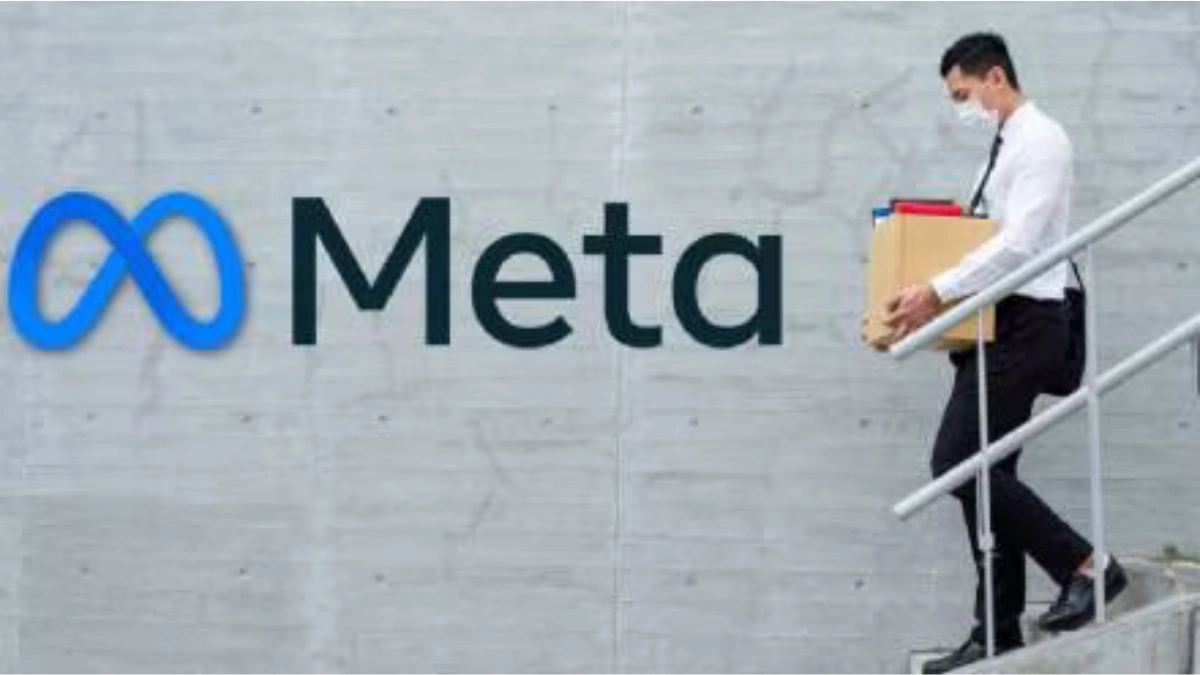
Meta layoffs 2026
Tech giant Meta is signaling that its recent wave of layoffs may not be the last, raising fresh concerns among employees and the broader tech industry. Despite already announcing plans to cut around 10% of its global workforce—roughly 8,000 employees—the company has indicated that further job reductions could still be on the table as it continues to adapt to changing business priorities.
Uncertainty After Major Layoff Announcement
During an internal meeting, Meta’s Chief People Officer Janelle Gale addressed employee concerns regarding the layoffs scheduled for May 20. When asked directly whether additional job cuts were planned, she offered a cautious response.
“I’d love to say there are no more layoffs, but I can’t promise something we can’t deliver,” Gale stated, emphasizing that while Meta’s business remains strong, the company must stay flexible in a highly competitive environment.
Her remarks made it clear that Meta is still in a phase of restructuring, where cost management and operational efficiency remain top priorities. She added that the company would continue to “evolve teams as needed,” suggesting that workforce adjustments may continue depending on business needs.
Focus on Redeployment and AI Growth
Gale also highlighted that Meta is trying to minimize the impact of layoffs by exploring opportunities to redeploy employees into different roles wherever possible. One key area of investment is the company’s Applied AI division, which continues to grow as Meta pushes deeper into artificial intelligence technologies.
The restructuring impact, however, is expected to vary across departments. While no specific teams were named, it is evident that some areas may face deeper changes than others as Meta reallocates resources toward future-focused initiatives.
Zuckerberg: AI Not the Sole Reason
Meta CEO Mark Zuckerberg also addressed employees during the meeting, attempting to clarify the reasons behind the layoffs. He pushed back against the assumption that artificial intelligence is the primary driver of job cuts.
Zuckerberg explained that while AI tools have improved efficiency and allowed smaller teams to perform more effectively, they are not the sole cause of workforce reductions.
He also addressed concerns about workplace monitoring, assuring employees that Meta does not track individuals directly. Instead, aggregated activity data—such as keystrokes and mouse movements—is used in an abstract manner to enhance AI systems, not to monitor personal productivity.
Impact on Employee Morale
Acknowledging the emotional toll of the layoffs, Gale admitted that employee morale has been affected. She stated that the company is making efforts to handle the process in the “best version possible,” aiming to provide support to affected staff.
As part of these efforts, Meta has extended COBRA healthcare coverage for impacted employees up to 18 months, offering some level of financial and medical security during the transition.
Continued Investment in AI
At the same internal meeting, Meta’s AI head Alexandr Wang ներկայացd the company’s latest AI model, Spark, underscoring Meta’s commitment to advancing its AI capabilities.
The company is also significantly increasing its infrastructure spending, with plans to invest between $125 billion and $145 billion this year—much of it directed toward AI development and related technologies.
Questions Around Workforce Size
Meanwhile, Meta’s Chief Financial Officer Susan Li recently acknowledged the uncertainty surrounding the company’s ideal workforce size. Despite employing more than 77,000 people globally, she admitted that the company is still figuring out what the optimal number of employees should be.
A Company in Transition
Meta’s latest signals suggest that it is in the midst of a broader transformation, balancing cost control with aggressive investment in future technologies like AI. While the company remains financially strong, its evolving priorities and competitive pressures mean that workforce changes are likely to continue.
For employees, this creates an atmosphere of uncertainty, while for the industry, it highlights a broader trend: even the biggest tech companies are constantly reshaping themselves in response to rapid technological change.
About the Author