Iran compensation demand
Iran compensation demand: Tensions in the Middle East have taken a sharper turn as Iran has formally demanded war damage compensation from five regional countries, accusing them of supporting military actions led by the United States and Israel. The countries named include Bahrain, Saudi Arabia, Qatar, United Arab Emirates, and Jordan.
The demand was conveyed by Iran’s Ambassador to the United Nations, Amir Saeid Iravani, who stated that these nations had violated international law by participating—directly or indirectly—in the ongoing conflict against Iran. According to Iran’s position, such actions amount to a breach of international obligations and justify a call for reparations.
Iran’s state news agency IRNA reported that Tehran has asked these countries to “make full compensation” for damages inflicted during the conflict. This includes not only material losses such as infrastructure damage but also what Iran describes as “moral damages” caused by the war. The statement reflects Tehran’s growing frustration with what it perceives as regional complicity in a broader geopolitical struggle.
The conflict, which began escalating on February 28, has seen a series of military exchanges and heightened rhetoric across the region. Iranian officials have repeatedly accused neighboring countries of allowing their territories, airspace, or logistical networks to be used by the United States and Israel for military operations. In response, Iran has carried out retaliatory drone and missile strikes targeting multiple locations it believes are linked to hostile actions.
Iranian President Masoud Pezeshkian has issued stern warnings to regional governments, urging them not to permit foreign powers to use their land as a base for military operations. He emphasized that cooperation with external forces could undermine regional stability, cautioning that countries seeking long-term “development” and “security” should avoid becoming entangled in the conflict.
The situation has been further complicated by developments involving the United States. Under the leadership of Donald Trump, Washington has reportedly imposed a naval blockade on Iranian ports. This move is widely seen as a significant escalation, as it directly impacts Iran’s ability to engage in maritime trade and export oil—one of its primary economic lifelines.
The blockade has also raised serious concerns about global energy markets. The Strait of Hormuz, a critical chokepoint for global oil shipments, has once again become a focal point of tension. Iran had earlier restricted tanker movement through the strait, allowing only select vessels to pass while imposing heavy charges. Any prolonged disruption in this region could have far-reaching consequences for oil prices and global supply chains.
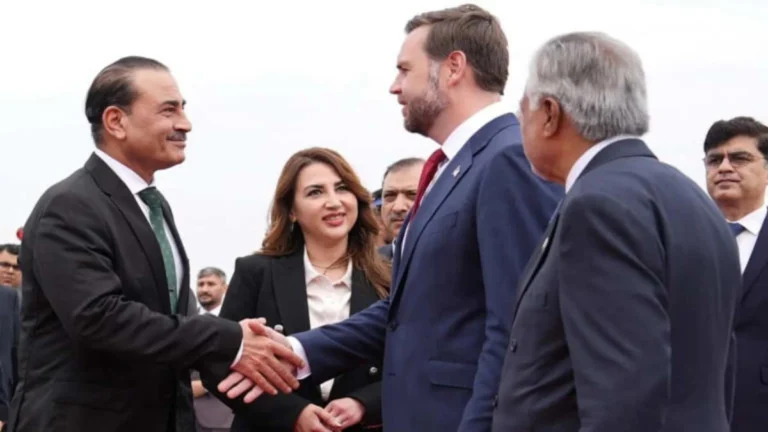
Adding to the uncertainty is the fragile ceasefire that was announced recently. The two-week truce, intended to create space for diplomatic negotiations, now appears to be under strain after talks in Islamabad failed to produce a concrete agreement. The lack of progress has fueled speculation that hostilities could intensify in the coming days.
Legal experts and international observers are closely watching Iran’s demand for compensation. While the principle of reparations exists under international law, proving direct involvement or liability in a complex, multi-party conflict can be challenging. The accused countries have yet to formally respond to Iran’s claims, but the allegations could deepen divisions within the region.
This development underscores the increasingly interconnected nature of modern conflicts, where regional disputes often draw in multiple actors with competing interests. Iran’s move to seek compensation is not just a legal or financial demand—it is also a strategic signal aimed at holding neighboring countries accountable and deterring further involvement.
At the same time, the broader geopolitical implications cannot be ignored. The combination of military escalation, economic pressure, and diplomatic deadlock has created a volatile environment that could impact not just the Middle East but the global economy as well.
As the situation unfolds, the world watches closely to see whether diplomacy can prevail or whether the region will slide further into conflict. Iran’s latest demand marks a new phase in the crisis—one that blends legal arguments with geopolitical strategy, and raises the stakes for all parties involved.
About the Author