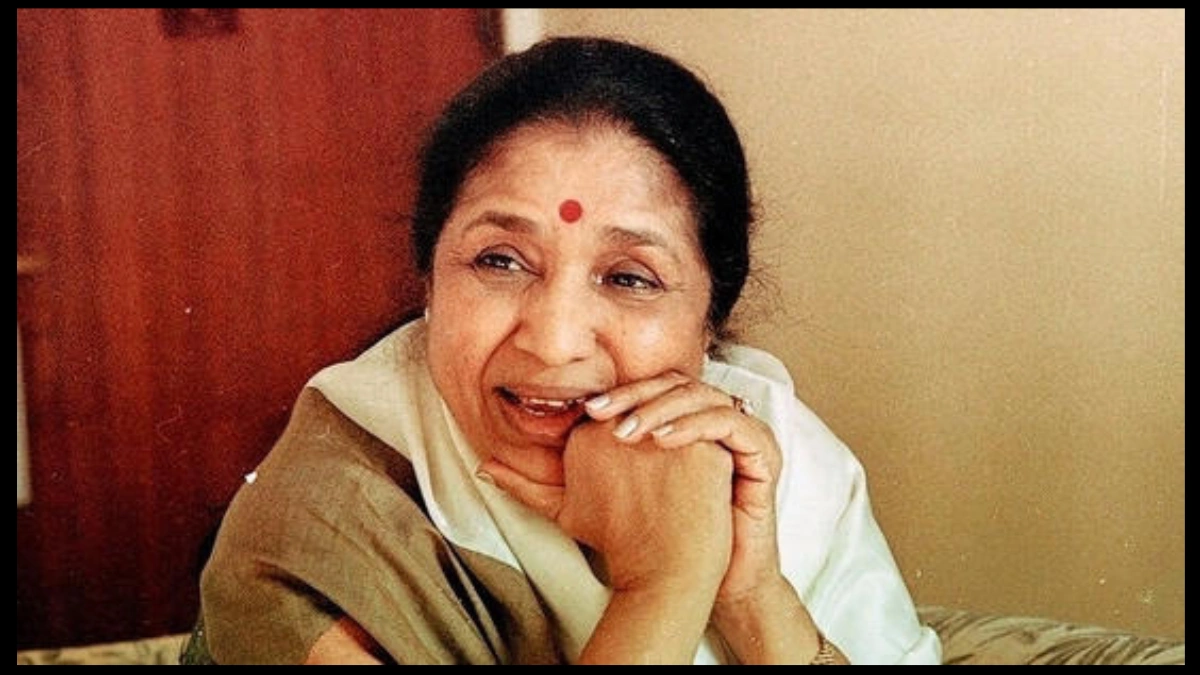
The passing of legendary singer Asha Bhosle on April 12 has left a deep void in the world of Indian music. Known for her unmatched versatility and soulful voice, she was more than just a playback singer—she was an institution who shaped the soundscape of Indian cinema for decades. As tributes pour in from across the globe, one of her most profound quotes on music and life has resurfaced, offering comfort and meaning to millions of grieving fans.
Born in 1933 into a musically rich family, Asha Bhosle began her singing journey at the tender age of nine. Over the course of an extraordinary career spanning more than eight decades, she recorded over 12,000 songs in multiple Indian languages. Her ability to adapt to different genres—from classical to cabaret, ghazals to pop—made her one of the most celebrated and versatile voices in the history of Indian music.
She was admitted to Breach Candy Hospital in Mumbai due to extreme exhaustion and a chest infection shortly before her demise. Her passing marks not just the loss of a singer but the end of an era that defined generations of Hindi cinema and beyond.
Amid this moment of grief, her words about music have taken on a deeper resonance. In a past interaction, she had said:
“Sangeet ek aisi kala hai jo janam janam tak apne saath chalti hai… shareer yahi reh jata hai lekin aavaj zaroor jaati hai.”
Translated, she described music as an eternal art form that stays with a person across lifetimes. She emphasized that while the physical body may perish, the voice—nurtured with devotion and hard work—continues to live on.
View this post on Instagram
This quote beautifully captures the essence of her life’s philosophy. For Asha Bhosle, music was not merely a profession or performance—it was a spiritual journey. She believed that when an artist dedicates themselves completely to their craft, the art becomes inseparable from their identity. It transforms into something sacred, something that transcends mortality.
Her message carries a powerful meaning. It suggests that true art is eternal. It does not fade with time or vanish with the artist’s physical presence. Instead, it continues to inspire, comfort, and connect people across generations. In her case, her songs have already become timeless treasures that will continue to echo in the hearts of listeners for years to come.
The quote also highlights the importance of devotion and discipline in mastering any art form. According to her, when an artist invests years of effort, emotion, and dedication into their craft, it evolves into a lifelong companion. It becomes a part of their soul—something that cannot be separated even by death.
Beyond music, her words offer a broader lesson about creativity and passion. Whether it is music, dance, painting, or any other form of expression, true artistry requires surrender. It is not just about skill or performance but about forming a deep emotional and spiritual connection with the craft.
Asha Bhosle’s life and words remind us that art has the power to grant a form of immortality. When an artist pours their heart into their work, their creations continue to tell their story long after they are gone. In this way, art becomes a bridge between the past and the future, carrying memories, emotions, and legacy forward.
As fans mourn her loss, her own belief offers a sense of solace—that she is not truly gone. Her voice lives on in every melody she gifted to the world. Every song she sang is a testament to her enduring spirit and passion.
In remembering Asha Bhosle, we are also reminded to value art not just as entertainment but as something sacred. Her message encourages aspiring artists to embrace their craft with dedication and reverence. Because in doing so, they too can create something timeless—something that outlives them.
About the Author