Raghav Chadha
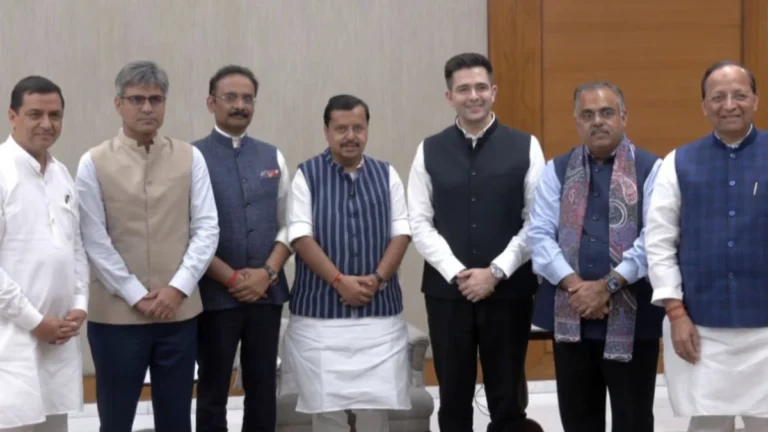
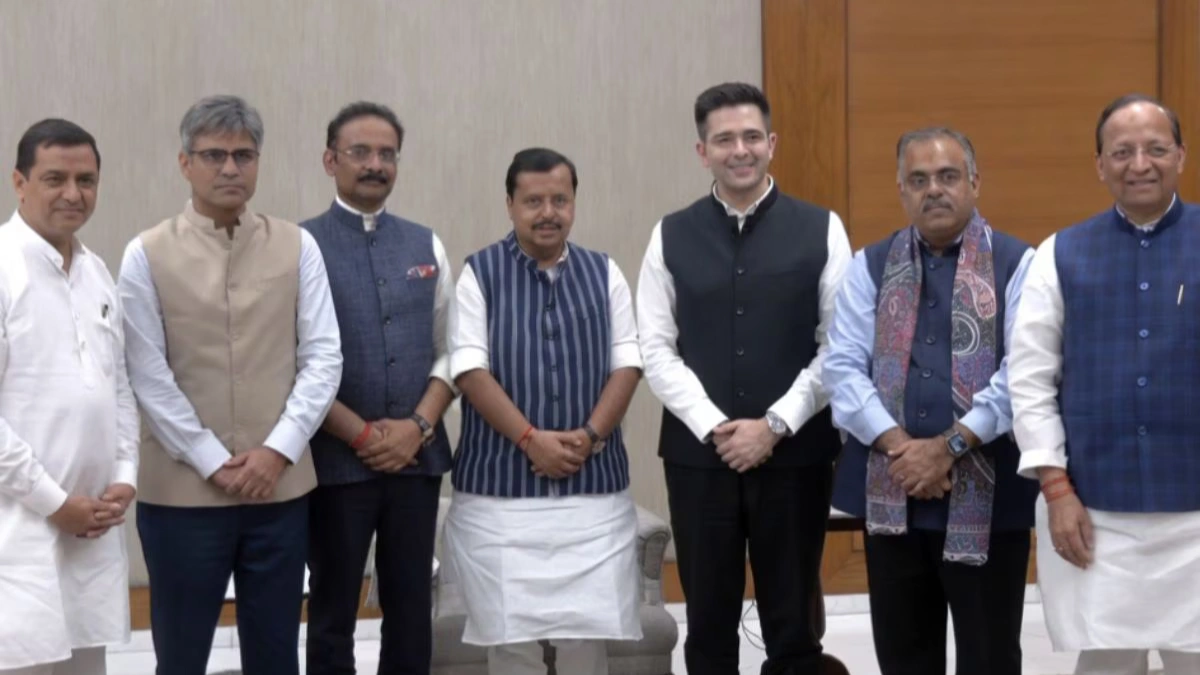
A significant political development has unfolded in Delhi, as Raghav Chadha resigned from the Aam Aadmi Party (AAP) and joined the Bharatiya Janata Party (BJP). He made this move on Friday, accompanied by two other Rajya Sabha MPs from AAP—Sandeep Pathak and Ashok Mittal—who also switched to the BJP.
The development came shortly after Raghav Chadha held a press conference announcing his resignation from AAP. He stated that two-thirds of AAP’s Rajya Sabha MPs had decided to break away from the party and merge with the BJP.
According to him, the decision was taken in accordance with provisions of the Constitution of India. He revealed that out of AAP’s 10 Rajya Sabha members, seven MPs are supporting this move. These reportedly include Swati Maliwal, Harbhajan Singh, Rajinder Gupta, and Vikram Sahni.
Raghav Chadha also shared details of the development on the social media platform X, stating that documents signed by seven MPs were submitted to the Chairman of the Rajya Sabha. He personally delivered these documents along with two other MPs.
During his address, Chadha made serious allegations against AAP, claiming that the party has drifted away from its original principles and is now prioritizing personal interests over national welfare. He described his decision to leave as difficult but necessary.
Reports suggest that this move came after Chadha was recently removed as AAP’s deputy leader in the Rajya Sabha. He was also accused by the party leadership of adopting a “soft stance” towards the central government, which reportedly widened internal differences.
After joining the BJP, Raghav Chadha openly praised Prime Minister Narendra Modi. He said that under Modi’s leadership, the government has taken several bold decisions that previous administrations hesitated to implement, including strong actions against terrorism and efforts to strengthen India’s global economic position.
He further added that the people of India have repeatedly expressed their trust in Prime Minister Narendra Modi, reflecting his popularity and leadership style.
This political shift is being seen as a major setback for AAP, especially in terms of its strength in the Rajya Sabha. On the other hand, it is considered a significant gain for the BJP, as it could further strengthen its position in Parliament.
The development may also signal larger changes in India’s political landscape in the coming months. It remains to be seen how this move will impact the strategies of both AAP and BJP going forward.
About the Author