Nearly a year after Operation Sindoor heightened tensions between India and Pakistan, China has publicly acknowledged for the first time that its personnel provided technical ground support to Pakistan during the four-day military confrontation.
The admission came through an interview aired on China’s state-run broadcaster CCTV, where engineers linked to China’s aviation defence sector described working closely with Pakistani forces during the conflict. Their comments are being viewed as the clearest indication yet of Beijing’s direct operational involvement in supporting Pakistan’s military systems.
Zhang Heng, an engineer associated with the Aviation Industry Corporation of China’s Chengdu Aircraft Design and Research Institute, recalled the intense atmosphere at a military support base during the clashes.
“We constantly heard fighter jets taking off along with air-raid sirens,” Zhang said in the televised interview. He added that extreme temperatures and continuous military activity made conditions physically and mentally exhausting for the support teams.
The remarks are significant because they mark the first official public acknowledgment from China that its technical teams were present on the ground while Pakistan’s air force carried out combat operations.
Focus on Chinese Fighter Jets
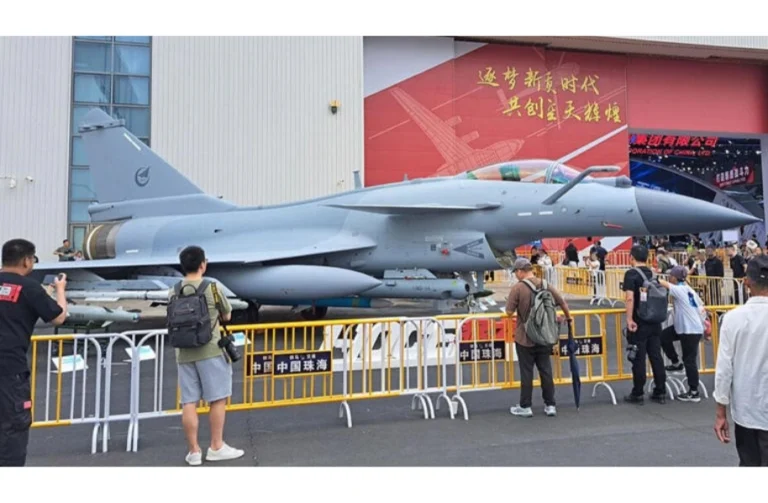
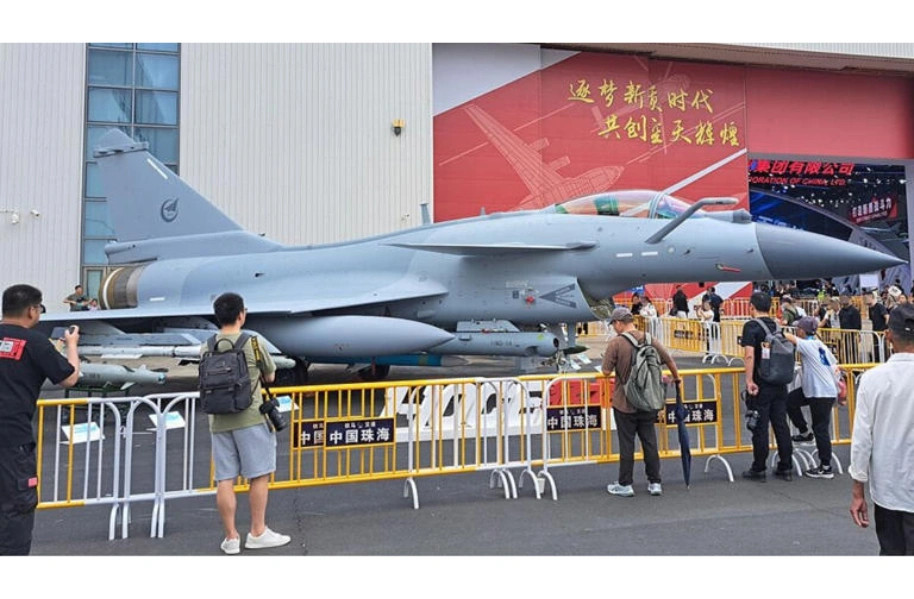
Zhang explained that his team’s primary responsibility was to ensure that the aircraft and related combat systems operated at maximum capability during the conflict. Pakistan currently operates the Chinese-made J-10CE fighter jet, which is the export version of China’s advanced J-10C multirole combat aircraft.
According to Zhang, the successful performance of the aircraft during the confrontation reflected not only the technology itself but also the close defence partnership between China and Pakistan.
Another engineer, Xu Da, compared the aircraft to “a child” nurtured by its designers before being tested in real combat conditions. He suggested that the strong performance of the J-10CE during the conflict was expected by the development team and demonstrated the maturity of the platform.
China’s Growing Role in Pakistan’s Defence Network
The statements are being interpreted by defence analysts as a signal of China’s expanding strategic role within Pakistan’s military infrastructure. Pakistan remains the only foreign operator of the J-10C fighter series.
Islamabad had earlier ordered 36 J-10C fighter jets along with long-range PL-15 air-to-air missiles from China. The Pentagon’s China Military Power Report 2025 later confirmed the delivery of the aircraft to Pakistan.
China has also emerged as Pakistan’s largest arms supplier in recent years. According to data from the Stockholm International Peace Research Institute (SIPRI), nearly 80 percent of Pakistan’s arms imports between 2021 and 2025 came from China.
Pakistan’s air force also heavily depends on the JF-17 fighter jet program, which was jointly developed by Chinese and Pakistani engineers.
India Had Raised Concerns Earlier
Indian military officials had previously alleged that China was indirectly assisting Pakistan during the May conflict. In July 2025, Lt. Gen. Rahul Singh, India’s Deputy Chief of Army Staff (Capability Development & Sustenance), stated that India effectively faced multiple adversaries despite having a single active border conflict.
He had described Pakistan as the “front face” while accusing China of providing extensive support in the background. Singh also raised concerns that China may have used satellite surveillance and battlefield monitoring systems to track Indian military deployments during the operation.
The latest remarks from Chinese engineers are likely to intensify discussions around Beijing’s military cooperation with Islamabad and its broader strategic ambitions in South Asia.
About the Author