Remove Hard Water Stains with Vinegar and Dish Soap
If you live in an area with hard water, keeping your bathroom and kitchen surfaces spotless can feel like an endless battle. Those cloudy marks on glass, chalky deposits around taps, and stubborn stains on tiles are all signs of limescale buildup—one of the most common household cleaning challenges.
Hard water contains high levels of minerals like calcium and magnesium. When the water evaporates, these minerals are left behind, forming visible stains and deposits. Over time, this buildup can make surfaces look dull, foggy, and difficult to clean, especially on glass shower doors, sinks, and faucets.
While many people rely on expensive cleaning products to deal with this issue, a surprisingly simple and affordable solution has been gaining attention online. According to cleaning enthusiasts, you can remove hard water stains quickly using just two everyday kitchen items: dishwashing liquid and white vinegar.
The “Magic” Cleaning Combo
The idea is simple yet highly effective. By combining dish soap with white vinegar, you create a powerful cleaning solution that breaks down both grease and mineral deposits.
Vinegar is naturally acidic, which makes it excellent for dissolving limescale and mineral buildup. Dishwashing liquid, on the other hand, helps lift grime, oils, and residue from surfaces. When used together, they form a cleaning solution that tackles tough stains with minimal effort.
Many people who have tried this method describe the results as almost “magical,” especially when compared to traditional cleaning methods that require heavy scrubbing or harsh chemicals.
Why It Works So Well
The effectiveness of this method lies in the chemistry behind it. The acidity of vinegar reacts with calcium deposits, breaking them down so they can be wiped away easily. Meanwhile, the dish soap ensures that any leftover residue is removed, leaving surfaces clean and shiny.
This combination is particularly useful for:
- Glass shower doors
- Bathroom taps and fixtures
- Kitchen sinks
- Tiles and chrome surfaces
Unlike some commercial cleaners, this solution is gentle on surfaces while still being highly effective.
How to Use Vinegar and Dish Soap for Cleaning
Here’s a simple step-by-step method to try at home:
- Mix equal parts white vinegar and water in a spray bottle.
- Add a small amount of dishwashing liquid to the mixture.
- Spray the solution generously on the stained surface.
- Let it sit for 5–15 minutes to break down the buildup.
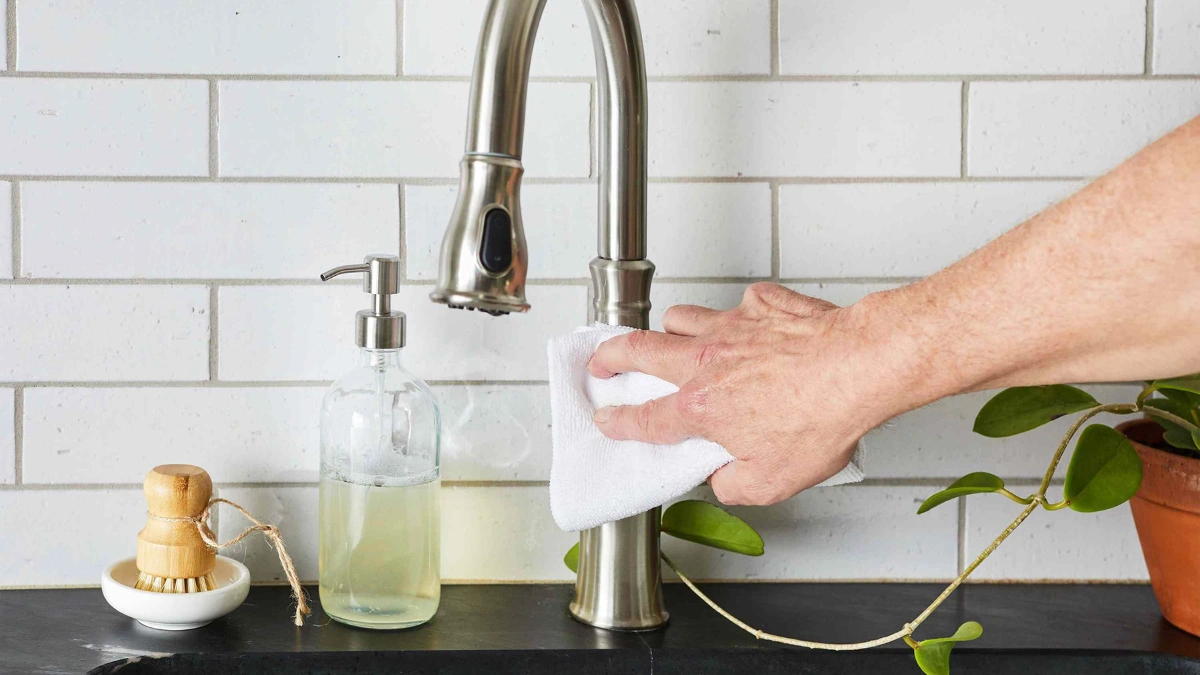
- Wipe gently with a soft cloth or sponge.
- Rinse with clean water and dry with a microfiber cloth for a streak-free finish.
For best results, use this method regularly to prevent heavy buildup.
Other Natural Ways to Remove Hard Water Stains
If you’re dealing with more stubborn stains, there are a few additional natural remedies you can try:
1. Baking Soda Paste (For Tough Deposits)
Baking soda works as a mild abrasive, making it ideal for scrubbing away stubborn stains.
- Mix baking soda with a little water to form a paste.
- Apply it directly to the stain.
- Let it sit for 10–15 minutes.
- Scrub gently and rinse thoroughly.
2. Lemon Juice (Fresh and Natural Cleaner)
Lemon juice is another natural acid that can help dissolve mineral deposits.
- Squeeze fresh lemon juice onto the affected area.
- Leave it for 5–10 minutes.
- Wipe and rinse with water.
This method also leaves a fresh, pleasant scent behind.
Prevention Tips: Keep Stains Away
While cleaning solutions are helpful, prevention is just as important. Here are a few tips to reduce hard water buildup:
- Wipe surfaces dry after use to prevent mineral deposits
- Use a squeegee on shower glass after every shower
- Clean regularly to avoid heavy buildup
- Consider installing a water softener if hard water is a major issue
Hard water stains can be frustrating, but they don’t have to be permanent. With simple, affordable ingredients like vinegar and dish soap, you can restore shine to your bathroom and kitchen surfaces without relying on expensive products.
The key is consistency—regular cleaning and quick action can prevent stains from building up in the first place. Sometimes, the most effective solutions are already sitting in your kitchen.
About the Author