
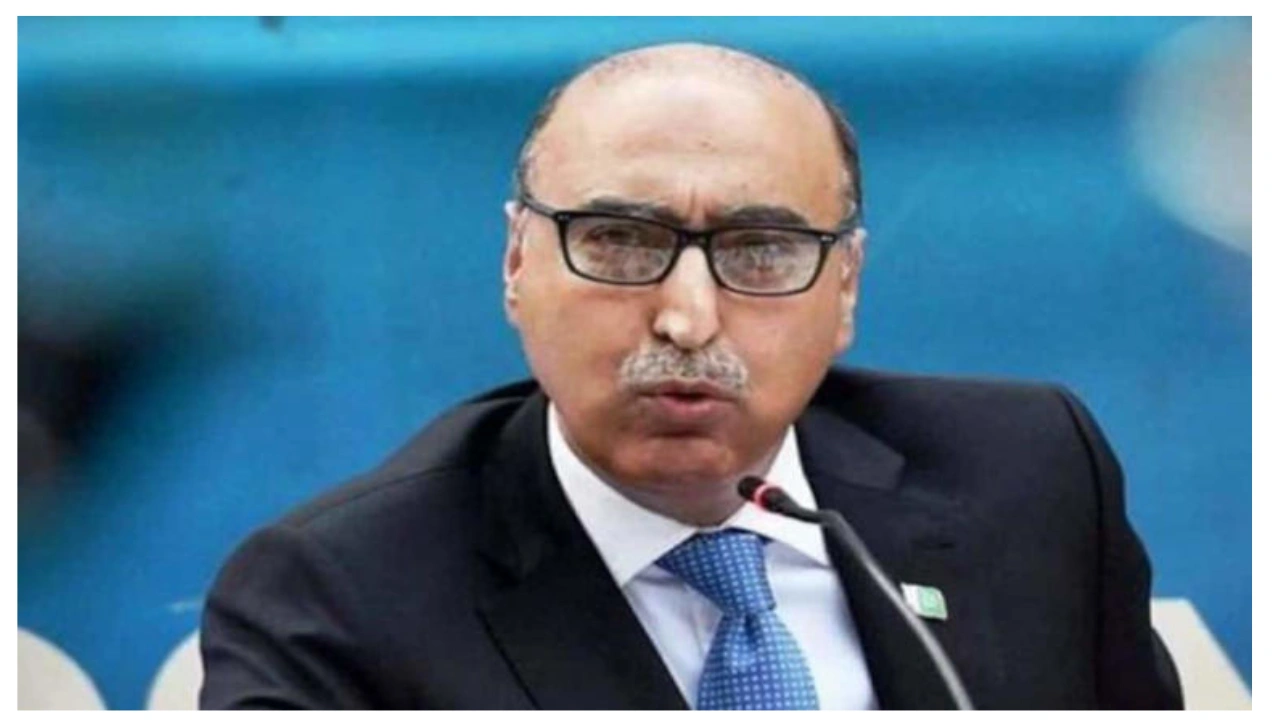
Abdul Basit
Amid escalating geopolitical tensions in West Asia, a controversial statement by former Pakistan High Commissioner to India Abdul Basit has raised fresh concerns about regional stability and security. His remarks come at a time when the ongoing conflict involving Iran, the United States, and Israel continues to intensify, creating uncertainty across global strategic circles.
Basit, who served as Pakistan’s top envoy in New Delhi from 2014 to 2017, recently discussed a hypothetical worst-case scenario during a public interaction. While he repeatedly clarified that the situation he described was highly unlikely, his comments have nevertheless drawn attention due to their sensitive nature.
A Hypothetical but Alarming Scenario
In his remarks, Basit outlined a situation in which regional tensions escalate dramatically. He suggested that if Israel were to position itself closer to Pakistan and if the United States were to adopt an aggressive stance toward Pakistan’s nuclear program, the situation could spiral into a serious crisis.
According to him, such a scenario could involve attempts to neutralize Pakistan’s nuclear capabilities. While he maintained that Pakistan possesses sufficient defensive strength, he explored the potential consequences if the country were pushed into a corner.
India Mentioned as a Strategic Target
One of the most controversial aspects of Basit’s statement was his suggestion that India could become a default target in such extreme circumstances. He argued that if Pakistan were unable to directly respond to distant adversaries like the United States or Israel due to operational or geographical limitations, it might consider closer alternatives.
In this context, he referred to major Indian cities such as Mumbai and New Delhi, indicating that retaliation would not be restrained if Pakistan faced an existential threat. However, he emphasized multiple times that this was purely a theoretical discussion based on an unlikely chain of events.
#BreakingNews | “India may face 26/11-style attacks.”
Former Pak High Commissioner Abdul Basit warns of a catastrophic security blowback for India if the US and Israel ever plan to strike Pakistan and its nuclear facility#ExclusiveStory: @manojkumargupta @AmanKayamHai_ and… pic.twitter.com/rQIZOxPoDD
— News18 (@CNNnews18) March 21, 2026
Rising Tensions Add Context
Basit’s remarks come against the backdrop of increasing military activity in West Asia. The conflict involving Iran, the United States, and Israel has seen multiple rounds of strikes and counter-strikes in recent weeks. Reports of attacks in Tehran and Beirut, along with heightened military deployments, have added to the volatility of the region.
Despite statements from Donald Trump suggesting that the United States may consider scaling down its involvement, the situation remains unpredictable. Analysts warn that mixed signals from global powers could further complicate an already fragile scenario.
Expert Concerns Over Escalation
Strategic experts believe that rhetoric involving nuclear capabilities and cross-border retaliation—even in hypothetical terms—can contribute to heightened anxiety in an already tense environment. Such statements, they argue, risk misinterpretation and could escalate diplomatic tensions between neighboring countries.
The possibility of a broader regional conflict involving multiple nations remains a key concern. With global powers already engaged in strategic positioning, any escalation could have far-reaching consequences beyond the immediate region.
While Abdul Basit described his remarks as a theoretical exercise, the timing and nature of his statements have sparked widespread discussion. In a period marked by geopolitical uncertainty, such comments underscore the importance of measured communication and diplomatic restraint.
As tensions in West Asia continue to evolve, the focus remains on preventing further escalation and ensuring stability in a region that plays a critical role in global security and economic balance.
About the Author