
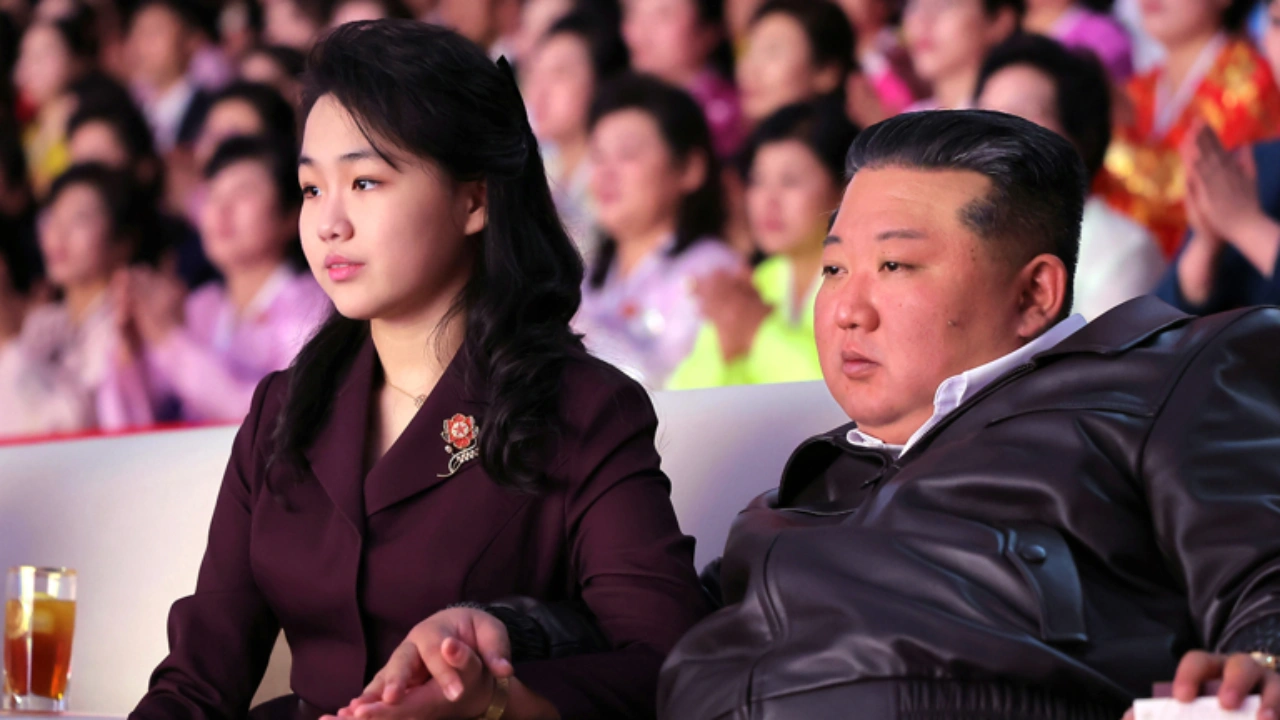
North Korean leader Kim Jong Un has once again secured an overwhelming electoral victory, as state media reported near-total support in the country’s 2026 parliamentary elections. According to the official Korean Central News Agency (KCNA), the ruling Workers’ Party of Korea and its allied groups won 99.97% of the vote, claiming all seats in the latest election to the Supreme People’s Assembly.
The vote, held on March 15, was conducted to elect representatives to the 15th Supreme People’s Assembly, North Korea’s unicameral legislature. Official figures revealed an exceptionally high turnout, with 99.99% of registered voters participating in the process. Only a minuscule fraction—0.0037%—were reportedly unable to vote due to being overseas or engaged in maritime work, while just 0.00003% abstained.
Of those who cast their ballots, 99.93% voted in favor of the officially endorsed candidates. However, what stood out this time was the reported 0.07% of voters who opposed the candidates—an extremely rare statistic in North Korean elections, where dissent is almost never publicly acknowledged.
Under the country’s electoral system, each constituency presents only a single candidate, typically pre-approved by the ruling establishment. A total of 687 representatives were elected, including workers, farmers, intellectuals, military personnel, and party officials. Due to the absence of electoral competition, international observers and analysts have long described North Korea’s voting process as largely symbolic, often referring to it as a “show election.”
BREAKING:
Kim Jong‑un officially wins North Korea’s parliamentary election with 99.93% of the vote. pic.twitter.com/LRv81e4p02
— Globe Eye News (@GlobeEyeNews) March 17, 2026
In a notable development, state media acknowledged the presence of dissenting votes for the first time in a Supreme People’s Assembly election since 1957. While the figure remains extremely small, its inclusion in official data has drawn significant attention both from political analysts and the global public.
Among the prominent figures elected was Kim Yo Jong, the influential sister of Kim Jong Un. She secured her seat from Kallimgil Constituency No. 5, further reinforcing the ruling family’s continued dominance in the country’s political structure.
Despite the predictable nature of the results, the 0.07% dissent quickly became the focal point of online discussions. Social media users around the world reacted with a mix of sarcasm and humor, highlighting the rarity—and perceived risk—of opposing votes in such a tightly controlled political environment.
One user joked, “Moment of silence for the 0.07%,” while another quipped, “Give me the names of those 0.07%,” sharing a meme featuring Kim Jong Un. A third comment humorously suggested, “In unrelated news, population expected to decrease by 0.07% this summer,” reflecting the internet’s tendency to respond to such news with dark humor.
Others pointed out the unusual transparency in reporting dissent, even if minimal. “That 0.07% just became the most talked-about group in the country,” one user wrote on X (formerly Twitter), underlining how even a tiny fraction can draw global curiosity.
North Korea’s elections have historically reported near-unanimous support for the ruling party, making any acknowledgment of opposition noteworthy. While the system remains unchanged, the inclusion of such figures in official reporting could signal a subtle shift in how the regime presents its internal processes—or simply an attempt to project a controlled image of limited diversity in opinion.
Regardless of interpretation, the 2026 election results reaffirm the continued political dominance of Kim Jong Un and his leadership circle. At the same time, the tiny fraction of dissent has managed to capture outsized attention, turning a routine state-controlled election into a subject of global conversation.
About the Author