ISI Arms Network
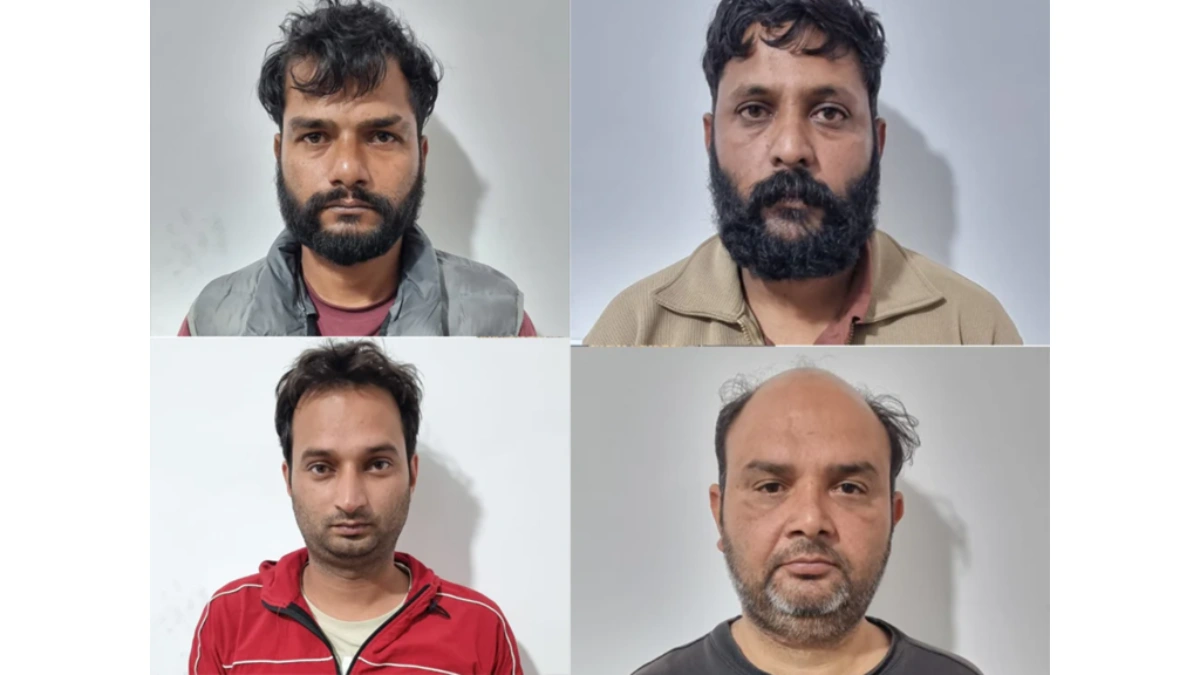
In a major breakthrough, the Delhi Police Crime Branch has dismantled a significant part of a transnational arms trafficking and terror network allegedly backed by Pakistan’s intelligence agency, Inter-Services Intelligence (ISI). With the latest arrests, the total number of accused in the case has risen to 12.
The two suspects, identified as Imran (37) and Mohammad Kamran (27), were apprehended earlier this week at Indira Gandhi International Airport after Look Out Circulars (LOCs) were issued against them. Following their detention, both were formally arrested under multiple legal provisions, including the Bharatiya Nyaya Sanhita (BNS), the Arms Act, and the Unlawful Activities (Prevention) Act (UAPA), which was invoked due to the serious nature of the case.
Key Role in International Arms Smuggling
According to investigators, the accused were active members of an illegal arms supply network allegedly operated by absconding kingpin Shahbaz Ansari. The duo reportedly traveled to Nepal to procure illegal firearms, which were then smuggled into India through covert cross-border routes.
To avoid detection, the weapons were transported in dismantled form and reassembled after entering India. These arms were later distributed among criminal groups and anti-national elements across Delhi-NCR and other parts of the country.
Police officials revealed that Imran and Kamran played a “crucial logistical role” in the network. Their responsibilities included receiving consignments, assembling firearms, arranging safe storage, and ensuring smooth distribution. They were also involved in managing financial transactions linked to the illegal trade.
Multi-Country Network Backed by ISI
Investigations suggest that the entire operation was coordinated under the direction of handlers linked to the ISI. The smuggling network reportedly spanned multiple countries, including Pakistan, Thailand, Nepal, and India, making it a complex and highly organized operation designed to evade law enforcement scrutiny.
Authorities believe that Shahbaz Ansari acted as a key link between foreign handlers and local operatives, facilitating the procurement and movement of illegal arms across borders.
Threat to National Security
Officials have raised serious concerns about the intent behind the network. The primary objective, according to investigators, was to destabilize India’s internal security. Funds generated from illegal arms sales were allegedly meant to support terror-related activities.
Intelligence inputs indicate that the weapons could have been used in high-impact terror attacks, particularly during religious gatherings or large public events, posing a significant threat to public safety and communal harmony.
Recovery of Weapons and Modified Vehicle
During interrogation, police recovered a .30 bore Chinese pistol with five live cartridges and a .32 bore revolver manufactured by Indian Ordnance along with six cartridges.
Additionally, a specially modified Maruti Swift car was seized. The vehicle had concealed cavities designed for transporting weapons without raising suspicion during routine checks. Officials noted the high level of sophistication used in modifying the car for smuggling purposes.
Prior to these arrests, authorities had already detained 10 other accused and recovered 21 firearms, including a submachine gun, along with 200 live cartridges. With the latest seizures, the total recovery now stands at 23 advanced weapons and 211 live cartridges.
Ongoing Investigation
The Delhi Police have described the case as a “highly organized transnational conspiracy” with far-reaching implications for national security. Efforts are currently underway to track down other members of the network and completely dismantle the syndicate.
As the investigation progresses, authorities are focusing on uncovering deeper links and preventing any potential threats that may arise from such cross-border terror networks.
About the Author