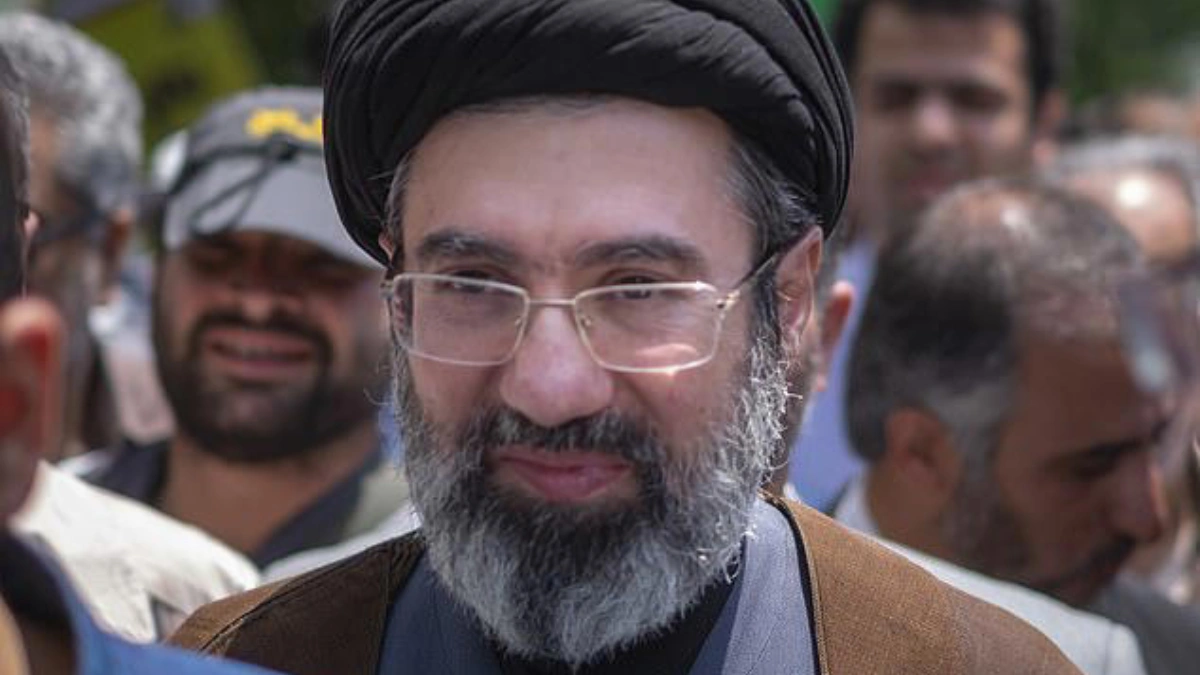
Mojtaba Khamenei
In a major development that could further destabilize an already war-torn nation, Iran’s newly appointed Supreme Leader, Mojtaba Khamenei, is reportedly in a critical medical condition and allegedly unable to carry out his duties. According to a confidential intelligence memo cited by international reports, the 56-year-old leader is being treated in the holy city of Qom for what has been described as a “severe” health issue.
The assessment, believed to be based on inputs from American and Israeli intelligence agencies, claims that Khamenei is currently not in a position to participate in any state decision-making processes. This revelation raises serious concerns about leadership continuity in Iran during a period of intense conflict and uncertainty.
Mystery Surrounds Leader’s Absence
Since assuming power following the death of his father, Ali Khamenei, Mojtaba Khamenei has not made any public appearances. The senior Khamenei was reportedly killed on the very first day of the ongoing war, along with several close family members, including his wife and one of his sons.
Initially, Iranian authorities had downplayed Mojtaba’s condition, stating that he had only suffered a minor leg injury during the strike. However, they failed to provide further updates or explain his prolonged absence from public view.
Now, the newly surfaced memo paints a far more alarming picture, suggesting that his condition may be critical and possibly deteriorating. It remains unclear whether his current state is a result of injuries sustained during the initial attack or due to subsequent complications.
Intelligence Memo Raises Alarm
The diplomatic memo, reportedly shared with Gulf allies and accessed by global media outlets, explicitly states that Mojtaba Khamenei is in no condition to govern. It emphasizes that he is undergoing treatment in Qom and is “unable to be involved in any decision making by the regime.”
This marks the first time his exact location within Iran has been publicly disclosed, although intelligence agencies are believed to have been aware of his whereabouts for some time.
Adding to the intrigue, reports indicate that the body of Ali Khamenei is also in Qom, where preparations for his burial are underway. Sources suggest that construction has begun on a large mausoleum capable of accommodating multiple graves, hinting that other family members may be laid to rest alongside him.
Questions Over Authenticity and Transparency
The Iranian state has attempted to maintain an image of stability by releasing statements attributed to Mojtaba Khamenei. However, these messages were delivered by television presenters rather than the leader himself, further fueling speculation about his condition.
In a controversial move, state media recently aired a video claiming to show the Supreme Leader in a war room analyzing strategic targets. However, the footage was later confirmed to be AI-generated, casting serious doubts on the regime’s transparency.
Opposition groups have long alleged that Khamenei is in a coma, and so far, no concrete evidence has emerged to definitively refute these claims.
Political Uncertainty and Global Implications
The reported incapacity of Iran’s Supreme Leader comes at a critical time, as the country remains deeply embroiled in conflict. Leadership paralysis at the highest level could significantly impact military decisions, diplomatic negotiations, and internal stability.
Meanwhile, former U.S. President Donald Trump has claimed that discussions with Iranian representatives are ongoing, though he clarified that these talks do not involve the Supreme Leader directly.
Further reports reveal that Mojtaba narrowly escaped death during the initial missile strike on his father’s compound in Tehran. Leaked audio from a senior regime official suggests that he had stepped बाहर moments before the attack, which ultimately claimed the lives of his close family members, including his wife.
Growing Uncertainty in Iran
As conflicting narratives continue to emerge, the lack of clear communication from Iranian authorities has only intensified global concerns. The situation raises pressing questions about who is currently making key decisions within the regime and how long this uncertainty can persist.
With no verified public appearance and increasing intelligence claims about his health, the future leadership of Iran remains unclear. If these reports prove accurate, the country could be facing not just a military crisis, but a profound political vacuum at its core.
About the Author