
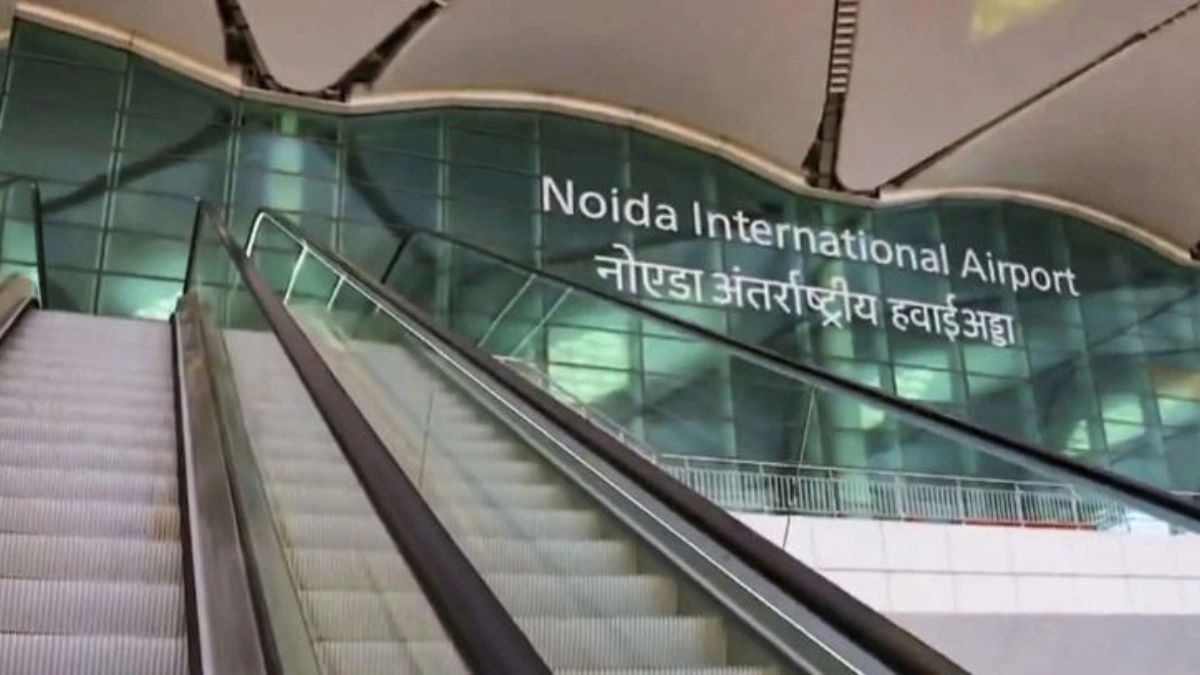
Noida International Airport
The much-anticipated Noida International Airport is on the brink of becoming operational, following its recent formal inauguration. While the mega infrastructure project promises to boost connectivity and economic growth in the NCR region, a growing sense of uncertainty looms over the very workforce that helped build it.
According to reports, more than 1,000 contractual workers employed through various contractors are now worried about their future as the first phase of construction nears completion. With major construction work slowing down, many workers claim they have not been offered permanent positions or given any clarity regarding continued employment once the airport becomes fully operational.
For these workers, the transition from construction to operations has created a gap filled with anxiety. While the airport is expected to generate jobs in the long term, there is little information on when those opportunities will arise or whether the current workforce will be considered for them. As a result, many are left uncertain about whether to wait for potential opportunities or search for new work elsewhere.
Among those affected is Mahendra Ambedkar, a BSc graduate with additional diplomas in computer science, IT, and civil engineering. Currently earning around ₹14,000 per month at the airport site, he says the income is significantly lower than what he previously earned as a lab assistant in Delhi before losing his job during the COVID-19 pandemic. For him, working at the airport was a necessity due to its proximity to his home in Jewar Banger.
Ambedkar’s connection to the project goes even deeper—his family had given up nearly 10 bigha of land for the airport’s development, receiving ₹46 lakh as compensation. However, despite this contribution, he now finds himself in a fragile financial situation, with no assurance of stable employment in the future.
The issue is not limited to a single worker. Labourers across various roles—including housekeeping, plumbing, welding, carpentry, and machine operations—face similar challenges. Most of them are hired on short-term contracts ranging from a few weeks to several months. Many rely on daily or temporary assignments, taking up whatever work is available to sustain themselves.
Yash Kumar, a 20-year-old worker from Taharpur village, shared that he earns approximately ₹14,000 a month after working long hours. With responsibilities such as supporting household expenses and contributing to his siblings’ education, his earnings leave little room for savings. Recently, his situation has worsened as he has not received any new assignments from contractors in the past few weeks.
For younger workers like 21-year-old Abhishek Kumar, the airport project has been a place to learn new skills rather than secure long-term employment. He has gained experience in multiple tasks, including installing window panes, assisting in electrical work, and painting. However, he highlights a critical concern—lack of safety and security measures.
According to workers, most contracts do not include basic benefits such as medical insurance or financial protection. Given the high-risk nature of construction work, this absence of safeguards adds another layer of concern. Many believe that better worker protection policies should have been implemented, especially for a project of such scale.
The situation highlights a broader issue in large infrastructure developments—while they create temporary employment during construction, long-term job security for workers often remains uncertain. As Noida International Airport prepares to take off, the people who built it are left wondering about their own future.
Despite the uncertainty, there is still hope among workers that the airport will eventually bring more stable job opportunities to the region. However, without clear communication or structured transition plans, that hope remains uncertain for now.
About the Author