Kasim Khan
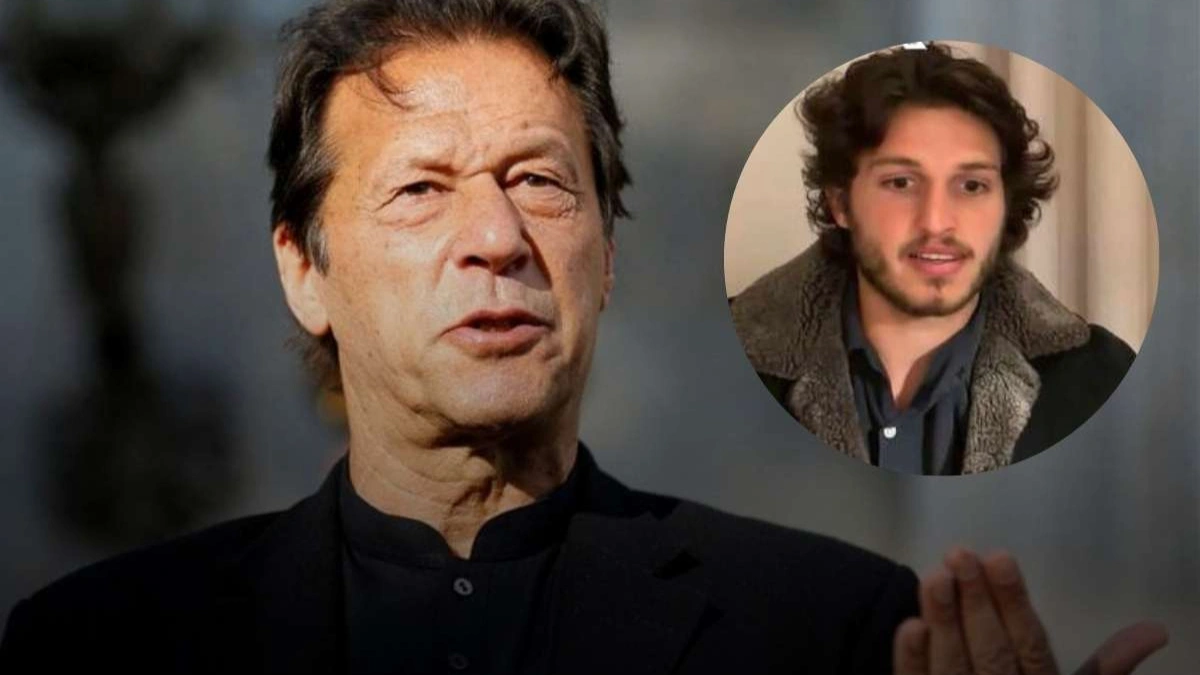
In a strongly worded appeal at the United Nations Human Rights Council (UNHRC), Kasim Khan, the son of former Pakistan Prime Minister Imran Khan, has called for his father’s immediate release from prison, alleging severe human rights violations and deteriorating health conditions.
Addressing the global forum, Kasim painted a grim picture of his father’s incarceration, claiming that Imran Khan has been confined in a solitary cell designed for death row inmates. According to him, such treatment goes beyond standard imprisonment and reflects a deliberate attempt to break the former leader physically and mentally.
Imran Khan, who has been behind bars since 2023, was sentenced last year to 17 years in prison alongside his wife on corruption charges. Both have consistently denied the allegations, maintaining that the cases are politically motivated. His imprisonment followed a turbulent period in Pakistan’s political landscape after he was removed from power in 2022 through a no-confidence vote.
During his speech at the United Nations Human Rights Council, Kasim expressed deep concern over what he described as a growing climate of intolerance and repression in Pakistan. He accused the authorities of targeting dissenting voices and using state machinery to silence opposition figures.
“My father has been imprisoned for nearly 1,000 days,” Kasim stated. “He is being held in solitary confinement in conditions meant for those awaiting execution. This is not just imprisonment—it is a calculated effort to strip him of his dignity and humanity.”
He further revealed that he has not been able to meet his father for over three years, adding an emotional dimension to his appeal. Reports have also emerged in recent weeks suggesting that Imran Khan’s health has worsened during his incarceration, including a significant loss of vision in his right eye.
Kasim emphasized that international human rights experts have already raised concerns about the conditions of Imran Khan’s detention, warning that they may amount to torture. He argued that the situation reflects a broader pattern of systemic persecution in Pakistan, extending beyond his father to other political opponents and sections of society.
In his address, he also criticized the expansion of Pakistan’s blasphemy laws, claiming they are being used to impose harsh punishments and create an environment of fear and division. He urged the UN body and the Office of the High Commissioner for Human Rights (OHCHR) to intervene and pressure Pakistan to uphold international human rights standards.
“The world must act,” Kasim said. “We urge this council to demand an end to these injustices and to ensure the immediate release of my father and all political prisoners.”
The appeal has added to growing international attention on Imran Khan’s situation. Earlier this year, a group of 14 former cricketers—including Indian legends Sunil Gavaskar and Kapil Dev—jointly appealed to the Pakistani government, calling for fair and humane treatment of the former cricket captain-turned-politician.
Before entering politics, Imran Khan was widely celebrated for leading Pakistan to victory in the 1992 Cricket World Cup, cementing his legacy as one of the country’s greatest sports figures. His transition into politics saw him rise to the highest office in the country, only to later face a dramatic fall amid political and institutional tensions.
As calls for his release grow louder, the situation continues to draw scrutiny from global observers, raising broader questions about governance, justice, and human rights in Pakistan.
About the Author