Apple components
India’s electronics manufacturing landscape is undergoing a significant transformation, and this time the story goes beyond imports and assembly. In a notable shift, Indian factories are now exporting key electronic components to China—a reversal of the long-standing trend where India largely depended on Chinese imports.
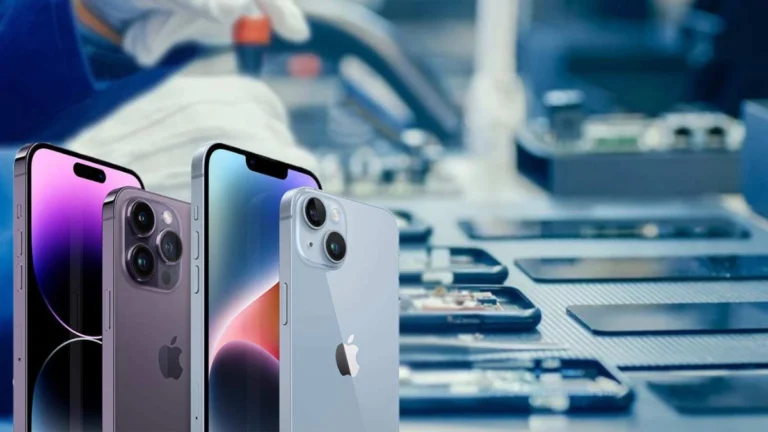
According to a recent report by The Economic Times, vendors associated with Apple have shipped a record $2.5 billion worth of components and sub-assemblies to China in the ongoing financial year FY26. This development marks a turning point in the global electronics supply chain, highlighting India’s growing role not just as an assembly hub but also as a supplier.
Exports to China See Rapid Growth
The pace of growth in electronics exports from India to China has been striking. The report suggests that exports could reach as high as $3.5 billion by the end of FY26. By January alone, exports had already touched approximately $2.8 billion, signaling strong momentum.
This is a massive leap compared to FY25, when exports stood at around $920 million. In earlier years, such exports were almost negligible. The shift reflects how quickly India’s manufacturing capabilities have evolved.
Industry insiders have described this as a “sharp jump,” emphasizing that such growth would have been hard to imagine just a few years ago when India primarily relied on imported components for its electronics production.
Apple’s Expanding Ecosystem in India
The driving force behind this shift is Apple’s rapidly expanding manufacturing ecosystem in India. Over the past five years, Apple has produced iPhones worth nearly $70 billion in the country. Out of this, around $51 billion worth of devices have been exported, mainly to markets like the United States and Europe.
Now, the ecosystem is maturing further. Companies such as Foxconn, Tata Electronics, and Pegatron are not only assembling devices but also manufacturing and exporting critical components. These include printed circuit board assemblies (PCBAs), mechanical parts, and device housings.
An industry source noted that the surge in exports is “entirely on account of Apple’s expansion,” underscoring how one company’s supply chain decisions can reshape an entire industry.
Policy Push Behind the Growth
Government initiatives have played a crucial role in enabling this transformation. Schemes like the Production-Linked Incentive (PLI) program and newer policies focused on electronics component manufacturing have encouraged companies to invest in local production.
These initiatives aim to boost domestic manufacturing, increase local value addition, and position India as a global electronics hub. Industry leaders are now pushing for an upgraded version—often referred to as PLI 2.0—to sustain the current growth trajectory.
An executive pointed out that such an upside was “unthinkable” when Apple first began shifting iPhone production from China to India around 2021. The progress since then highlights how policy support and global demand can work together to drive structural change.
A Bigger Shift in the Global Supply Chain
Beyond the numbers, this trend signals a deeper shift in global trade dynamics. India is gradually moving up the value chain—from being a destination for assembly to becoming a key supplier of components.
China, which was once the primary source of electronics imports for India, is now emerging as a destination for Indian exports. This reversal indicates a more balanced and interconnected supply chain between the two countries.
Experts believe that if the current momentum continues, India could play a much larger role in global electronics manufacturing. Some estimates suggest that Indian firms could contribute 30–35 percent of global mobile phone production in the coming years.
In conclusion, India’s growing exports of Apple components to China reflect more than just a trade milestone. It marks a structural shift in the country’s manufacturing capabilities and its position in the global electronics ecosystem. As policies evolve and investments increase, India appears well on its way to becoming a major force in the global supply chain.
About the Author