Bahrain Lockdown
Authorities in Bahrain have issued an emergency lockdown advisory after a major fire broke out in the Muharraq Governorate following what regional media reports described as an Iranian strike on fuel storage tanks.
The warning was issued by Bahrain’s Ministry of Interior, which urged residents in nearby areas to remain indoors as emergency teams worked to contain the blaze and assess the situation.
Residents Told to Stay Indoors
The ministry advised people living in several affected localities—including Hidd, Arad, Qalali and Samaheej—to stay inside their homes and shut windows and ventilation systems.
Officials said the directive was a precautionary measure aimed at protecting residents from possible smoke inhalation caused by the large fire at the fuel storage facility.
Emergency services and firefighters have been deployed to control the flames and ensure the safety of nearby communities.
Report of Iranian Attack on Fuel Tanks
Earlier reports from Al Jazeera indicated that the fire erupted after a suspected Iranian attack targeting fuel storage tanks in the Muharraq area.
The incident is part of a broader escalation of hostilities across the Gulf region involving Iran and several allied nations.
Civilian Casualties Reported
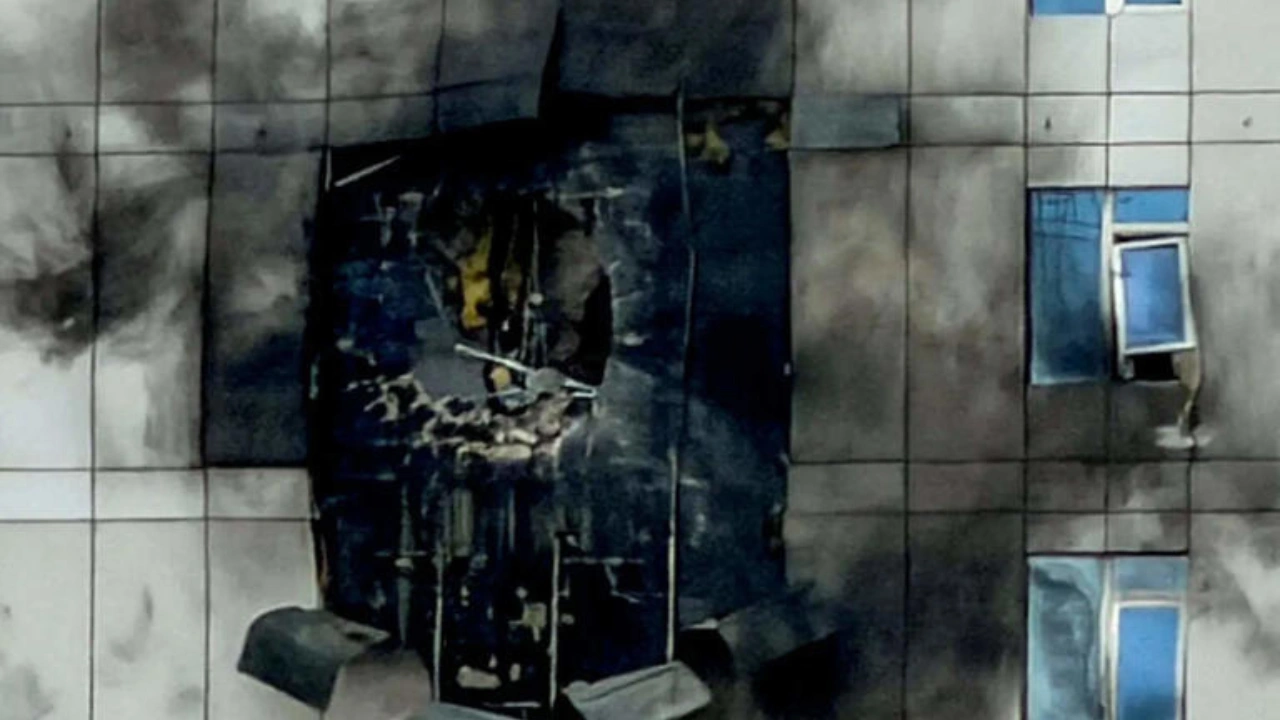
The regional tensions have already resulted in casualties. Bahraini authorities confirmed that a 29-year-old woman was killed and eight others injured after a strike hit a residential building in the capital city of Manama.
The strike reportedly caused significant damage to the building and nearby infrastructure.
Earlier, another drone attack targeted the island of Sitra, leaving two people injured, including children.
Bahrain Claims Interception of Missiles and Drones
In response to the ongoing attacks, the Bahrain Defence Force said its air defence systems have successfully intercepted a large number of incoming threats.
According to officials, 105 missiles and 176 drones allegedly launched by Iran have been neutralised by Bahraini defence systems.
Military authorities described the attacks as “heinous” and said their defence systems remain on high alert to respond to further threats.
Escalation Across the Gulf Region
The conflict has expanded beyond Bahrain, affecting several countries across the Gulf.
In the United Arab Emirates, warning sirens were activated in Dubai after a suspected drone attack triggered a fire at the Ruwais Industrial Complex in Abu Dhabi.
Meanwhile, Saudi Arabia reported shooting down two drones over its eastern region.
Security forces in Kuwait also intercepted six drones, while Qatar confirmed that its armed forces blocked a missile aimed at the country.
Qatar’s Foreign Ministry spokesperson Majed al-Ansari said that while Doha remains committed to diplomacy, any aggression against the country would be dealt with firmly.
Impact on Global Energy Markets
The growing conflict is also affecting global energy supplies. Several energy installations in the Gulf region have come under pressure as attacks target oil and fuel infrastructure.
The strategic maritime route Strait of Hormuz—through which a large portion of global oil shipments pass—has been severely disrupted.
In Qatar, difficulties in transporting oil and gas through the strait have forced partial production halts.
Energy companies have also been impacted. Bahrain’s national oil company Bapco has reportedly declared force majeure following repeated strikes on its facilities.
Meanwhile, Saudi Arabia’s Shaybah Oilfield—which produces nearly one million barrels of oil per day—has also faced increasing pressure amid the escalating conflict.
Oil Prices Surge Amid Conflict
The rising tensions have triggered volatility in global oil markets.
The benchmark Brent Crude price surged to nearly $120 per barrel earlier in the week before settling around $90, representing a 24% increase since the conflict intensified on February 28.
US and Iran Exchange Warnings
Amid the escalating tensions, Donald Trump warned that the United States would dramatically escalate its military response if Iran attempted to block shipping routes in the Strait of Hormuz.
Trump stated that any interference with oil transport would result in the US striking Iran “twenty times harder” than previous attacks.
In response, Ali Mohammad Naini, speaking through Iranian state media on behalf of the Islamic Revolutionary Guard Corps, declared that Iran would ultimately decide when the conflict ends.
With attacks spreading across multiple countries and energy infrastructure under threat, the situation in the Gulf region remains extremely volatile.
About the Author