Indian-Origin US Soldier
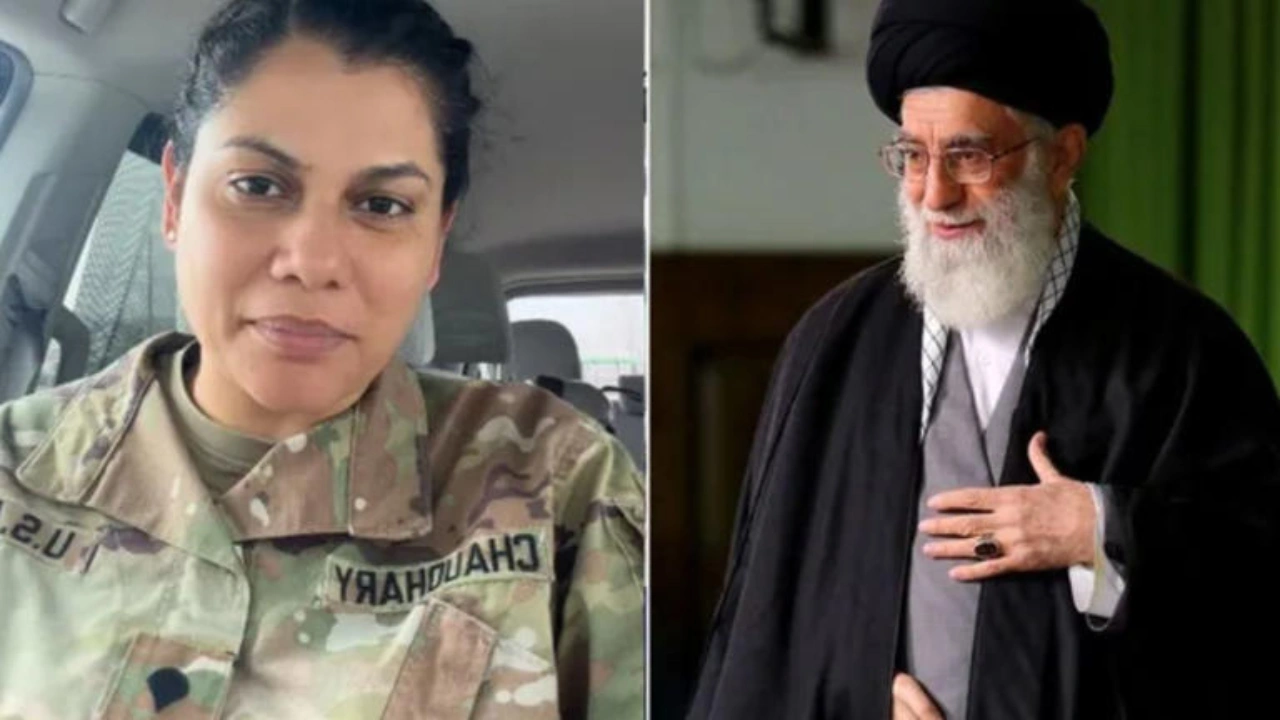
An Indian-Origin US Soldier serving in the United States military has sparked a debate online after criticising protests in India following the reported killing of Iran’s Supreme Leader Ali Khamenei in a joint strike carried out by United States and Israel.
The woman, identified as Shilpa Chaudhary, shared a video message on Instagram in which she questioned the purpose and impact of demonstrations taking place in different parts of India after the incident. Her remarks have triggered strong reactions on social media, with some supporting her views while others disagree with her criticism.
Criticism of protests in India
In her video message, Chaudhary said she was concerned about the way protests over Khamenei’s death were affecting India’s image internationally. According to her, the demonstrations—some of which reportedly involved disruption of public spaces—could create a negative perception of the country abroad.
View this post on Instagram
She stated that from her perspective outside India, the protests appeared unnecessary and could make Indians the subject of global ridicule. Chaudhary said she wanted to ensure that India’s reputation as a respected nation was not harmed by actions that might appear destructive or politically unclear.
Chaudhary emphasised that her comments were not intended to target any particular religion or community. Instead, she said she was questioning the purpose of protests that involve damaging public property or causing unrest.
Questions about the goal of demonstrations
In her statement, the US-based soldier asked protesters to think about what exactly they expected the Indian government to do regarding the killing of Khamenei, which occurred outside India.
She questioned whether demonstrations directed at local authorities would have any practical impact on the geopolitical situation in the Middle East. According to Chaudhary, protests that disrupt daily life without a clear demand or objective may not bring meaningful change.
She also asked demonstrators to consider whether their actions were helping their communities or simply creating tension. Chaudhary said people should reflect on whether their protests would lead to any concrete outcome or policy decision from the government.
Comments on global reactions
Chaudhary further claimed that reactions in Iran itself were mixed following Khamenei’s death. She suggested that some Iranian citizens, particularly women, were seen celebrating the development on social media platforms.
Based on this, she argued that if Khamenei had been universally admired within Iran, such reactions might not have occurred. However, these claims remain part of the broader online debate surrounding the political situation in Iran.
Appeal for national unity
In her message, Chaudhary urged Indians to think about the country’s global standing and maintain the respect India has earned internationally. She said that India is widely viewed as an influential and respected nation, and actions that create unrest or conflict could damage that image.
She also encouraged people to focus on supporting their own country and contributing positively to society. According to her, people should prioritise unity and constructive dialogue rather than protests that could escalate tensions.
Chaudhary concluded by appealing to citizens to reflect on the bigger picture and act in ways that strengthen India’s reputation rather than undermine it.
Background of the conflict
The controversy comes amid escalating tensions in the Middle East following the killing of Ali Khamenei in a reported strike involving the United States and Israel. The incident has significantly intensified the conflict between Iran and the allied forces, raising fears of wider regional instability.
The development has triggered strong reactions across several countries, including India, where some groups organised demonstrations expressing anger over the strike.
As geopolitical tensions continue to rise in the region, discussions on social media and public platforms have highlighted differing opinions on how people in other countries should respond to international events.
For now, Chaudhary’s comments have added another dimension to the debate, reflecting the diverse views within the global Indian community regarding protests, foreign policy, and national image.
About the Author