Donald Trump
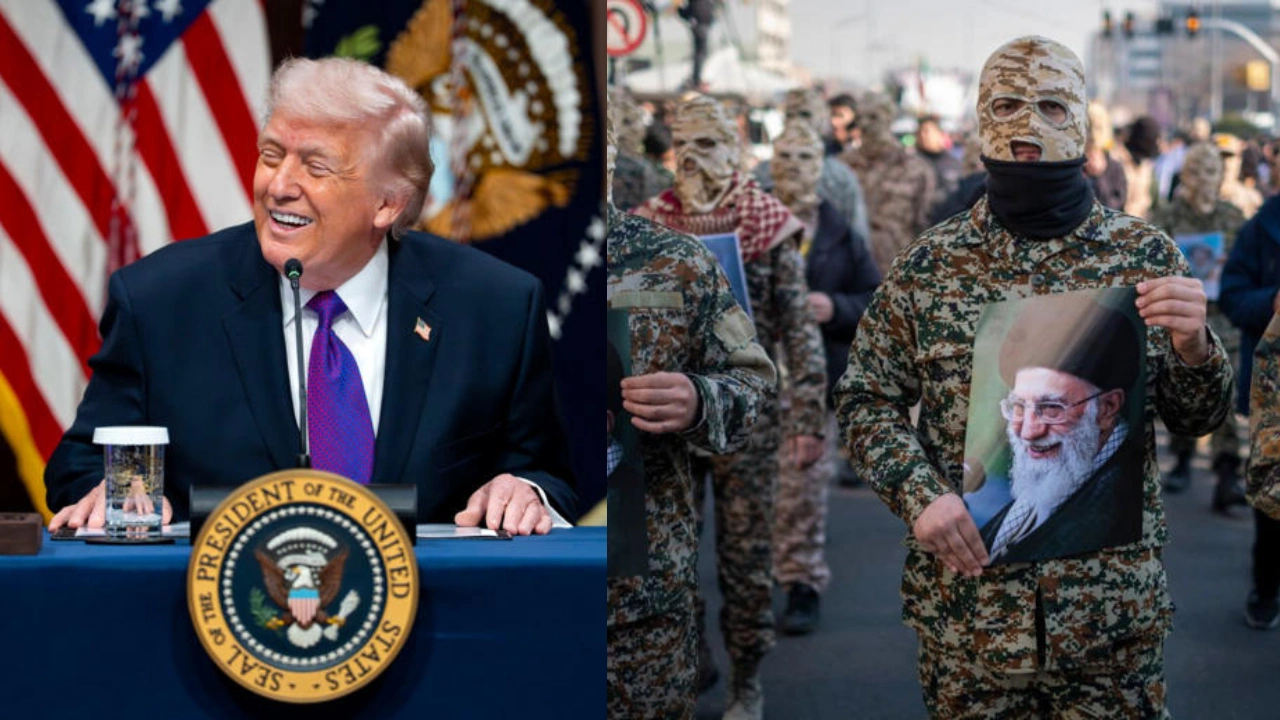
Tensions in the Middle East have escalated further after a senior Iranian religious leader issued a controversial statement calling for violence against former U.S. President Donald Trump. The remarks have intensified global concerns as the ongoing conflict involving Iran, Israel, and the United States continues to expand.
Iranian cleric Abdollah Javadi Amoli, who recently emerged as a prominent voice in the country’s leadership following the death of Iran’s supreme leader Ali Khamenei, delivered a fiery message during a broadcast on Iranian state television. In his speech, he urged supporters to stand united against what he described as “oppressive America,” using rhetoric that called for the shedding of the blood of both “Zionists” and Trump.
Amoli’s remarks are unusual even in Iran’s heated political environment, as senior religious leaders rarely make direct public calls that appear to encourage violence against specific foreign leaders. His comments have drawn sharp reactions internationally and have further raised the stakes in an already volatile regional conflict.
Escalating war in the region
The controversial statement comes amid an expanding war that began when the United States and Israel launched coordinated strikes against Iranian targets. The military operation reportedly focused on key leadership figures, missile facilities, and nuclear infrastructure inside Iran.
Officials involved in the operation suggested that weakening or potentially toppling Iran’s current government could be among the strategic objectives. The strikes triggered widespread retaliation from Iran and its regional allies.
The conflict has already caused significant casualties across multiple countries. According to official figures released by authorities in the region, more than 1,200 people have been killed in Iran. At least 70 people have died in Lebanon, while a smaller number of casualties have been reported in Israel.
Calls for wider confrontation
Online channels linked to the Islamic Revolutionary Guard Corps have also circulated messages urging supporters to carry out attacks against Western interests. Some posts reportedly called on sympathizers in countries including Iran, Iraq, Lebanon and Pakistan to target foreign embassies and assets belonging to nations involved in the conflict.
Such calls have raised concerns about the possibility of the war spreading beyond conventional battlefields into acts of violence targeting diplomatic or civilian sites.
Naval clash in the Indian Ocean
Another major flashpoint emerged earlier this week after the United States Navy sank an Iranian warship in the Indian Ocean. The vessel, identified as the Iranian frigate Dena, was reportedly carrying around 130 sailors when it was struck.
Iranian officials claim that at least 87 sailors were killed in the attack. The incident triggered a strong response from Iranian Foreign Minister Abbas Araghchi, who condemned the strike and described it as an “atrocity at sea.”
Araghchi said the ship had been operating in international waters and warned that the United States would eventually regret its actions. His statement further escalated tensions between the two countries.
Missile strikes and air raids
Meanwhile, Iran has launched a new wave of missile attacks targeting Israeli territory and American military bases in the region. The Iranian military confirmed that it had deployed its powerful Khorramshahr-4 missile, which reportedly carries a one-ton warhead and can be equipped with multiple warheads.
Air raid sirens were heard in major Israeli cities including Tel Aviv and Jerusalem as missile alerts were triggered.
Iran’s Revolutionary Guard also claimed that some of its attacks had targeted U.S. bases in countries such as Bahrain, Kuwait and the United Arab Emirates.
In response, Israel said it carried out additional strikes against military infrastructure in Tehran and operations targeting the Iranian-backed militant group Hezbollah in Lebanon.
Residents in Iran’s capital Tehran reported hearing multiple explosions shortly after the Israeli military announced its latest wave of attacks.
Uncertain future
With the death of Iran’s long-time supreme leader Ali Khamenei and the emergence of new voices within the country’s leadership, analysts warn that the region could face a period of instability. Some observers believe the leadership change could open the door to political transformation, while others fear it may create a dangerous power vacuum.
As military exchanges continue and political rhetoric intensifies, the international community is closely watching developments in the Middle East, concerned that the conflict could spiral into a much wider regional war.
About the Author