
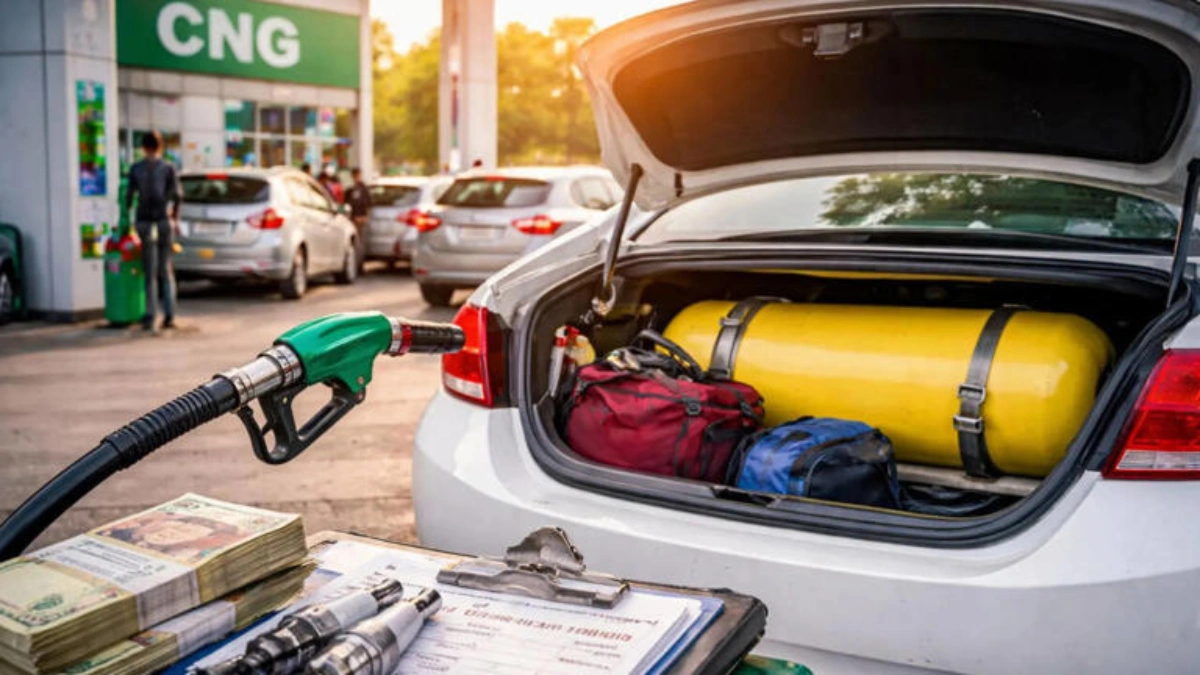
CNG Car
With fuel prices steadily rising, many car buyers are now considering CNG (Compressed Natural Gas) as a budget-friendly alternative. On the surface, it certainly looks like a smart choice—CNG can reduce running costs by up to 40–50% compared to petrol. However, the reality is not as straightforward as it seems.
CNG proves to be economical only when your usage is high. If you don’t drive frequently, the expected savings may not be as significant as advertised.
When Does CNG Actually Save Money?
CNG cars are most beneficial for people who drive regularly. If your monthly driving is around 1,000–1,200 km or more, then switching to CNG starts making financial sense. For example, someone who drives about 15,000 km per year can save over ₹1.5 lakh in fuel costs over five years compared to a petrol car.
This is why daily commuters, taxi drivers, and city users often prefer CNG vehicles—they maximize savings through consistent usage.
The Hidden Costs You Shouldn’t Ignore
While the running cost is lower, there are several hidden expenses that buyers often overlook.
First, the initial purchase cost of a CNG car is higher. Factory-fitted CNG variants typically cost ₹80,000 to ₹1 lakh more than their petrol counterparts. This means you’ll need time and sufficient usage to recover that extra investment.
Second, maintenance is not always as low as people assume. CNG engines operate at higher combustion temperatures, which can lead to faster wear and tear of components like spark plugs and air filters. As a result, servicing may be required more frequently.
Additionally, CNG systems have specialized filters that need periodic replacement. Every three years, the CNG cylinder must undergo mandatory hydro-testing for safety, which costs around ₹2,500 to ₹4,000. While this may seem minor, it adds to the long-term ownership cost.
Space and Practical Limitations
One of the biggest drawbacks of CNG cars is reduced boot space. The cylinder occupies a significant portion of the trunk, leaving limited room for luggage. This can be inconvenient for families or people who travel frequently.
Insurance premiums for CNG cars are also slightly higher due to the additional components installed in the vehicle.
Performance and Driving Experience
CNG cars generally deliver 10–15% less power compared to petrol vehicles. This difference becomes noticeable during overtaking or when driving with the air conditioner on.
Another practical issue is refueling. Unlike petrol pumps, CNG stations often have long queues, especially in busy cities. Waiting times can stretch up to 20–30 minutes or more.
Moreover, a full CNG tank typically offers a range of 200–250 km, which means you’ll need to refuel more frequently compared to petrol vehicles.
Resale Value Considerations
Resale value of CNG cars depends largely on location. In metro cities like Delhi and Mumbai, where CNG infrastructure is well-developed, resale demand is strong. However, in smaller towns with limited CNG availability, resale value may be lower.
Who Should Buy a CNG Car?
CNG cars are ideal for individuals who:
- Drive at least 40 km daily
- Have easy access to CNG stations
- Primarily use their car for city commuting
However, CNG may not be suitable for those who:
- Drive less than 800 km per month
- Frequently travel long distances on highways
- Require full boot space for luggage
CNG is undoubtedly cheaper to run, but it is not automatically the best option for everyone. If your usage is high, you can enjoy significant savings. But if your driving is limited, the higher upfront cost, maintenance needs, and practical compromises may reduce or even cancel out the benefits.
About the Author