French President Emmanuel Macron has announced a major shift in France’s nuclear strategy, revealing plans to temporarily deploy nuclear-armed aircraft to allied European nations and expand the country’s nuclear arsenal. The declaration marks one of the most significant adjustments to France’s defence posture in decades and reflects growing security anxieties across the continent.
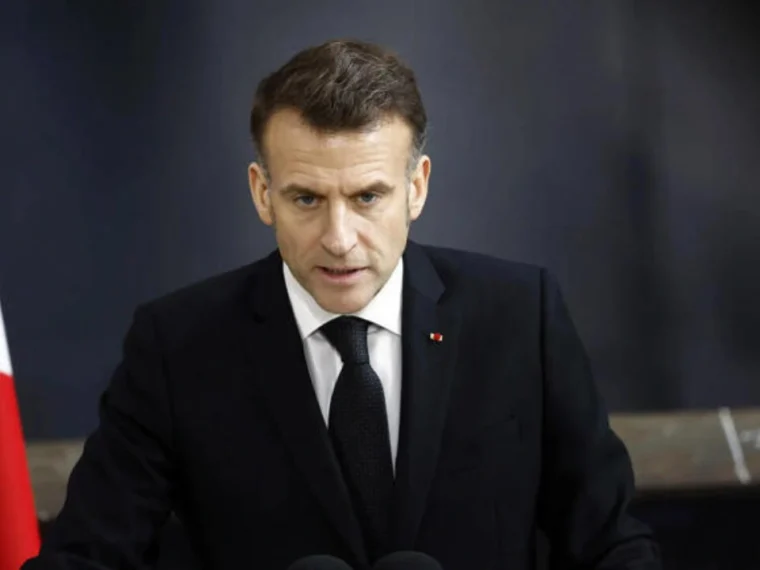
Speaking at a military base in L’Ile Longue, Macron framed the move as a necessary response to an evolving geopolitical environment shaped by Russia’s war in Ukraine and uncertainty in transatlantic relations. France, he stressed, must reinforce its deterrence capabilities not only for its own protection but also to strengthen European security autonomy.
A New Concept: ‘Forward Deterrence’
France has been the European Union’s only nuclear-armed state since the United Kingdom formally left the bloc in 2020. Macron reiterated that nuclear deterrence remains central to France’s national defence doctrine but introduced what he described as a new approach — “forward deterrence.”
Under this framework, France would permit temporary deployments of its strategic air forces — including nuclear-capable jets — to allied European territories. However, Macron was clear that any decision regarding the use of nuclear weapons would remain solely under French authority. The arrangement, he said, is intended to reinforce collective security without diluting France’s sovereign control over its arsenal.
According to Macron, discussions about deeper deterrence cooperation have already begun with key European partners, including Germany, Poland, and Netherlands. The initiative is being positioned as complementary to NATO’s existing defence framework rather than a replacement for it.
Expansion of France’s Nuclear Arsenal
In addition to the deployment plan, Macron revealed that France will increase the number of nuclear warheads in its stockpile, currently estimated to be under 300. If implemented, this would represent the first numerical expansion of France’s nuclear arsenal since at least the early 1990s.
“I have decided to increase the numbers of warheads of our arsenal,” Macron said, emphasizing that maintaining a credible and modern deterrent is his responsibility as head of state. He argued that the strategic landscape has shifted dramatically and requires updated capabilities to ensure long-term security.
Macron also delivered a stark warning intended to underscore the strength of France’s deterrent. “If we had to use our arsenal, no state, however powerful, could shield itself from it,” he stated, reinforcing the principle that nuclear deterrence is meant to prevent aggression through the certainty of devastating retaliation.
Support from European Leaders
European leaders have largely reacted positively to the announcement. In a joint statement, Macron and German Chancellor Friedrich Merz expressed their intention to deepen cooperation on deterrence matters, including expanded joint military exercises and strategic coordination.
The Dutch government acknowledged ongoing strategic consultations with France and indicated that enhanced cooperation would strengthen broader European defence capabilities within the NATO framework.
Polish Prime Minister Donald Tusk also welcomed the initiative, framing it as a necessary step toward collective security. He noted that closer defence alignment among European allies sends a strong signal of unity and preparedness.
Criticism from Disarmament Advocates
Not all reactions have been supportive. The International Campaign to Abolish Nuclear Weapons (ICAN) strongly criticized the move, warning that it risks fueling a renewed nuclear arms race in Europe.
Melissa Parke, ICAN’s executive director, cautioned that expanding nuclear capabilities and deploying them closer to Russia could heighten tensions and undermine global non-proliferation efforts. Critics argue that such actions may contradict broader international commitments aimed at reducing reliance on nuclear weapons.
A Strategic Turning Point
Macron’s announcement signals a potential turning point in European security strategy. As the continent grapples with ongoing instability and shifting alliances, France appears determined to position itself as a central pillar of European defence autonomy.
Whether the plan ultimately enhances deterrence stability or intensifies geopolitical friction remains to be seen. What is clear, however, is that France is preparing to play a more assertive nuclear role within Europe’s evolving security architecture.