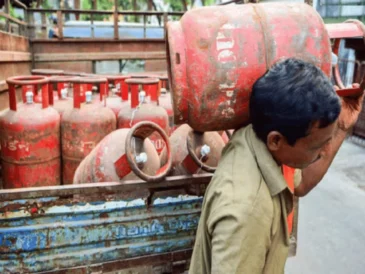
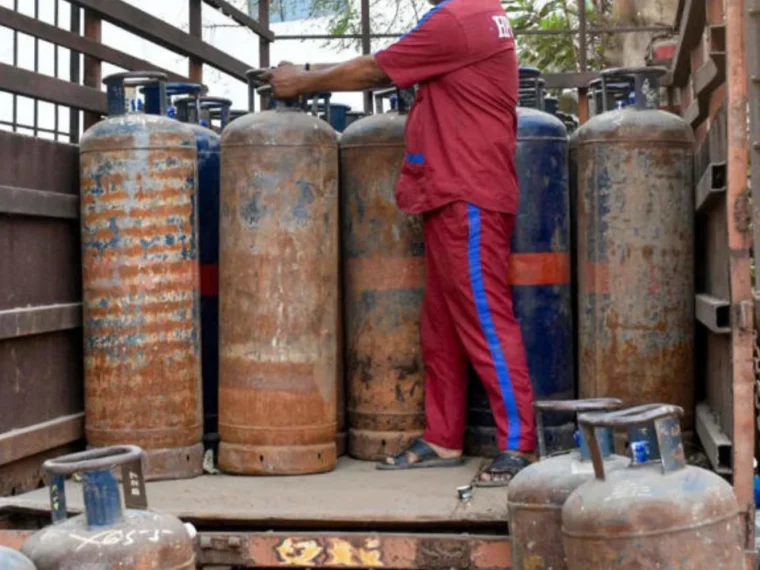
The ongoing LPG shortage in India is beginning to severely impact the hospitality sector, with restaurants and hotels struggling to keep their kitchens running. Amid the growing crisis, a restaurant owner in Delhi has announced the closure of his establishment, claiming that gas cylinders are being sold in the black market at extremely inflated prices.
The restaurateur, Gagandeep Singh Sapra, took to social media to highlight the difficulties faced by businesses due to the shortage of commercial LPG cylinders. According to him, the situation has become so dire that many restaurants are left with no choice but to temporarily shut down operations.
Restaurateur Alleges Black Marketing
In his social media post, Sapra claimed that the supply of commercial LPG cylinders has almost dried up in the market, while black market dealers are demanding more than ₹5,000 for a single gas cylinder.
We are shutting down too now – gas is finished, black marketeers are now asking for 5000+++ for gas cylinders, how do they have it in black if there is no supply for commercial is the big question, where are the so called ED / CBI? Who is the Babu / Neta that is backing up all… https://t.co/pKzmkL0AeL
— Gagandeep Singh Sapra (@TheBigGeek) March 11, 2026
“We are shutting down too now — gas is finished. Black marketeers are now asking for ₹5000+ for gas cylinders. If there is no supply for commercial cylinders, how do they have it in the black market? That is the big question,” he wrote in his post.
He also questioned the lack of action by enforcement agencies such as Enforcement Directorate and Central Bureau of Investigation, asking who might be backing such illegal black marketing activities.
His comments quickly gained attention online, as many people in the hospitality industry echoed similar concerns about the sudden shortage of LPG supplies.
Restaurants Facing Major Disruptions
The LPG shortage has begun disrupting restaurant kitchens across the country, particularly in the national capital. According to reports, several restaurants in Delhi currently have LPG stocks that may last only one or two days.
Many eateries have started reducing their menu options, while others are operating with limited kitchen hours to conserve fuel. Some establishments are also considering temporary closures if the supply situation does not improve soon.
Industry representatives say that the crisis is especially worrying for small and medium-sized restaurants, which rely heavily on daily LPG supply to run their kitchens. If the shortage continues, restaurant owners fear they may struggle to pay salaries to staff members.
Government Issues Advisory to States
Amid rising concerns over LPG availability, the central government has asked all states and Union Territories to closely monitor gas supplies and take strict action against those involved in illegal activities.
Officials said the government has advised authorities to track LPG distribution daily, curb rumours about shortages, and maintain law and order in case public anxiety grows.
The government also urged state administrations to ensure that supply chains remain smooth and that essential fuel reaches both households and commercial establishments.
India’s LPG Demand and Import Dependence
India consumes around 31.3 million tonnes of LPG annually, making it one of the largest users of liquefied petroleum gas in the world.
Approximately 87% of the LPG is used in domestic households, mainly for cooking, while the remaining supply goes to commercial establishments such as restaurants, hotels, and food businesses.
However, India depends heavily on imports to meet its LPG requirements. Nearly 62% of the country’s LPG demand is fulfilled through imports, largely from West Asian nations.
West Asia Crisis Impacting LPG Supply
The current supply disruption is largely linked to rising tensions in West Asia. Recent military confrontations involving Iran, Israel, and the United States have significantly affected global energy routes.
Following the attacks and retaliatory strikes, shipping activity through the strategically important Strait of Hormuz has been severely disrupted. This narrow maritime corridor is one of the world’s most crucial energy transit routes.
India receives nearly 85–90% of its LPG imports from West Asian countries, including Saudi Arabia and Qatar. Any disruption in this route directly impacts LPG supply in India.
Hospitality Sector Under Pressure
For India’s hospitality sector, which is still recovering from earlier economic shocks, the LPG shortage presents yet another challenge. If the supply situation continues to worsen, industry experts warn that many restaurants may face temporary shutdowns or financial losses.
Restaurant owners are now urging authorities to take immediate action to ensure the steady availability of commercial LPG cylinders and prevent black marketing that further worsens the crisis.