Balen Shah
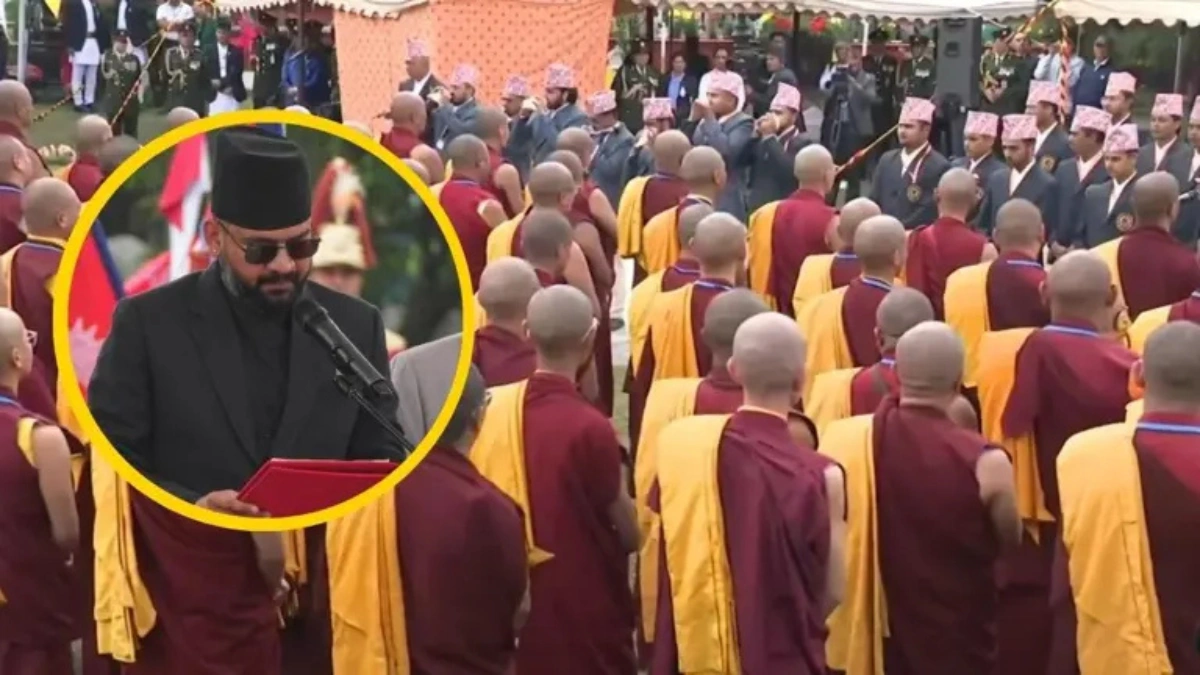
The oath-taking ceremony of Balendra Shah drew sharp attention as it blended state proceedings with elaborate Hindu and Buddhist rituals, raising concerns about secularism in Nepal.
As Shah approached the stage, the ceremony unfolded with conch shells, मंत्र chants, and synchronized rituals. Seven Brahmins performed ceremonial conch blowing, while 108 batuks (young novice priests) recited Swasti chants. Alongside them, 107 Buddhist monks chanted the Ashtamangala, creating a rare fusion of religious traditions during a state function.
The timing of the oath—12:34 pm—was deliberately chosen for its numerological sequence, believed by organizers to bring success and शुभ outcomes. Religious recitations continued throughout the swearing-in, blending spiritual symbolism with official governance procedures.
After taking his oath of secrecy, Shah administered the same to his Cabinet before formally assuming office later that afternoon. A day earlier, he had already been sworn in as a member of the House of Representatives.
Criticism over secular values
The ceremony quickly triggered backlash from academics and civil society voices. Critics questioned whether such overt religious symbolism aligns with Nepal’s constitutional identity as a secular republic.
Political science professor Sucheta Pyakuryal argued that governance in a secular democracy should remain independent of religious influence. She warned that such displays risk alienating minority communities, especially in a diverse society.
Anthropologist Dinesh Pant also raised concerns, suggesting the ceremony reflected a growing dominance of Hindu symbolism in public institutions. He cautioned against trends resembling religious nationalism seen elsewhere in the region.
From outsider to Prime Minister
Shah’s rise has been anything but conventional. Known for his background in rap battles and engineering, he first gained popularity through underground music before entering politics.
In 2022, he shocked the establishment by winning the Kathmandu mayoral election as an independent candidate. Four years later, he has emerged as one of Nepal’s youngest prime ministers.
After initially declining an interim leadership role following political unrest, Shah strategically positioned himself for long-term leadership. His decision to join the Rastriya Swatantra Party in January 2026 marked a turning point.
Launching his campaign from Janakpur, he contested from Jhapa-05—considered a stronghold of KP Sharma Oli—and secured a decisive victory, signaling a major shift in Nepal’s political landscape.
About the Author