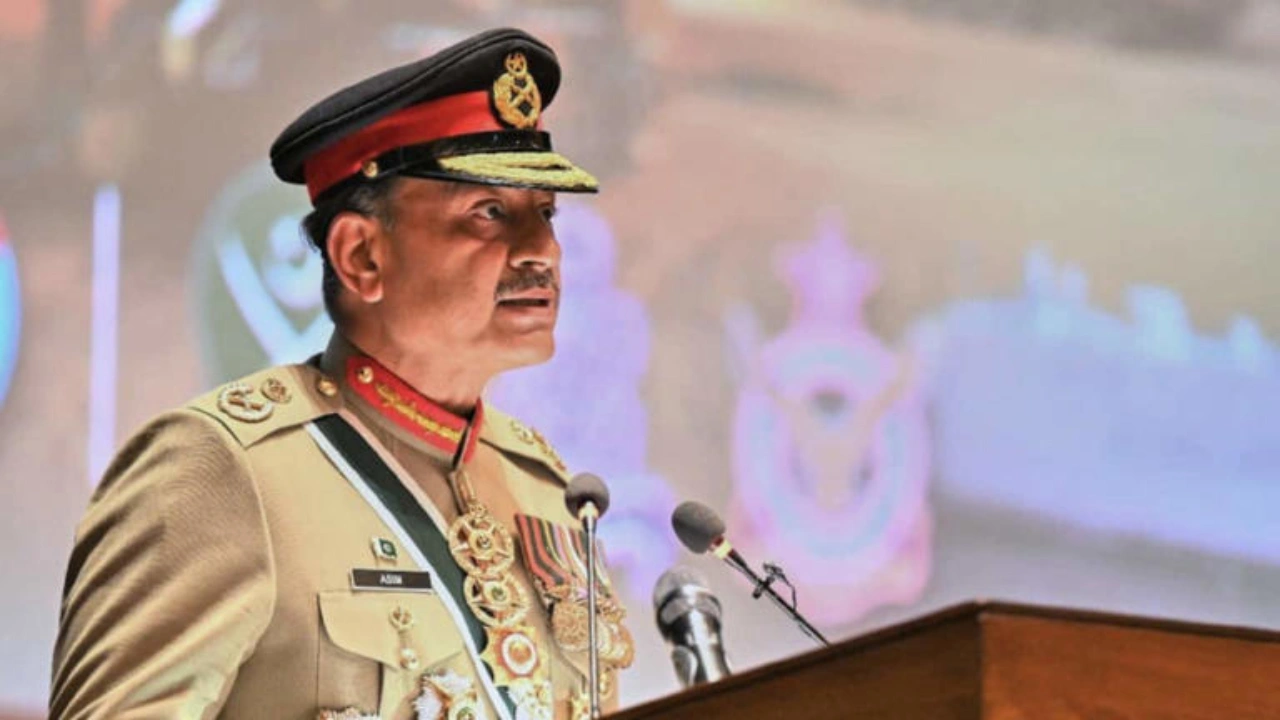
Asim Munir
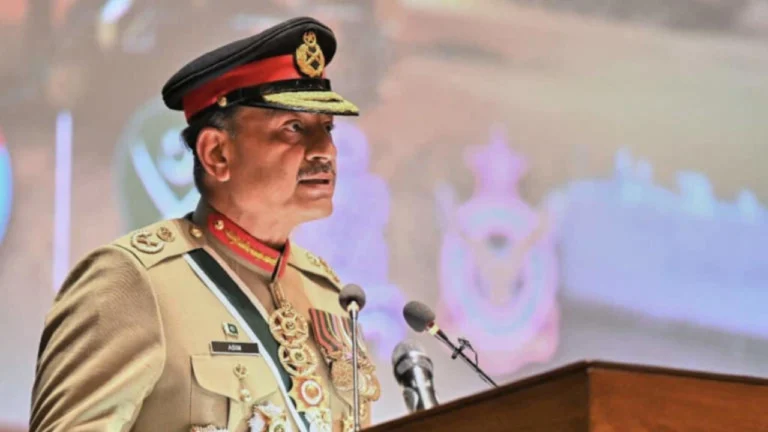
Pakistan Army Chief Asim Munir has issued a strong message to citizens, warning against any violence داخل the country linked to ongoing tensions in West Asia. His statement comes in the aftermath of widespread protests that erupted across Pakistan following recent US-Israeli military actions against Iran.
Speaking during an interaction with religious scholars (ulema) in Rawalpindi, Munir made it clear that Pakistan will not allow internal unrest triggered by events taking place beyond its borders. According to a statement released by the Inter-Services Public Relations (ISPR), the army chief emphasized that maintaining law and order within Pakistan remains a top priority.
“Violence in Pakistan, on the basis of incidents occurring in another country, will not be tolerated,” Munir said, sending a firm signal to groups attempting to mobilize protests over the Iran conflict.
The remarks come nearly two weeks after Pakistan witnessed large-scale demonstrations in several cities, particularly in response to the reported killing of Iran’s Supreme Leader Ayatollah Ali Khamenei. Protesters took to the streets in solidarity with Iran, condemning the actions of the United States and Israel.
In one of the most intense episodes, hundreds of demonstrators marched toward the US consulate in Karachi, leading to violent clashes. Reports suggest that at least 22 people lost their lives during these protests, while many others were injured. The unrest was not limited to Karachi alone—regions like Gilgit-Baltistan also saw significant violence, where thousands reportedly attacked United Nations offices, resulting in further casualties.
Amid these developments, Munir also highlighted Pakistan’s ongoing diplomatic efforts to ease tensions in the region. He stressed the importance of dialogue and de-escalation, noting that Pakistan is actively working to prevent the conflict from spiraling further.
At the same time, the army chief underlined the crucial role of ulema in maintaining social harmony. He urged religious leaders to promote unity and tolerance, and to actively counter misinformation, sectarian narratives, and what he described as “externally sponsored destabilisation efforts.”
The situation has placed Pakistan in a complex and delicate position. On one hand, there is growing public anger and sympathy for Iran among sections of the population. On the other, the government must carefully manage its diplomatic relationships, particularly with global and regional powers.
The killing of Ayatollah Khamenei has further intensified this challenge, as Pakistan tries to balance domestic sentiment with its foreign policy priorities. The country has recently seen improving ties with the United States under Donald Trump, making the situation even more sensitive.
Adding to the complexity is Pakistan’s strategic defence agreement with Saudi Arabia, signed last year. Under this pact, any aggression against one nation is considered an attack on both, potentially obligating Pakistan to support Saudi Arabia in the event of a broader regional conflict.
At the same time, Pakistan is trying to avoid being drawn directly into the Iran conflict. Officials are walking a tightrope—signaling support for allies like Saudi Arabia while also pushing for diplomatic solutions to prevent further escalation.
Beyond geopolitical concerns, Pakistan is also dealing with internal challenges. The country is already facing a tense security situation along its border with Afghanistan, along with mounting economic pressures. The instability in West Asia has added to these financial strains, particularly due to rising energy costs and disrupted trade dynamics.
In this context, Munir’s warning reflects a broader effort by Pakistan’s leadership to maintain internal stability while navigating a highly volatile regional environment. His message underscores that while global events may influence public sentiment, domestic peace and security cannot be compromised.
About the Author