
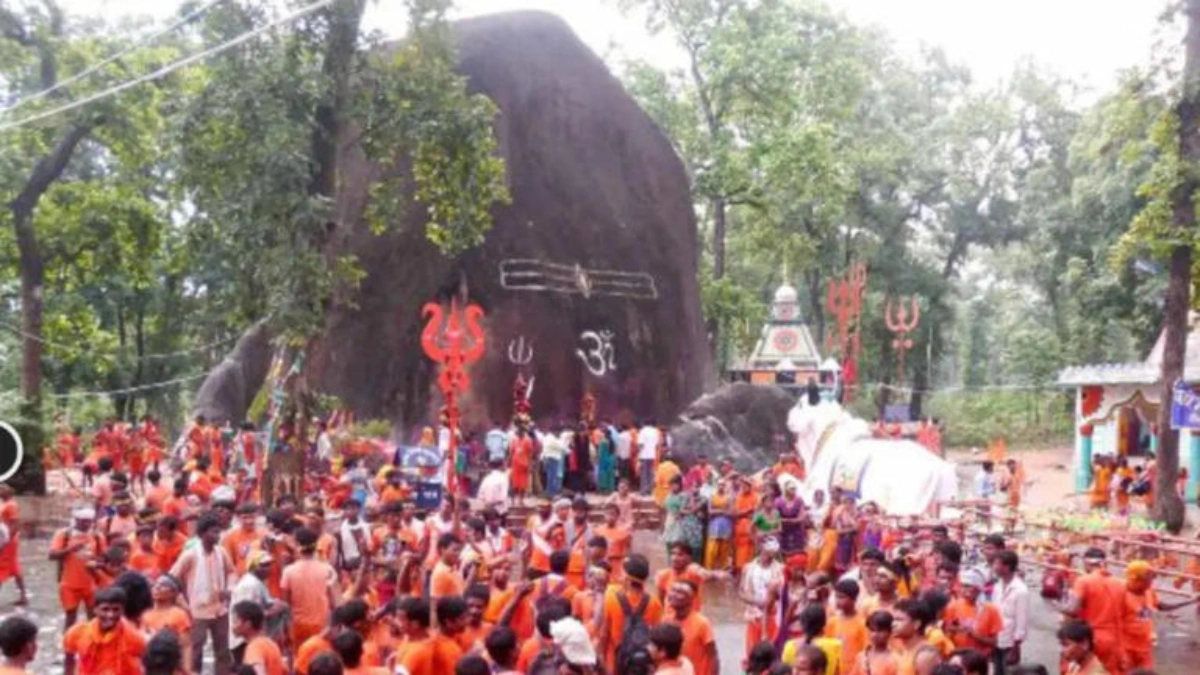
Bhooteshwarnath Temple
Bhooteshwarnath Temple: Hidden within the lush, forested landscape of Gariaband district lies a unique spiritual site that continues to intrigue both devotees and curious travelers alike. The Bhooteshwarnath Temple is not renowned for grand architecture or intricate carvings, but for a rare and fascinating phenomenon at its heart—a naturally formed Shivling that is believed to increase in size year after year.
Surrounded by dense greenery near Maroda village, this temple has gradually evolved from a quiet local shrine into a widely discussed subject of faith and mystery. Unlike most Hindu temples where Shivlings are carefully sculpted by artisans, the Shivling at Bhooteshwarnath is considered to be self-manifested, or Swayambhu. This distinction alone sets it apart, but what truly captivates attention is the claim that its height and girth continue to grow annually.
According to local accounts and reports cited by district authorities, the Shivling is believed to expand by approximately 6 to 8 inches every year. Officials and temple committees are said to periodically measure its dimensions and maintain records of these observations. Interestingly, despite these claims, there is no widely accepted scientific explanation that validates the phenomenon. The absence of concrete evidence has only added to the intrigue, turning the site into a blend of spirituality and curiosity.
The official district information portal describes the Shivling as possibly the largest natural Shivalinga in the world, nestled amid scenic hills and forests. It also highlights an unusual contrast—while many ancient Shivlings across India are said to erode or shrink over time, the one at Bhooteshwarnath is believed to be doing the opposite. Some narratives even suggest that the increasing number of devotees visiting the shrine could be symbolically linked to its growth, reinforcing the idea of a living, divine presence.
For devotees, however, the question of scientific validation is secondary. The Shivling is revered as a living manifestation of Lord Shiva, embodying divine energy that continues to evolve. Pilgrims visiting the temple often describe a deep spiritual connection and consider witnessing the growing Shivling as a blessing in itself.
Like many ancient Indian temples, the origins of Bhooteshwarnath Temple are rooted in folklore rather than documented history. One popular legend tells the story of a zamindar named Shobha Singh, who lived centuries ago. It is said that he heard unusual sounds—resembling the calls of a bull and a lion—emanating from a mound on his land. When villagers investigated, they found no animals, but the site began to be regarded as sacred. Over time, the mound transformed into a place of worship and eventually came to be recognized as a Shivling.
Another fascinating aspect of the temple is its association with the concept of Ardhanarishvara, symbolizing the combined energies of Shiva and Parvati. This belief further enhances the spiritual significance of the shrine, making it a powerful representation of balance and cosmic unity.
Despite growing attention, the mystery surrounding the Shivling remains unresolved. Scientists and researchers have yet to provide a clear explanation for the reported growth. What persists instead is a blend of observation, faith, and repeated testimonies that continue to strengthen belief among followers.
In a country rich with spiritual heritage and unexplained phenomena, Bhooteshwarnath Temple stands out as a remarkable example where faith and mystery coexist. Whether one views it through a scientific lens or a spiritual perspective, the growing Shivling of Gariaband remains an enduring enigma—quietly rising amid the forests, drawing people closer to something beyond explanation.
About the Author