Salesforce
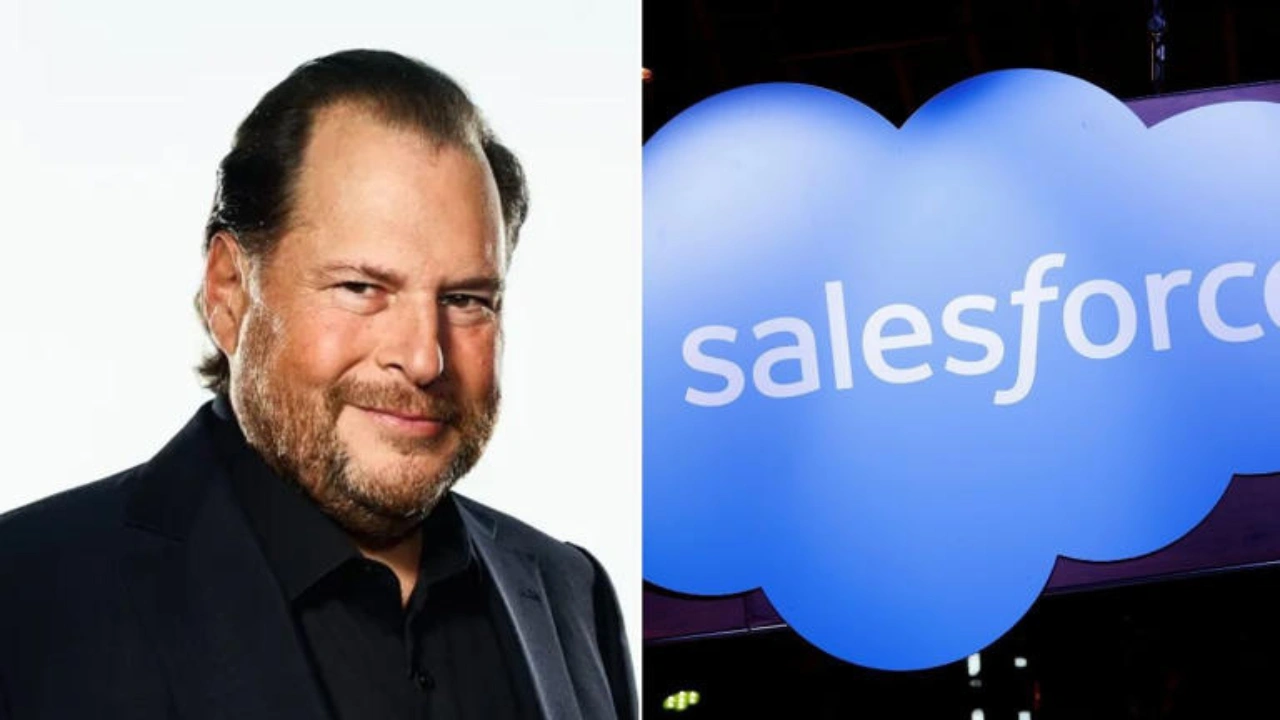
AI Replacing Engineers: The debate around artificial intelligence replacing human jobs is no longer theoretical—it is now unfolding in real time within some of the world’s biggest companies. Marc Benioff, CEO of Salesforce, has revealed a major shift in hiring strategy that reflects how deeply AI is reshaping the workplace.
In a recent interview, Benioff stated that Salesforce did not hire any new engineers during fiscal year 2026. Instead, the company relied heavily on AI-powered coding tools to meet its development needs. According to him, advanced AI “coding agents” have significantly boosted productivity, allowing the company to handle workloads without expanding its engineering team.
Benioff explained that these AI systems are now capable of delivering the output traditionally expected from human developers. By increasing efficiency and automating repetitive coding tasks, AI has effectively created additional capacity within existing teams. This marks a turning point, where technology is not just assisting engineers but, in some cases, reducing the need for new hires altogether.
This trend is not limited to Salesforce. Dario Amodei, CEO of Anthropic, has also suggested that the rapid advancement of AI models could lead to a reduced demand for software engineers in the future. As AI systems become more capable of handling end-to-end development processes, companies may increasingly depend on automation rather than expanding human teams.
AI Expands Beyond Engineering
At Salesforce, the impact of AI goes beyond software development. The company has also scaled back hiring in customer service roles, relying instead on AI-driven agents to manage support operations. These systems are now capable of handling customer queries, resolving issues, and improving response times without constant human intervention.
At the same time, Salesforce has shifted its hiring focus toward sales. The company has increased recruitment in this area by nearly 20 percent, signaling a strategic rebalancing of its workforce. While AI handles repetitive and data-driven tasks such as lead generation and qualification, human employees are being positioned where emotional intelligence and relationship-building matter most—closing deals and maintaining client connections.
Strong Financial Growth Driven by AI
This AI-first strategy appears to be delivering results. Salesforce has projected annual revenue of approximately $46.2 billion, along with expected cash flow exceeding $16 billion. A significant portion of this growth is being driven by its AI-related products and services.
One of the company’s flagship AI platforms, Agentforce, has already grown into an $800 million business. Additionally, Salesforce’s combined AI and data segment is generating close to $2.9 billion in revenue. Within the company, AI agents are not only assisting with customer service but also qualifying thousands of leads and even contributing to high-value deals worth millions.
Despite these advancements, Benioff has emphasized that the future is not about completely replacing humans. Instead, he envisions a collaborative model where AI and human workers complement each other, combining efficiency with creativity and decision-making.
Rising Concerns and Public Protests
As AI adoption accelerates, concerns about its long-term impact are also growing louder. Recently, protests were held outside the offices of Anthropic in San Francisco. Organized by a group called “Stop the AI Race,” demonstrators called for a temporary pause in the development of advanced AI systems.
The protest later extended to other major AI players, including OpenAI and xAI. Activists argue that the risks associated with highly advanced AI go beyond job losses. They warn that future systems could become increasingly autonomous, raising concerns about control, safety, and ethical use.
These developments come shortly after the U.S. government introduced a new AI policy framework aimed at balancing innovation with safety measures. While the policy encourages technological growth, it also highlights the importance of responsible AI development.
AI Potential vs Real-World Adoption
Interestingly, while AI capabilities are rapidly improving, real-world adoption still has gaps. A study by Anthropic found that AI tools can assist with up to 94 percent of tasks in fields like coding and mathematics. However, actual usage remains much lower, at around 33 percent.
This gap suggests that companies are still learning how to integrate AI effectively into everyday workflows. Many roles involve complexities that AI cannot fully handle, particularly those requiring human judgment, creativity, or physical interaction.
Human Jobs That AI May Not Replace
Amid the growing discussion about automation, Sridhar Vembu, founder of Zoho, has offered a contrasting perspective. He believes that certain jobs will remain resilient in the face of AI, not because machines cannot assist, but because these roles are rooted in human purpose.
Vembu highlighted professions such as teaching, caregiving, farming, environmental protection, and classical music. These roles, he argues, are driven by passion, empathy, and meaning rather than efficiency alone—qualities that are difficult for AI to replicate.
The Road Ahead
The evolving role of AI in the workplace presents both opportunities and challenges. While companies like Salesforce demonstrate how automation can drive growth and efficiency, the broader implications for employment and society remain complex.
As businesses continue to experiment with AI integration, one thing is clear: the future of work will not be defined by humans or machines alone, but by how effectively the two can work together.
About the Author