
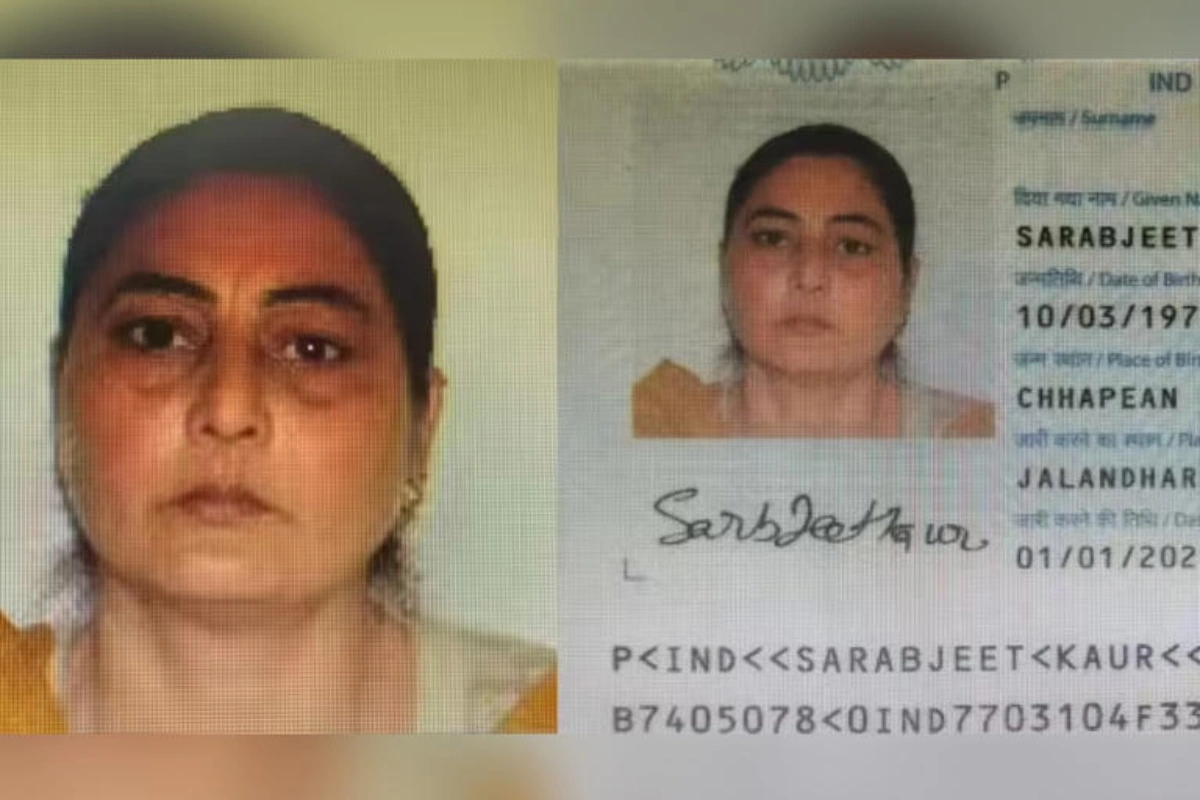
Sarabjit Kaur’s pilgrimage to Pakistan has turned into a high-profile cross-border case involving marriage, conversion, visa rules, and security checks. Kaur, a resident of Amanipur village in Punjab’s Kapurthala district, travelled to Pakistan on November 4, 2025, as part of a Sikh jatha visiting Nankana Sahib. While most pilgrims returned on November 13, she stayed behind — and is now set to be deported through the Attari–Wagah border after overstaying her visa.
Authorities in Pakistan detained Kaur earlier this month and later moved her to the Wagah border area, confirming that her single-entry religious visa had expired and could not be legally extended for marriage or residence.
Locals back home described Kaur as quiet and largely withdrawn, noting that she lived in a large house and rarely interacted socially. Officials later found that members of her family had previous criminal cases, raising questions about how her background clearance was approved for the pilgrimage.
During her stay, Kaur reportedly adopted the name Noor Hussain. Reports soon emerged that she had married a Pakistani man, Nasir Hussain from Sheikhupura district, shortly after arriving. A video of her nikah ceremony later surfaced online, where she claimed the marriage and conversion to Islam were voluntary.
Because her visa permitted travel only for religious purposes and carried strict dates, the marriage created legal complications. Pakistani police eventually arrested the couple, citing immigration violations. They remained out of sight for weeks before being traced near Nankana Sahib on January 4.
The couple approached the Lahore High Court at one point, alleging harassment and police pressure. The court instructed authorities not to intimidate them — but the visa breach still stood. Pakistani officials later said deportation was the only lawful solution, especially since immigration details such as passport information had gone missing.
Kaur’s absence first appeared in records as a missing case. Only later, when the marriage video surfaced, did the situation shift from a welfare search to a sensitive cross-border issue. Indian agencies are now reviewing how she cleared checks and why her exit details initially failed to register.
The case has triggered wider scrutiny of pilgrimage procedures. Officials are reassessing verification processes, documentation flows, and communication between agencies handling travel groups. Stricter rules and tighter monitoring for future religious delegations are likely outcomes.
Once handed over at the Attari-Wagah border, Indian authorities are expected to question Kaur about her travel, documents, and the circumstances that led to the visa violation. Parallel inquiries on both sides are anticipated as the case continues to unfold.