
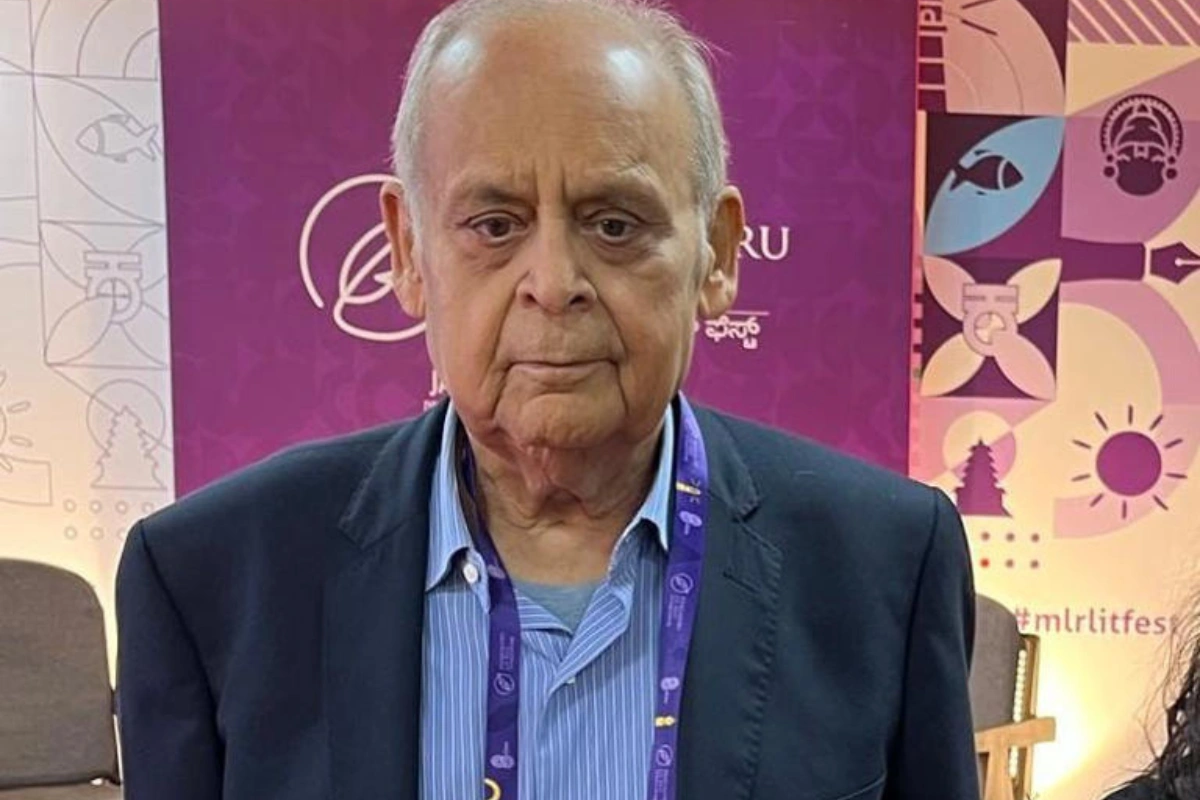
Former Research and Analysis Wing (RAW) chief Vikram Sood on Saturday asserted that lasting peace between India and Pakistan is not feasible unless there is a fundamental shift in Islamabad’s approach. Speaking at a session on global power dynamics during the Mangaluru Literature Festival, Sood stressed that India must prioritise strategic strength, military capability, and self-reliance rather than relying on dialogue that yields little outcome.
Sood said India’s past experiences have shown that compromise or negotiations with Pakistan offer limited benefits, as hostile policies and actions continue to persist. According to him, dialogue cannot succeed unless Pakistan abandons its entrenched stance and demonstrates a genuine commitment to peace. Without such a change, expectations of normalisation remain unrealistic.
Highlighting India’s regional role, Sood pointed out that New Delhi has often acted as a stabilising force in neighbouring countries during times of crisis. He cited India’s support to Sri Lanka and Bangladesh as examples of constructive regional engagement. However, he noted that such goodwill has rarely been reciprocated when India itself has faced security or strategic challenges.
The former intelligence chief also voiced criticism of what he described as excessive “global interventions,” particularly by the United States. He argued that international power dynamics are often shaped by national interests rather than principles, and countries must therefore safeguard their own strategic priorities instead of depending on external powers.
Emphasising the importance of strength in governance, Sood said that military capability and national power are essential for maintaining sovereignty and influence in global affairs. He drew a comparison with China, stating that its ability to challenge the economic dominance of the United States stems largely from its manufacturing independence and long-term strategic planning.
Sood further observed that despite the United States’ unmatched military strength, it has not achieved clear victories in conventional wars since the 1940s. This, he said, underlines the limits of military power when not supported by coherent political objectives and long-term strategies.
On India’s foreign policy, Sood advised a pragmatic approach towards major global players such as the United States and China. He said India should engage with these powers based on logic and national interest rather than expectations of support during critical moments. Strategic autonomy, he argued, remains key to India’s rise as a global power.
Referring to India’s recent military actions, Sood cited the Balakot airstrike and the Uri counterattack as examples of India’s growing strategic confidence and willingness to respond decisively to security threats. These operations, he said, reflect a shift towards a more assertive national security posture.
Concluding his remarks, Sood reiterated that peace with Pakistan cannot be achieved through dialogue alone. Until there is a visible and credible change in Pakistan’s policies, India must continue strengthening its defence capabilities, economic resilience, and strategic independence.