
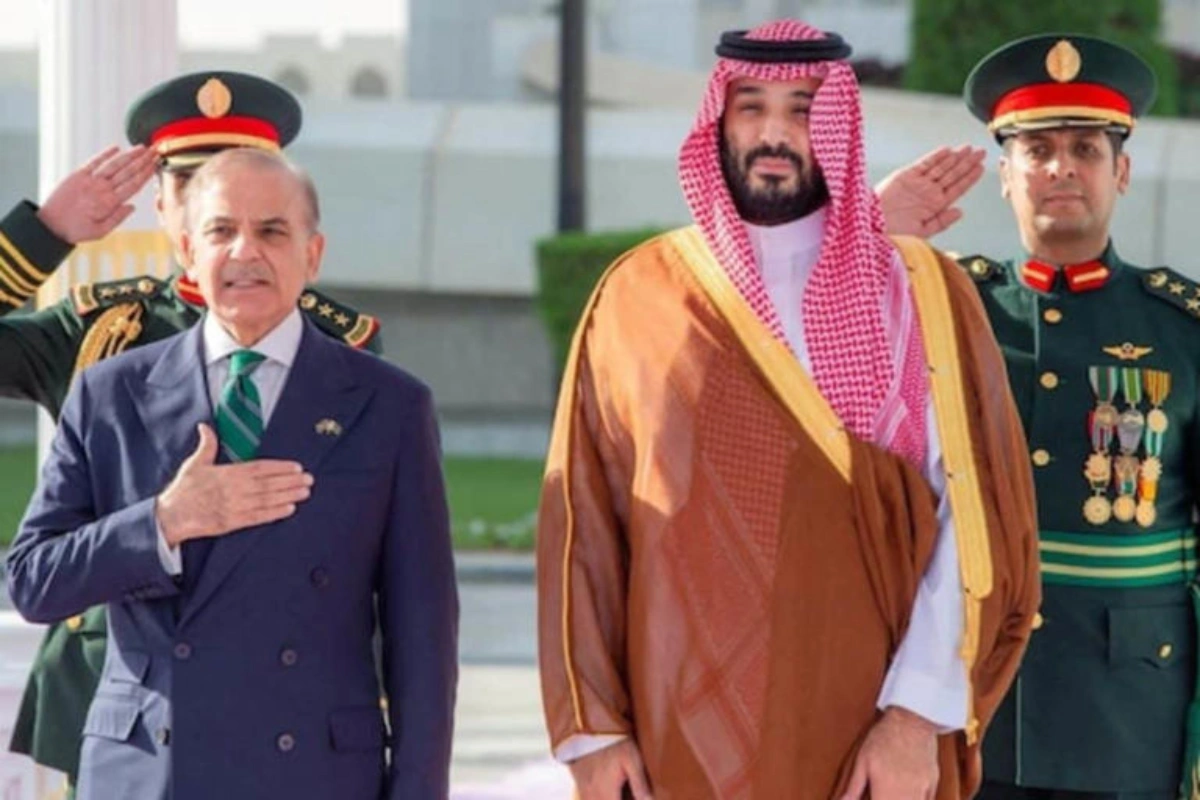
Pakistan, facing mounting financial pressure and limited capacity to service its external debt, is considering an unusual route to manage part of what it owes to Saudi Arabia. According to a Reuters report, Islamabad is in discussions with Riyadh to convert nearly $2 billion in Saudi loans into a defence transaction, potentially involving the supply of JF-17 Thunder fighter jets.
The move reflects the growing strain on Pakistan’s economy, which continues to battle low foreign exchange reserves, high inflation, and reliance on international bailouts. With cash repayments becoming increasingly difficult, Pakistani officials are reportedly evaluating alternatives that reduce immediate fiscal outflows while preserving strategic ties with key allies.
Saudi Arabia and China are among Pakistan’s largest bilateral creditors. While Pakistan remains under a $7 billion International Monetary Fund (IMF) programme, officials say traditional debt repayment methods are becoming harder to sustain. Against this backdrop, defence-based settlements are being discussed internally as a practical, if unconventional, solution.
JF-17 at the Centre of Talks
Reuters cited two Pakistani sources familiar with the matter who said the proposal centres on the JF-17 Thunder, a lightweight, multi-role combat aircraft jointly developed by Pakistan and China and manufactured by the Pakistan Aeronautical Complex. One source estimated the total value of the potential package at around $4 billion, with roughly half offsetting Saudi debt and the remainder covering weapons systems, avionics, spare parts, logistics support and pilot training.
The sources spoke on condition of anonymity, as the discussions are ongoing and have not been officially disclosed.
Deepening Defence Ties
The talks follow the signing of a mutual defence pact between Pakistan and Saudi Arabia in September 2025, a landmark agreement that significantly elevated their security relationship. Under the pact, both sides agreed to treat an attack on one as an attack on the other, formalising decades of close military cooperation.
The agreement came amid heightened regional instability in the Middle East, particularly after Israeli strikes targeting Hamas-linked sites unsettled the Gulf region. Since then, military coordination between Islamabad and Riyadh has intensified.
Pakistan Air Force chief Zaheer Ahmad Babar Sidhu recently visited Saudi Arabia for discussions on defence collaboration, a trip now being viewed as closely linked to the fighter jet negotiations. However, Pakistan’s military leadership and its finance and defence ministries declined to comment on the report. Saudi Arabia’s government media office also did not respond to Reuters’ queries.
Saudi Arabia Reassesses Defence Options
For Saudi Arabia, the potential deal comes at a time of strategic reassessment. Uncertainty surrounding the future role of the United States in the region has prompted Riyadh to diversify its defence partnerships. While Saudi Arabia is interested in acquiring advanced F-35 fighter jets from the US, the proposal faces opposition from Israel, leaving its prospects unclear.
In this context, platforms like the JF-17 offer a relatively cost-effective and quicker alternative to strengthen air power while reducing dependence on Western suppliers.
Pakistan’s Push as a Defence Exporter
Analysts note that Pakistan is increasingly positioning itself as a defence exporter rather than an aid-dependent economy. The JF-17’s lower cost, simpler maintenance requirements and claimed combat experience have boosted its appeal internationally.
Pakistan says the aircraft has been tested in combat situations, including during last year’s intense confrontation with India, the most serious escalation between the two nuclear-armed neighbours in decades.
Retired air marshal and defence analyst Aamir Masood told Reuters that Pakistan is either negotiating or has finalised defence deals with at least six countries. These include agreements involving fighter jets, weapons systems and electronic warfare equipment. Recently, Pakistan announced an arms deal worth over $4 billion with Libya’s Libyan National Army and has also held discussions with Bangladesh over potential JF-17 purchases.
Pakistan’s defence minister has argued that sustained growth in arms exports could help stabilise the economy and eventually reduce reliance on IMF support. Pakistan narrowly avoided default in 2023 with emergency funding from the IMF and financial backing from Gulf allies, particularly Saudi Arabia, which has repeatedly rolled over deposits to help Islamabad shore up its foreign reserves.