
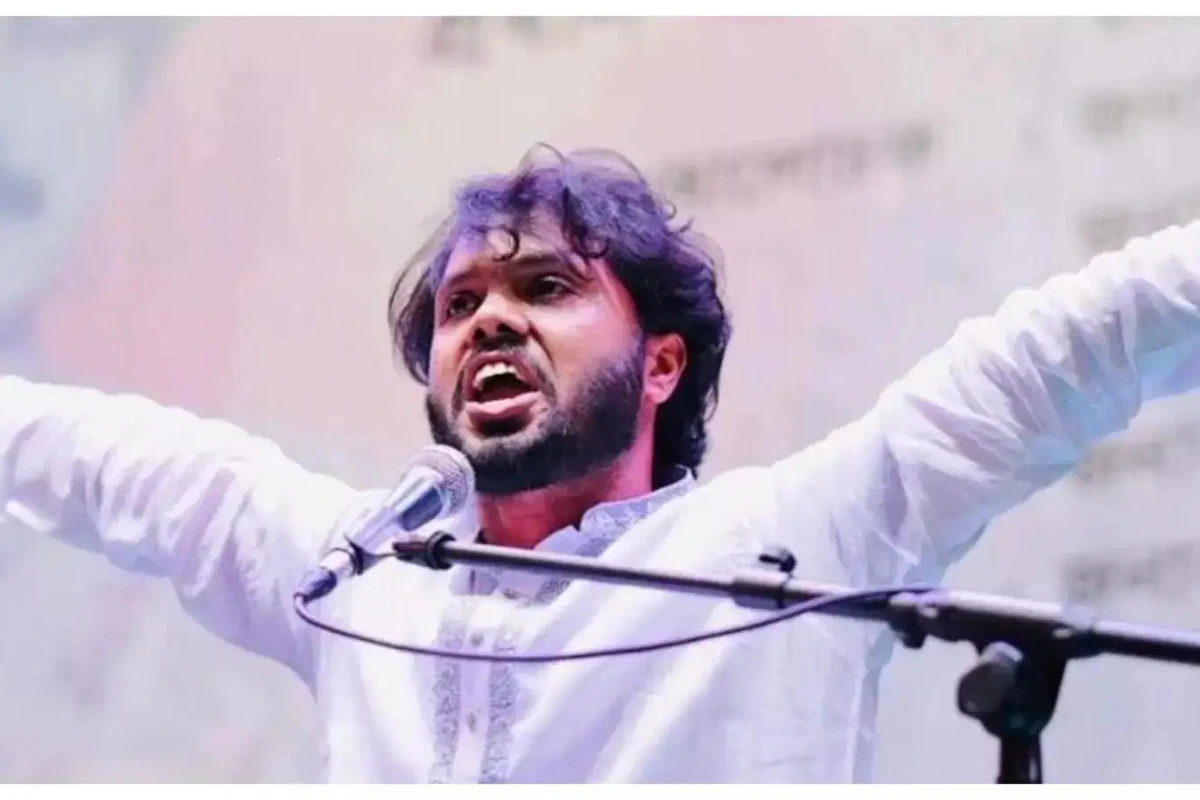
The death of Sharif Osman Hadi has become a flashpoint in Bangladesh’s fragile political transition, triggering protests and reigniting debates over radical nationalism and regional tensions. As news of his death was confirmed late Thursday, demonstrations broke out in several parts of Dhaka, highlighting the deeply divisive influence Hadi held during his lifetime.
Hadi, a senior figure linked to the controversial platform Inquilab Mancha, died in Singapore after succumbing to gunshot wounds sustained in an attack in central Dhaka earlier this month. His killing has unsettled the capital and intensified scrutiny of extremist politics at a time when Bangladesh is preparing for a crucial electoral phase.
Hadi rose to prominence during the student-led mass uprising of mid-2024, which ultimately led to the removal of long-time prime minister Sheikh Hasina. Within the movement, he became known as a hardline organiser who rejected compromise and favoured confrontational tactics. Inquilab Mancha, the group he helped shape, projected itself as a revolutionary force seeking to dismantle Bangladesh’s existing political structure.
While the movement initially drew support from widespread youth frustration and political disillusionment, critics warned that its rhetoric was becoming increasingly extreme. These concerns later led the interim administration to disband Inquilab Mancha, citing fears of radicalisation and threats to public order.
A defining aspect of Hadi’s political identity was his outspoken hostility toward India. He gained widespread attention for advocating the idea of a so-called “Greater Bangladesh,” a concept that provoked sharp reactions in New Delhi and unease within Bangladesh’s political establishment. Maps circulated online by Hadi’s supporters depicted parts of India’s northeastern region as Bangladeshi territory. Though dismissed by mainstream parties as unrealistic and provocative, the imagery resonated with a niche online audience and solidified Hadi’s image as a staunch anti-India ideologue.
Despite his organisation being banned, Hadi announced plans to contest the upcoming parliamentary elections as an independent candidate from Dhaka. The move was widely seen as bold and risky, given the tense political climate ahead of the February polls. He was attacked while campaigning in the heart of the capital, in an assault carried out by two bike-borne gunmen—an incident that immediately raised alarms about targeted political violence.
Following his death, unrest quickly spilled onto the streets. Protesters alleged that the attackers may have fled toward India, with slogans targeting New Delhi and demands for accountability echoing during demonstrations. Although no evidence has been presented to support these claims, the accusations strained diplomatic exchanges between Dhaka and New Delhi.
Interim leader Mohammed Yunus has cautioned that forces behind the killing may be attempting to destabilise the electoral process, urging restraint and calm. Nevertheless, the unrest underscores how deeply Hadi’s rhetoric has penetrated public discourse.
As Bangladesh moves closer to elections, Osman Hadi’s legacy—marked by radical symbolism, confrontation, and anti-India rhetoric—continues to shape an already uneasy political landscape.