
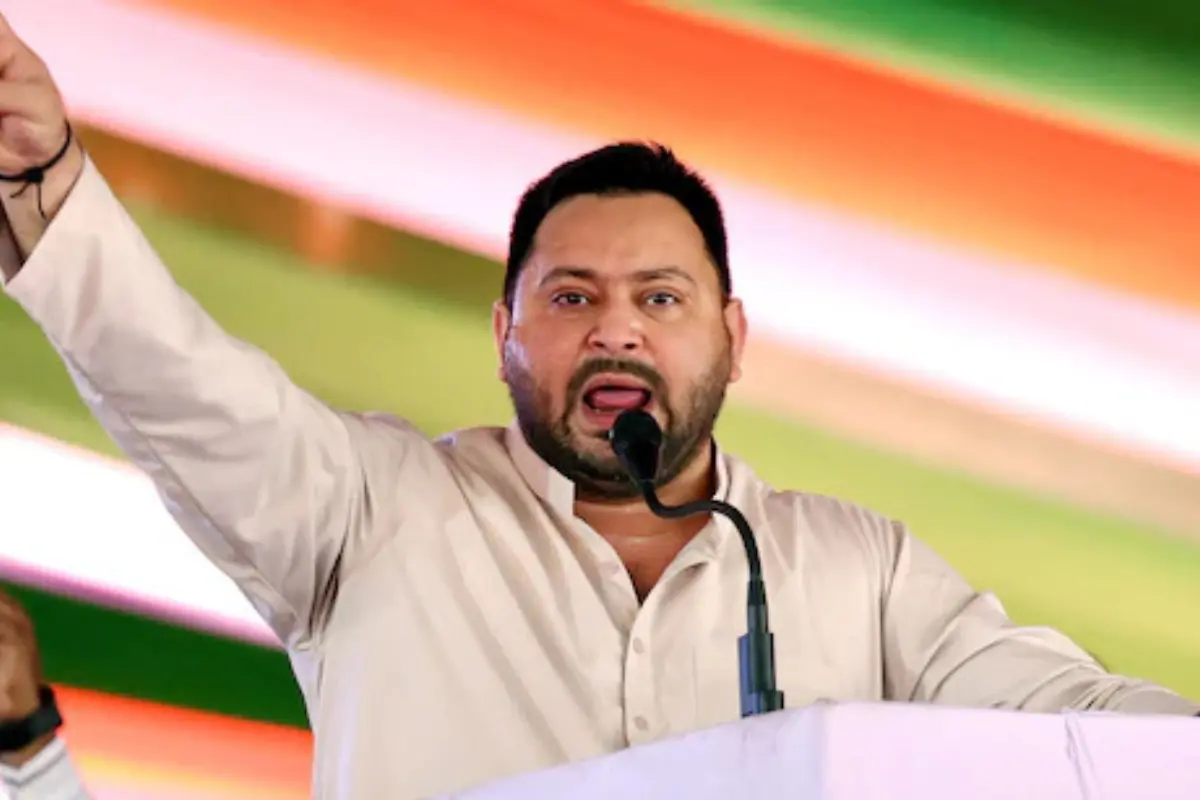
The Rashtriya Janata Dal (RJD) may have faced a disappointing outcome in the Bihar Assembly Elections by securing only 25 seats, but there’s a significant positive takeaway for Tejashwi Yadav. Despite the loss, the party has demonstrated that it still enjoys widespread support across the state.
Tejashwi, stepping firmly out of Lalu Prasad Yadav’s shadow, led a spirited campaign that attracted massive crowds. Although this public enthusiasm didn’t convert into winning seats, the RJD’s vote share tells a different story. The party emerged as the single largest vote-winner, surpassing both the BJP and JD(U), reaffirming its strong grassroots appeal.
RJD Leads in Vote Share Despite Low Seat Count
According to the Election Commission, the RJD contested 143 seats and received 23% of the total vote share—the highest for any individual party in this election. This marks only a slight decline from its 23.11% vote share in 2020, when it emerged as the single largest party with 75 seats.
In terms of actual votes, the RJD received around 1.15 crore (1,15,46,055) votes in the 2025 polls, highlighting its widespread acceptance even though the final results didn’t reflect this strength.
How Other Parties Performed
The BJP emerged as the largest party with 89 seats and secured 20.08% of the total votes (1,00,81,143 votes), slightly higher than its 19.46% in 2020.
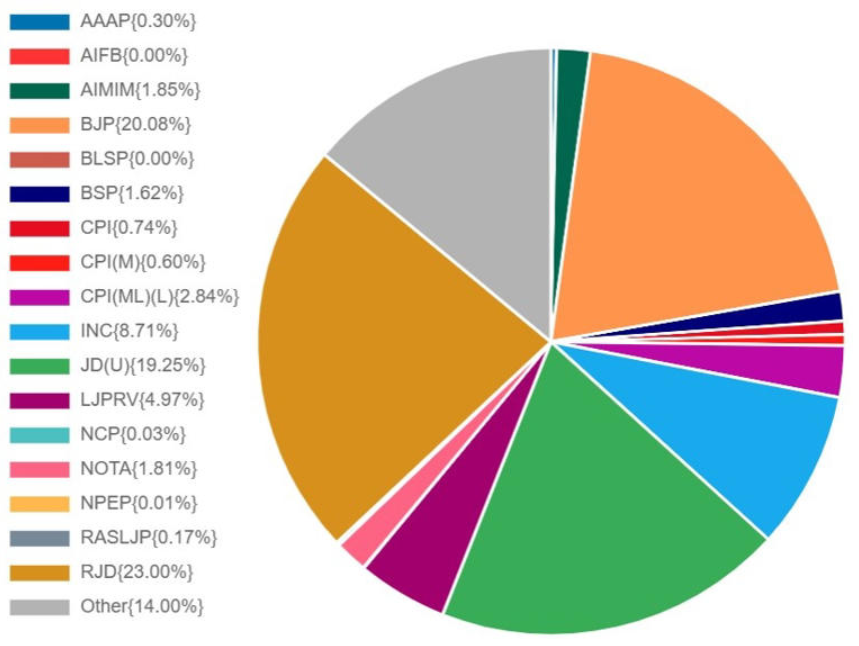
Its ally JD(U), led by Nitish Kumar, performed strongly by winning 85 out of 101 seats it contested. The party’s vote share rose significantly to 19.25% (96,67,118 votes), reflecting the Chief Minister’s continued hold over a section of Bihar’s voters despite years of anti-incumbency and criticism over political U-turns.
Together with other partners such as Chirag Paswan’s LJP, HAM (Secular), and RLM, the NDA’s combined vote share stood at approximately 46–47%, making it a formidable bloc.
In contrast, the Mahagathbandhan—comprising the RJD, Congress, VIP, and the Left parties—collectively secured 35.89% of the vote share. The underperformance of its partners impacted the overall alliance tally.
Why RJD Still Topped the Vote Share Charts
RJD’s high vote share stems from several key factors:
1. Vote Share Reflects Popularity, Not Seats
Vote share indicates how many people preferred a party, regardless of the final seat outcome. RJD’s strong 23% vote share proves that its popularity in Bihar remains resilient, despite the ‘jungle raj’ label historically associated with Lalu Prasad Yadav’s tenure.
2. Close Contests in Many Constituencies
In several seats, RJD candidates finished in second place with narrow margins. These votes contributed to the overall vote share but did not convert into victories.
3. Highest Number of Seats Contested
RJD fielded candidates on 143 seats, the highest among all parties. In contrast, both BJP and JD(U) contested only 101 seats each due to seat-sharing agreements. With 42 more seats in the race, RJD naturally accumulated more votes—even from losing candidates.
A Setback, Yet a Silver Lining for Tejashwi
While the 2025 election marks one of RJD’s weakest seat performances in over a decade (it had won just 22 seats in 2010), the vote share paints a more hopeful picture. Tejashwi Yadav may have fallen short in the numbers game, but the strong vote base suggests that a large section of Bihar still resonates with his leadership.
For RJD, the path ahead may require strategizing better alliance coordination and converting vote share into tangible wins—but the widespread support it enjoys remains a powerful foundation for the future.