
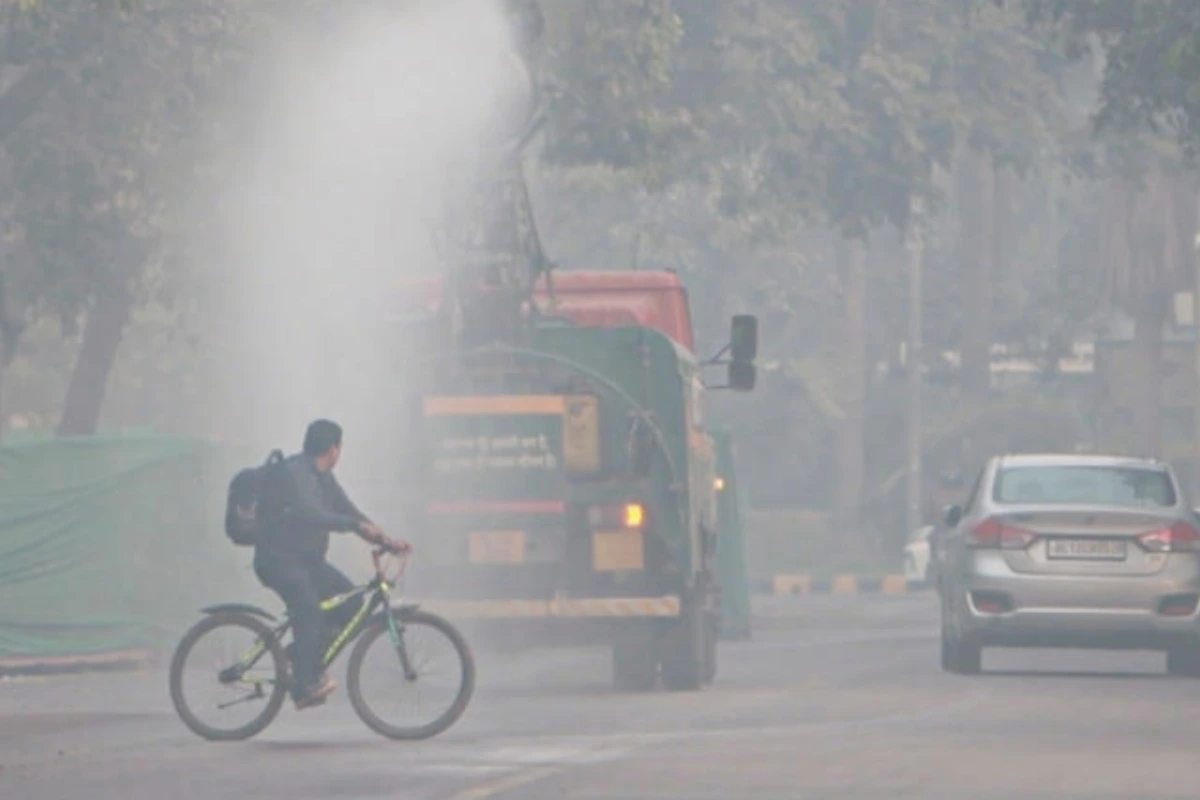
The Delhi government on Thursday announced strict workforce restrictions for both government and private offices, directing them to function at no more than 50% staff capacity while the remaining employees shift to work-from-home arrangements. The emergency measures fall under Stage III of the Graded Response Action Plan (GRAP) and were issued by the Department of Environment & Forests under Section 5 of the Environment (Protection) Act, 1986.
The directive comes as Delhi continues to battle alarming levels of air pollution, with concentrations of PM2.5 and PM10 soaring far above permissible limits. With the Capital designated as an air pollution control zone since 1987, authorities have been activating successive GRAP stages since mid-October based on directions from the Commission for Air Quality Management (CAQM).
50% LIMIT FOR GOVT AND PRIVATE OFFICES
According to the order, all government offices under the GNCTD must restrict physical attendance to half their workforce. Administrative Secretaries and Heads of Departments may call additional staff only for essential operations or public service delivery.
Private organisations across the city have been directed to follow the same 50% ceiling. They must also adopt staggered working hours, enforce robust work-from-home systems, and minimise employee-related vehicular movement—considered a key contributor to pollution during peak smog periods.
SUPREME COURT-BASED GRAP CHANGES
The latest curbs follow amendments introduced by the CAQM after Supreme Court hearings on November 17 and 19 in the M.C. Mehta air pollution case, along with stakeholder consultations held on November 20. As part of the revised action plan, the provision allowing 50% workforce attendance—previously listed under Stage IV—has been shifted to Stage III to allow quicker implementation during escalating pollution conditions.
L-G APPROVES STAGGERED HOURS
The workforce cap comes shortly after Delhi Lt. Governor VK Saxena approved staggered office timings for GNCTD departments and the Municipal Corporation of Delhi. Officials say the move is aimed at reducing peak-hour traffic congestion, a major contributor to vehicular emissions during severe pollution episodes.
EXEMPTIONS FOR ESSENTIAL SERVICES
Essential sectors including hospitals, fire services, prisons, public transport, water and electricity utilities, sanitation departments, disaster management agencies, and pollution control units are exempt from the 50% attendance rule.
STRICT MONITORING & PENALTIES
The order takes effect immediately and will remain active for as long as GRAP Stage III remains in force. District Magistrates, DCPs, and municipal bodies have been tasked with ensuring strict compliance across all offices.
Violations may invite penalties under Sections 15 and 16 of the Environment (Protection) Act, 1986, along with other relevant legal provisions.
The Environment Department has circulated the directive to all departments and instructed the IT Department to display the order prominently on the official Delhi government website.