
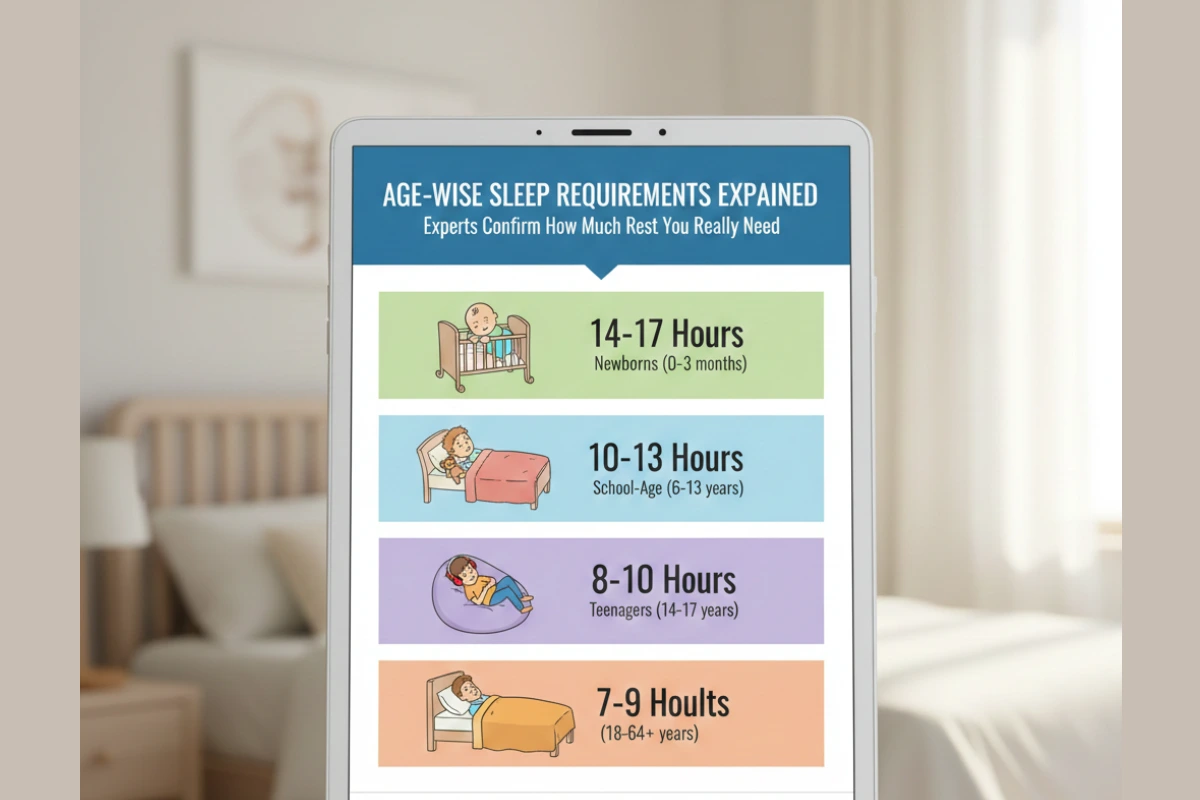
Age-Wise Sleep Requirements– According to Dr. Jagadish Hiremath, a public health expert, the figures shared by Dr. Sudhir align well with globally accepted guidelines. He confirms that major bodies like the American Academy of Sleep Medicine and the National Sleep Foundation endorse similar ranges.
Dr. Hiremath adds that although slight differences may appear across studies, the values shared represent sound averages. Factors such as genetics, daily routine, stress levels, and health conditions can cause individual needs to vary slightly.
Why Sleep Needs Decline With Age
Infants require significantly more sleep due to intense brain and body development. This period is crucial for memory building, neural growth, and strengthening the immune system.
“As children get older, the rapid pace of brain development slows down,” explains Dr. Hiremath. While sleep remains essential for learning and emotional balance, the number of necessary hours gradually decreases. By adulthood, the brain has structurally matured, and sleep primarily supports cognitive functioning, cellular repair, and emotional well-being.
Health Risks Linked to Lack of Sleep
Short-term sleep deprivation can result in:
-
Poor concentration
-
Slower reflexes
-
Mood swings
-
Reduced immunity
Long-term sleep deficits raise the risk of:
-
Hypertension
-
Heart disease
-
Type 2 diabetes
-
Obesity
-
Anxiety and depression
-
Neurodegenerative disorders such as Alzheimer’s
Ensuring Children and Teens Get Adequate Sleep
Health experts emphasize the importance of consistent routines. Parents and caregivers can support better sleep by:
-
Establishing a regular bedtime and wake-up schedule
-
Reducing screen exposure at least an hour before bed
-
Encouraging daytime physical activity
-
Creating a calm, dark, cool, and quiet sleeping environment
For teenagers, balancing academics, extracurricular activities, and rest is essential. Dr. Hiremath stresses that good sleep should be treated as a non-negotiable part of healthy development, just like studying or sports.