
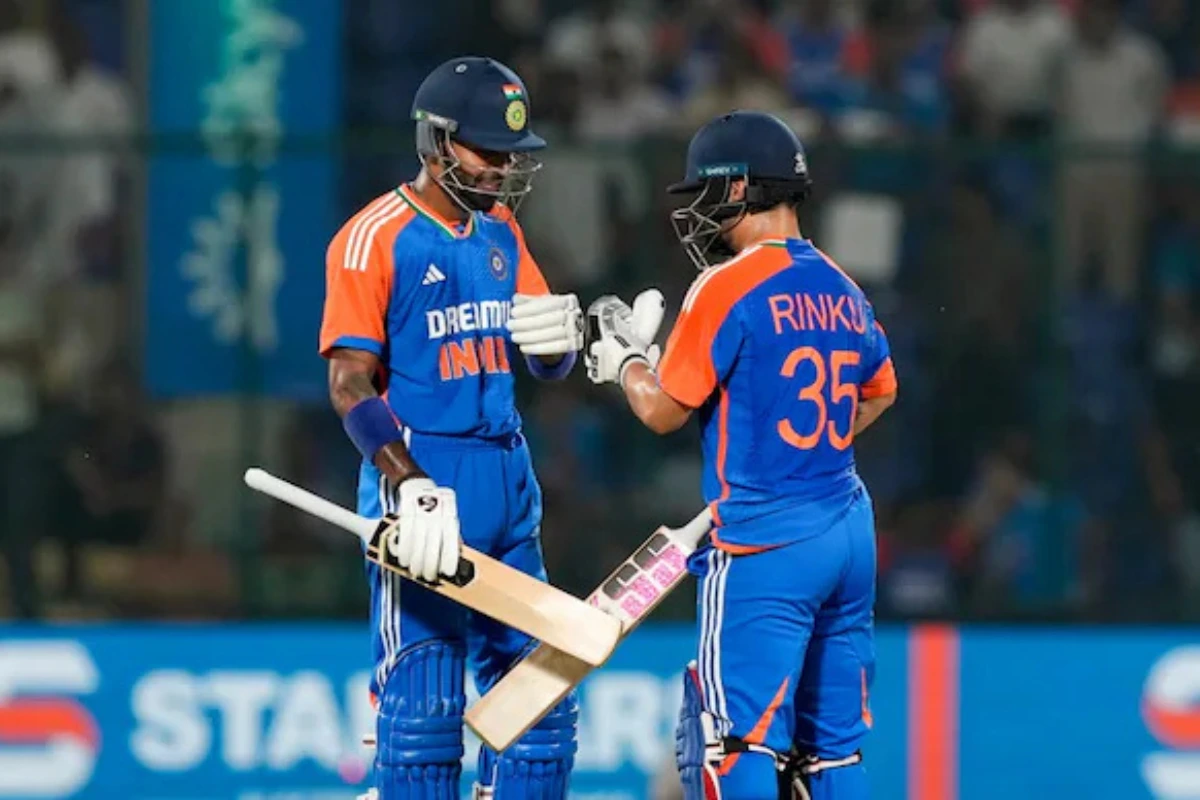
India’s T20 World Cup squad selection sent out a loud message: this team is built for relentless aggression. While leaving out Shubman Gill raised eyebrows, the more telling call was the return of Rinku Singh, a move that underlined India’s commitment to an all-out attacking blueprint.
By backing Rinku alongside Hardik Pandya, India have doubled down on power in the middle and lower-middle order. The idea is simple—there are no pauses, no consolidators, and no safe passages in this batting lineup. Every batter who walks in is expected to attack from ball one, blurring the traditional lines between top, middle, and finishing roles.
This approach resembles a football midfield stacked only with attackers—high risk, high reward, and built to overwhelm opponents.
🔥 A Finishing Partnership Built for Chaos
The pairing of Hardik Pandya and Rinku Singh promises controlled carnage at the death. Both are recognised as finishers, yet their batting abilities stretch far beyond slogging in the final overs. They are technically sound, adaptable, and capable of batting anywhere in the order—but in this setup, their job is clear: apply pressure immediately.
Their brief yet memorable stand against Sri Lanka last year, where they smashed 36 runs off just 21 balls, offered a glimpse of the damage they can inflict together. Tactical preferences and the team’s reliance on all-rounders meant Rinku often found himself sidelined, even carrying drinks or sitting unused in the dugout. But with his recall, India seem to have found the missing piece of the puzzle.
Just one right selection, like the final letter in a crossword, can complete the picture.
⚔️ Same Intent, Different Weapons
Though both are power hitters, Hardik and Rinku arrive at destruction via different routes.
Hardik Pandya’s recent form has been ruthless. Since returning from injury, he has hammered 142 runs in three innings at a strike rate touching 186. His six-hitting frequency—one every eight balls—is staggering, made more impressive by the low-risk nature of his approach. Flat-batted sixes, strong bottom hand, and precise down-the-ground hitting define his style. Bowlers must be flawless; even a millimetre of error can disappear into the stands.
Rinku Singh, by contrast, embraces risk a little more. His sixes travel higher, often clearing the leg side or sailing over extra cover. He is comfortable ramping, reverse sweeping, and opening his stance to create angles. While less bottom-hand dominant, Rinku’s numbers remain formidable—one six every eleven balls and a strike rate of 161.76 across 25 T20Is.
🧠 Masters of the Finish
Both batters have drawn inspiration from legendary Caribbean finishers. Andre Russell has praised Rinku’s calmness and adaptability, highlighting his readiness for every variation a bowler can throw. Similarly, Kieron Pollard has often spoken about Hardik’s unshakeable belief—his confidence to win matches from impossible positions.
Their personalities differ too. Hardik carries a quiet swagger, his celebrations now measured and restrained. Rinku bats with visible joy, a smile that widens with every boundary, sometimes spilling into exuberant celebrations. But once they settle in, both share the same effect—they drain confidence from bowlers in minutes.
🔑 Why This Duo Changes Everything
Perhaps the biggest impact of the Hardik–Rinku combination is psychological. When batters at the top know elite finishers are waiting, they play with greater freedom. That security allows India to maximize resources, stretch innings, and maintain pressure throughout the 20 overs.
In modern T20 cricket, templates are evolving fast. Hardik Pandya and Rinku Singh could well become the prototype finishing pair—two fearless hitters, different in style, united in intent, redefining how India closes games.