
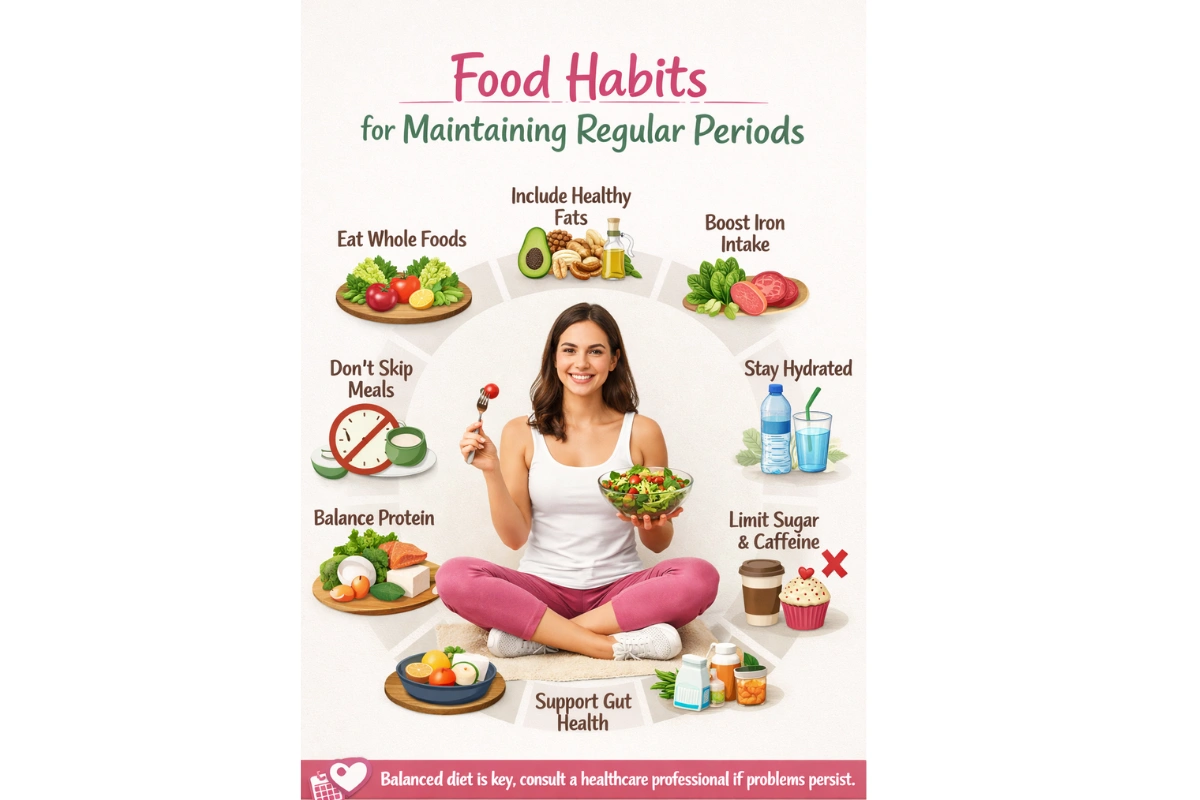
Balanced nutrition plays an important role in supporting hormonal health and maintaining regular menstrual cycles. While every woman’s body is different, adopting healthy food habits can help stabilize hormones, improve energy, and support overall reproductive wellness.
1. Prioritize Whole, Unprocessed Foods
Highly processed foods, refined sugars, and packaged snacks can disrupt blood sugar levels — which in turn affects hormones like insulin and estrogen. Building meals around whole grains, fresh fruits, vegetables, nuts, seeds, and lean proteins creates a steady foundation for hormone balance. Foods such as brown rice, oats, quinoa, seasonal fruits, leafy greens, and legumes supply fiber, antioxidants, and minerals that support the menstrual cycle.
2. Include Healthy Fats for Hormone Production
Hormones are partly made from fats, which means quality fats are essential. Avocados, olive oil, coconut, nuts, seeds, and fatty fish like salmon provide omega-3 and monounsaturated fats that support hormone regulation and reduce inflammation. Flaxseeds and chia seeds are especially beneficial because they contain plant compounds that may help balance estrogen levels naturally.
3. Eat Enough Iron-Rich Foods
Blood loss during menstruation can lead to reduced iron levels, resulting in fatigue, dizziness, and irregular cycles. Women should include iron-rich foods such as spinach, lentils, kidney beans, fortified cereals, pumpkin seeds, and lean meats if they are non-vegetarian. Pairing iron sources with vitamin-C-rich foods — such as citrus fruits, bell peppers, or tomatoes — can improve absorption.
4. Balance Protein Throughout the Day
Adequate protein helps stabilize blood sugar, supports metabolism, and fuels reproductive hormones. Adding moderate portions of eggs, tofu, paneer, yogurt, fish, or beans to meals helps maintain consistent energy and reduces cravings. Aim to include protein in each meal rather than relying on one large serving at dinner.
5. Stay Hydrated
Dehydration can worsen bloating, cramps, and fatigue and may indirectly contribute to cycle irregularities. Drinking enough water — typically 6–8 glasses daily depending on climate and activity level — helps circulation, hormone transport, and detoxification. Herbal teas like ginger, chamomile, or fennel can also be soothing.
6. Limit Caffeine and Excess Sugar
Too much caffeine can increase stress hormones, which may disrupt menstrual timing. Sugary drinks and desserts cause spikes and crashes in blood sugar that stress the endocrine system. Instead, choose fruit-sweetened snacks, dark chocolate in moderation, or homemade smoothies.
7. Support Gut Health
A healthy gut helps metabolize and eliminate excess estrogen. Adding fermented foods such as yogurt, kefir, sauerkraut, and buttermilk — along with fiber-rich vegetables — promotes better digestion and hormone clearance.
8. Don’t Skip Meals
Skipping meals can signal the body that it is under stress, potentially delaying ovulation and leading to irregular periods. Consistent, nourishing meals keep the body fueled and hormones stable.
Reminder: Diet alone cannot fix every menstrual issue. Persistent irregular periods, severe pain, or sudden changes should be discussed with a qualified healthcare professional.