
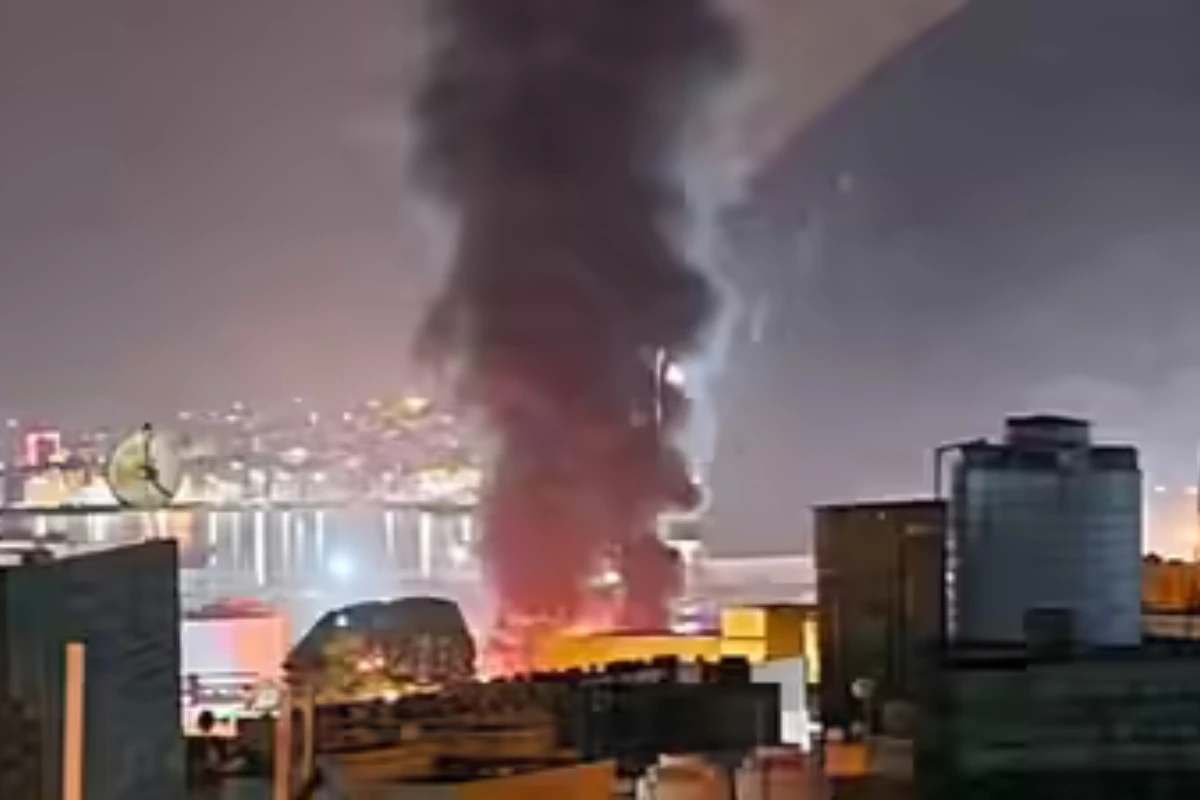
Tensions between Saudi Arabia and the United Arab Emirates have come into the open following a coalition airstrike on Yemen’s Mukalla port, an incident that has exposed growing divisions between the two Gulf allies over the country’s protracted conflict.
Saudi officials have reportedly accused the UAE of backing southern Yemeni separatist forces and facilitating the delivery of weapons and military vehicles into Mukalla, a key port city in Yemen’s eastern Hadramout province. According to regional media reports citing Saudi sources, Riyadh described Abu Dhabi’s actions as “extremely dangerous,” warning that they risk undermining regional security and stability.
In official statements, Saudi Arabia said coalition air forces carried out a limited overnight strike targeting weapons and combat vehicles that had allegedly been unloaded from two vessels at the port. The ships were said to be operating with disabled tracking systems, raising concerns over the nature and destination of their cargo.
Saudi authorities claimed the seized weapons were intended to support the Southern Transitional Council (STC), a separatist group that has been expanding its influence in southern Yemen. Riyadh described the shipment as an imminent threat and said the operation was necessary to prevent further escalation in the conflict.
The coalition stressed that the airstrike was conducted during nighttime hours to reduce the risk of civilian casualties. However, officials did not confirm whether there were any deaths or injuries, and details about the extent of the damage remain unclear. It is also uncertain whether coalition partners other than Saudi Arabia participated in the operation.
The UAE has so far refrained from issuing an official response. Meanwhile, the STC’s affiliated satellite channel acknowledged that airstrikes had taken place near Mukalla but did not provide further information about the incident or its consequences.
The episode highlights deepening fractures between Saudi Arabia and the UAE, partners who once coordinated closely in Yemen’s war against Iran-aligned Houthi rebels. While both countries remain aligned on several regional and economic issues, their strategies in Yemen—particularly in the south—have increasingly diverged.
Saudi Arabia has largely backed Yemen’s internationally recognised government and allied forces, while the UAE has been accused of supporting the STC, which seeks autonomy or independence for southern Yemen. This rivalry has intensified as both powers compete for strategic influence over ports, trade routes, and security infrastructure along Yemen’s southern coastline.
Mukalla recently fell under STC control after clashes with Saudi-backed National Shield Forces, marking a significant shift in the balance of power in Hadramout. The city lies roughly 480 kilometres northeast of Aden, the interim capital that has served as the main base for anti-Houthi factions since the rebels seized Sana’a in 2014.
Analysts warn that open confrontation between Saudi Arabia and the UAE could further complicate peace efforts in Yemen, prolonging instability in a country already devastated by years of war, humanitarian crisis, and political fragmentation.