
Chinese Air Defence Systems
China’s reputation as a rapidly advancing military technology power is facing renewed debate after a series of conflicts highlighted potential weaknesses in defence systems exported by Beijing. Analysts and defence observers are increasingly examining the real-world performance of Chinese-made air defence equipment following military operations in countries such as Pakistan, Venezuela and Iran.
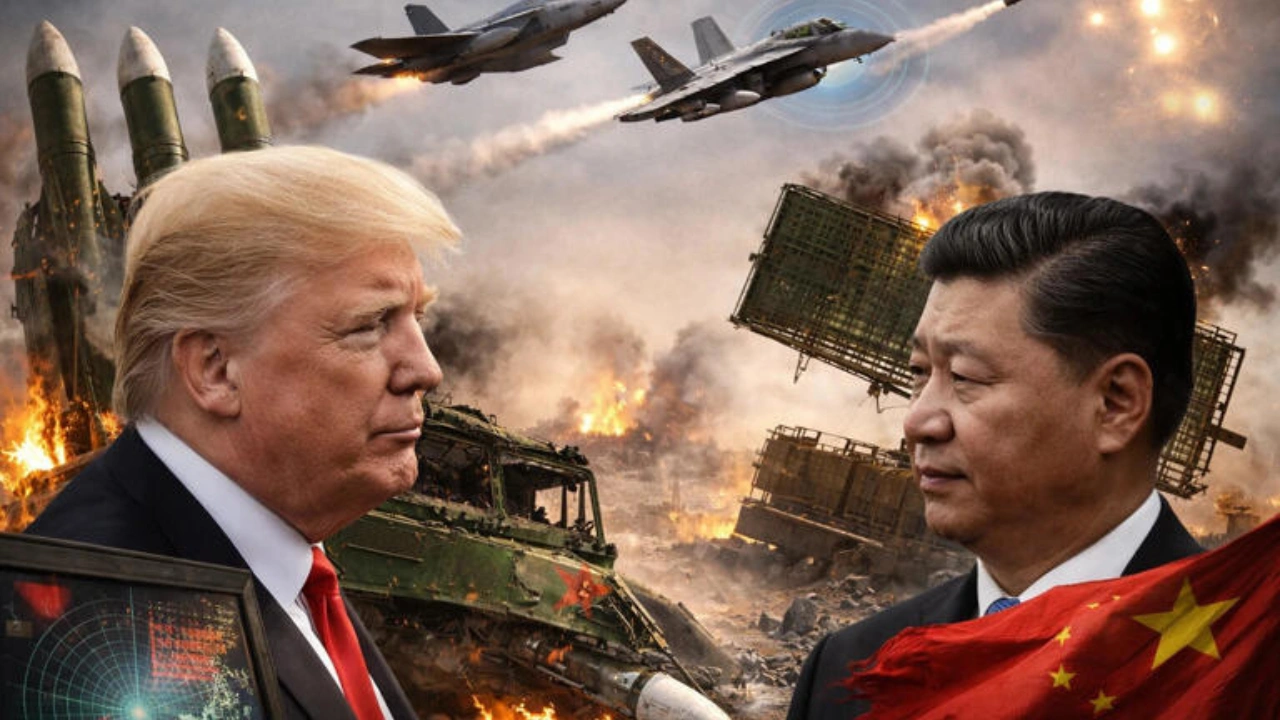
For years, China has promoted its air defence platforms as advanced alternatives to Western systems. One of the most prominent among them is the HQ-9B air defence missile system, also known as the Red Flag-9. The long-range surface-to-air missile system has frequently been showcased during Chinese military parades and international defence exhibitions as a sophisticated shield capable of tracking and intercepting multiple aerial threats simultaneously.
However, recent conflicts have triggered questions about whether these systems perform as effectively in real combat environments as they do in demonstrations and marketing material.
Focus on the HQ-9B air defence system
The HQ-9B is widely regarded as one of China’s flagship air defence platforms. Developed by China Aerospace Science and Industry Corporation, the system incorporates technology influenced by both the American MIM-104 Patriot missile system and the Russian S-300 air defence system.
In theory, the HQ-9B combines advanced radar tracking, electronic countermeasures and long-range interception capabilities. It is designed to detect and engage aircraft, cruise missiles and certain ballistic missiles at distances of up to around 260 kilometers and at high altitudes.
China has deployed variants of the system domestically in several strategic locations, including areas near Beijing, the South China Sea and regions close to the Tibet plateau.
Despite these capabilities on paper, analysts say the system’s battlefield performance outside China has raised questions.
Pakistan operations raise early concerns
Concerns first intensified after a military operation conducted by India reportedly targeted militant infrastructure in Pakistan. During the operation, defence observers reported that some Chinese-supplied systems, including HQ-9 and HQ-16 platforms, struggled to intercept incoming threats.
According to military assessments cited in several reports, multiple precision strikes managed to penetrate defensive networks that were expected to protect key installations. Fragments of the Chinese-made PL-15 air-to-air missile that failed to hit their intended targets were later displayed by Indian officials, adding to the debate about the effectiveness of some Chinese weapon systems.
Pakistan remains one of China’s largest arms customers, with estimates suggesting that more than 80 percent of its military imports come from Chinese suppliers. Because of this close defence relationship, the performance of Chinese systems in Pakistan attracted significant attention among defence analysts.
Radar systems questioned in Venezuela operation
Another episode that drew scrutiny involved a U.S. military operation in Venezuela. During the mission, forces from the United States reportedly conducted a large-scale operation involving stealth aircraft and electronic warfare platforms.
The Venezuelan defence network included Chinese-supplied early-warning radars such as the JY-27A radar system. These radars are designed to detect aircraft at long distances and are often promoted as capable of identifying stealth fighters.
However, reports suggested that the incoming aircraft involved in the operation were not detected early enough to prevent the mission from succeeding. Analysts pointed to the role of advanced electronic warfare systems such as the EA-18G Growler, which are specifically designed to jam radar and communication networks.
The incident raised questions about how modern electronic warfare tactics can disrupt air defence networks that rely heavily on radar detection.
Iran conflict intensifies debate
The most recent scrutiny came after large-scale strikes on Iran reportedly targeted multiple military installations across the country. Iran’s layered air defence system included long-range platforms such as the HQ-9B along with Russian-supplied S-300PMU-2 missile system and Iran’s domestic Bavar-373 air defence system.
These were supported by medium-range systems like Khordad-15 and Raad missile system, as well as short-range platforms including Tor-M2 and Pantsir-S1.
Despite this layered defence structure, the strikes reportedly caused extensive damage to military facilities and infrastructure. Analysts say such outcomes may result from several factors, including overwhelming missile barrages, electronic warfare disruption or coordinated cyber attacks that disable radar networks early in the conflict.
Modern military operations often rely on “saturation attacks,” where large numbers of missiles and drones are launched simultaneously to overwhelm air defence systems. Even advanced platforms can struggle to intercept every incoming threat under such conditions.
Impact on China’s arms export credibility
China has become one of the world’s largest arms exporters in recent years, supplying equipment to countries across Asia, Africa, the Middle East and Latin America. Nations such as Pakistan, Iran, Egypt and Azerbaijan have purchased Chinese air defence technology as a lower-cost alternative to Western systems.
However, the recent incidents have prompted some analysts to re-evaluate the reliability of these systems in high-intensity warfare scenarios.
While Chinese equipment is often significantly cheaper than Western alternatives, critics argue that lower costs may sometimes come with trade-offs in terms of technological maturity or battlefield integration.
Broader geopolitical implications
The debate about Chinese military technology also carries strategic implications for regions where Beijing’s influence is growing, including the Taiwan Strait. Observers say the performance of Chinese systems abroad may shape perceptions about China’s overall military capabilities.
Despite the criticism, China remains a major economic and military power with rapidly expanding naval, air and missile forces. Analysts note that assessing the true effectiveness of any defence system requires examining a wide range of operational conditions and battlefield variables.
For now, the recent conflicts have placed Chinese defence technology under intense international scrutiny, with experts continuing to study how these systems perform when faced with modern warfare tactics, stealth aircraft and advanced electronic warfare.
About the Author