Mojtaba Khamenei
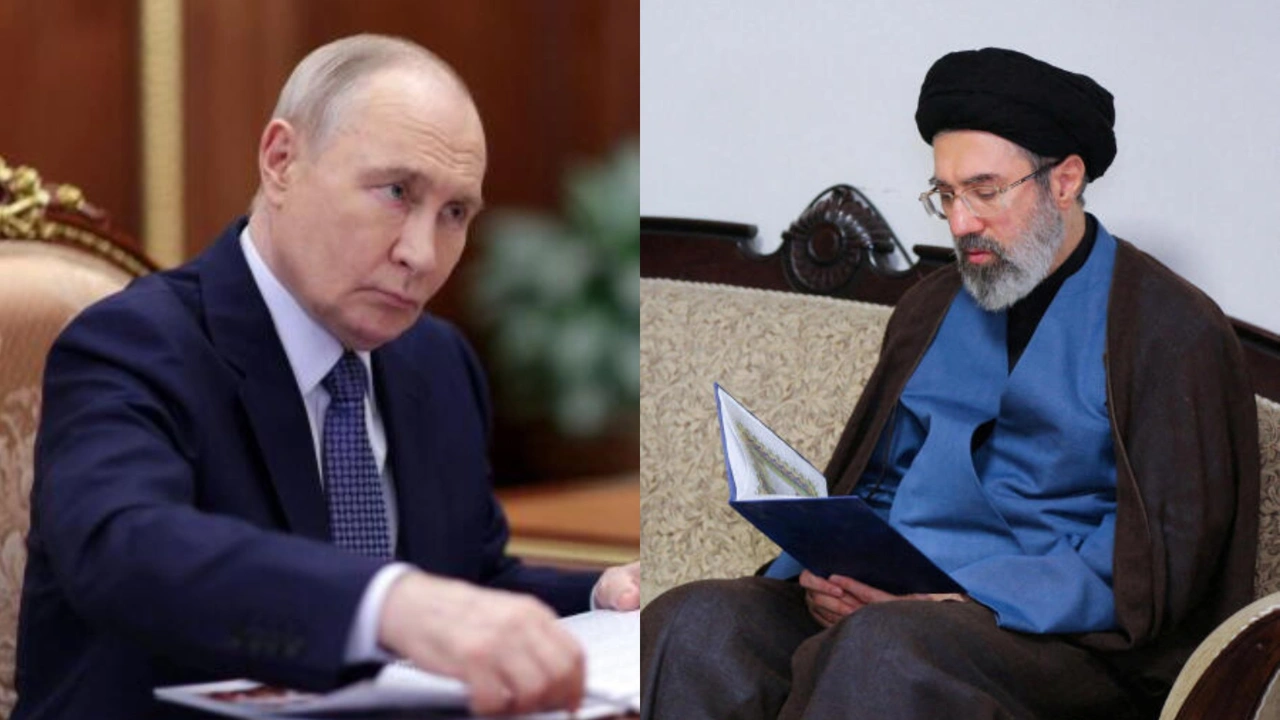
Russian President Vladimir Putin on Monday reaffirmed Russia’s “unwavering” support for Iran amid the ongoing tensions involving the United States and regional powers. At the same time, he extended his congratulations to Mojtaba Khamenei following his appointment as Iran’s new supreme leader.
The statement from Moscow comes at a time when the geopolitical situation in the Middle East remains highly sensitive. Russia’s message signals continued diplomatic backing for Tehran as the country navigates a period of political transition and rising regional pressure.
According to reports, Putin emphasized that Russia would continue to stand firmly with Iran. He said Moscow remains committed to maintaining strong relations with Tehran and supporting its leadership during challenging times. “We would like to confirm our unwavering support for Tehran and our solidarity with our Iranian friends,” Putin said in his message.
While congratulating Mojtaba Khamenei on assuming the country’s highest leadership position, the Russian president expressed confidence in his ability to guide the nation forward. Putin noted that the new leader would carry forward the legacy of his father, former Supreme Leader Ali Khamenei.
Putin said he believes Mojtaba Khamenei will continue his father’s work “with honour” and help unite the Iranian people during what he described as a period of severe trials. He acknowledged that the current situation requires strong leadership, courage, and dedication.
“At a time when Iran is facing armed aggression and serious challenges, your leadership in this important position will undoubtedly require great courage and commitment,” Putin said in his statement.
The Russian president’s remarks followed a phone call he held late on Friday with Iranian President Masoud Pezeshkian. During the conversation, Putin expressed his deep condolences over the killing of Iran’s Supreme Leader Ali Khamenei, as well as several members of his family and other senior Iranian political and military officials.
Putin also conveyed sympathy for the numerous civilians who reportedly lost their lives during the recent escalation of violence. The Kremlin described the conversation as a show of solidarity between Moscow and Tehran during a moment of national mourning in Iran.
In addition to offering condolences, Putin reiterated Russia’s stance on the need to reduce tensions in the region. The Kremlin said the Russian leader once again emphasized that the use of force should not be the primary method for resolving disputes related to Iran.
Russia has consistently advocated for diplomatic engagement and negotiations to address international disagreements involving Tehran. Moscow believes that dialogue and political solutions remain the most effective way to stabilize the situation in the region.
For his part, President Masoud Pezeshkian reportedly thanked Russia for its continued support. According to the Kremlin, the Iranian leader expressed appreciation for Moscow’s solidarity with the Iranian people as they work to defend their sovereignty and national independence during a difficult period.
Meanwhile, Iran officially announced the appointment of Mojtaba Khamenei as the country’s new supreme leader on Monday. Born in 1969 in the holy city of Mashhad in eastern Iran, Mojtaba is one of six children of the late leader Ali Khamenei.
Although he has largely remained away from the public spotlight in comparison to other political figures, Mojtaba Khamenei has long been regarded as an influential figure within Iran’s political and religious establishment. His appointment marks a significant moment in the country’s leadership transition.
Observers believe that his leadership could play a crucial role in shaping Iran’s domestic policies as well as its foreign relations during a time of heightened geopolitical tensions.
With Russia publicly reaffirming its support and Iran entering a new chapter under Mojtaba Khamenei’s leadership, global attention will remain focused on how the evolving political landscape in the Middle East unfolds in the coming months.
About the Author