Sacred Serpents
“अनन्तं वासुकिं शेषं पद्मनाभं च कम्बलम्।
शंखपालं धृतराष्ट्रं तक्षकं कालियं तथा॥”
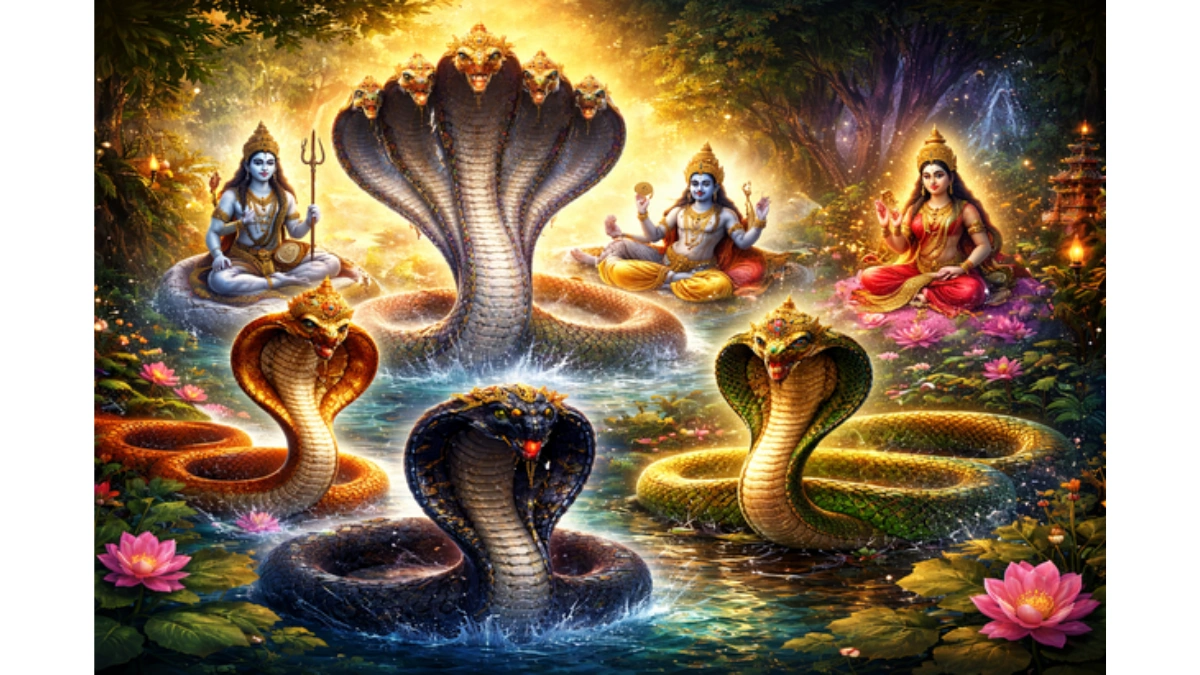
This ancient Sanskrit verse pays tribute to the revered serpents of Hindu tradition. In Indian philosophy, snakes are far more than earthly creatures—they symbolize infinity, divine energy, protection, and the balance of the universe. While many cultures associate serpents with fear, Hindu belief holds them in deep reverence.
From the cosmic bed of Lord Vishnu to the adornment around Lord Shiva’s neck, serpents appear throughout scriptures, rituals, and temple art. They embody time, rebirth, hidden wisdom, and the powerful Kundalini energy believed to reside within every human being.
1. Ananta Shesha: The Eternal Cosmic Serpent
Ananta Shesha, often referred to simply as Shesha, represents eternity. “Ananta” means endless, and “Shesha” signifies that which remains after everything else dissolves.
According to ancient texts, Lord Vishnu reclines on Shesha’s thousand-hooded form in the Kshira Sagara (cosmic ocean of milk). This imagery reflects stability amidst universal motion. Shesha is believed to support the entire cosmos, sometimes depicted carrying planets upon his hoods.
Philosophically, Shesha symbolizes infinite time and the cyclical nature of existence. In yogic traditions, his coiled form mirrors Kundalini Shakti—the dormant spiritual energy within humans. He represents the unseen force sustaining creation, often equated with Brahman, the ultimate reality.
2. Vasuki: The Serpent of Cosmic Churning
Vasuki holds a significant place in Hindu mythology, especially in the story of Samudra Manthan (the churning of the ocean).
During this event, gods and demons used Mount Mandara as a churning rod and Vasuki as the rope. As they pulled him back and forth, numerous divine treasures emerged, including the nectar of immortality.
Vasuki’s role highlights endurance, sacrifice, and cooperation. Despite immense strain, he contributed to a cosmic purpose. He is also often depicted around Lord Shiva’s neck, symbolizing control over fear and mortality.
3. Takshaka: The Mighty Naga King
Takshaka is a powerful Naga king featured in the Mahabharata. He belongs to the Nagas, semi-divine serpent beings said to reside in the mystical realm of Nagaloka.
His story is closely linked to King Parikshit and the famous snake sacrifice conducted by King Janamejaya. Beyond mythology, Takshaka represents ancient serpent worship traditions that predate many Vedic practices.
Serpents were historically linked with fertility, water, and land protection. As guardians of treasures and sacred rivers, Nagas were respected and feared. Takshaka embodies the strength and mystery of nature, reminding humans to respect its power.
4. Kaliya: The Serpent of Transformation
Kaliya, the multi-hooded serpent from the Bhagavata Purana, lived in the Yamuna river and poisoned its waters, causing destruction in the surrounding environment.
Lord Krishna subdued Kaliya by dancing upon his hoods. Instead of killing him, Krishna spared him after his surrender.
Symbolically, Kaliya represents inner negativity and toxic tendencies. Krishna’s dance signifies the triumph of higher consciousness over destructive forces. The story emphasizes purification rather than destruction—energy must be transformed, not eliminated.
5. Manasa Devi and the Tradition of Naga Worship
Manasa Devi, widely worshipped in eastern India, is the goddess associated with serpents, fertility, and protection from snakebites. Though not a serpent herself, she is deeply connected to Naga traditions.
Naga worship remains an important part of Hindu culture. Festivals like Nag Panchami involve offering prayers and milk to serpent deities. Many temples, especially in southern India, are dedicated to these divine beings.
Historically, serpents were seen as protectors of crops and water sources. In spiritual practice, they symbolize awakened consciousness rising through the chakras, reinforcing their sacred place in Hindu rituals and beliefs.
In Hindu tradition, serpents are not symbols of fear but of profound spiritual truth. They represent the eternal cycle of life, hidden power, and cosmic balance. Whether as protectors, destroyers, or guides, these sacred beings continue to inspire devotion and philosophical reflection across generations.
About the Author