Viral Supermarket Video
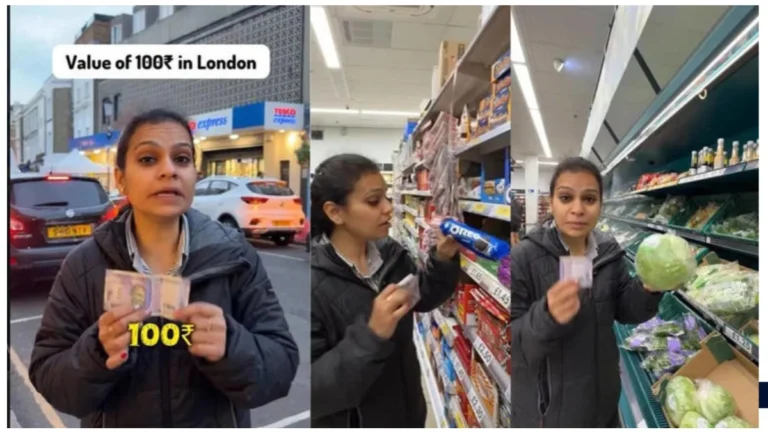
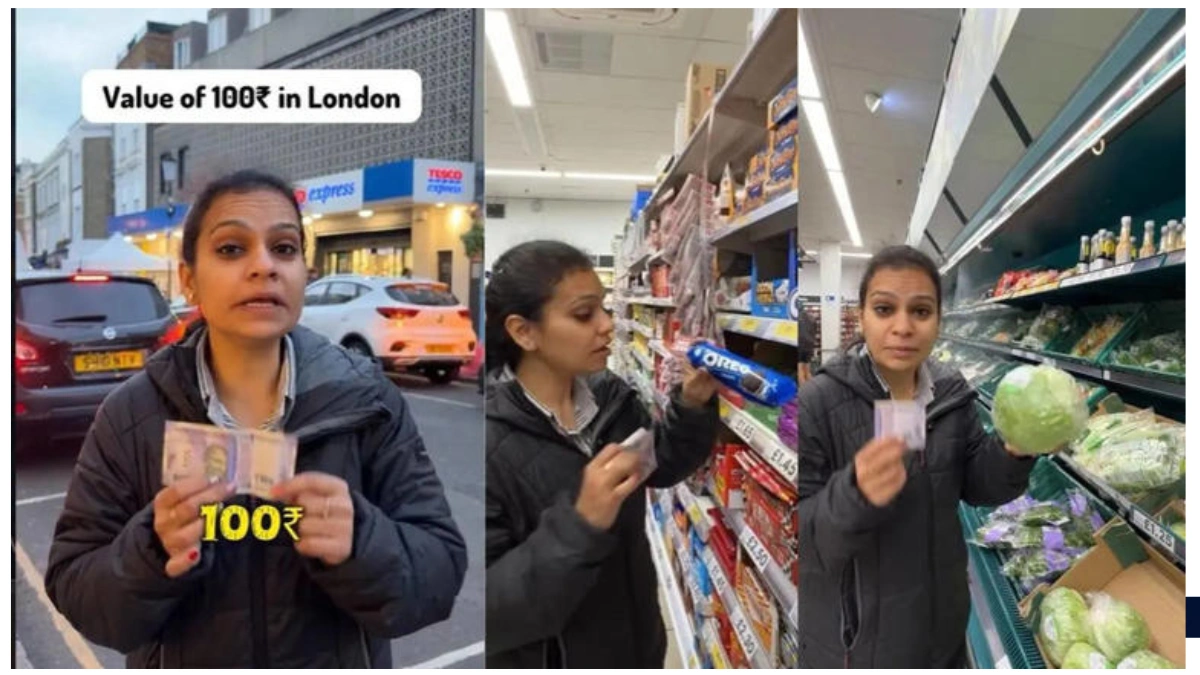
Viral Supermarket Video: A simple question—“India ke 100 rupaye ki yahan kya value hai?”—has taken the internet by storm. A viral Instagram video by veggiwander, which has already crossed millions of views, captures a woman walking into a supermarket in London with a ₹100 note in hand. What begins as a light-hearted experiment quickly turns into a reality check about the cost of living abroad.
In India, ₹100 still holds everyday value. It can buy a quick snack, a cup of tea or coffee, street food like chaat or idli-sambar, or even a simple meal in some areas. For many, it covers small daily needs like local transport or fruits. But when converted into British currency, ₹100 equals roughly £0.80—a figure that feels surprisingly small in a city like London, often ranked among the most expensive in the world.
As the woman enters the supermarket, she begins her search with optimism. She looks at a basic cheese and onion sandwich, hoping it might fit her budget. However, the price tag reads £1.50—almost double what she can afford. Her expression shifts from hopeful to surprised, marking the beginning of a series of similar disappointments.
View this post on Instagram
Determined to find something affordable, she moves through the aisles, scanning shelves carefully. She then spots a bottle of water and thinks this essential item should surely be within reach. But reality strikes again. The 500 ml bottle is priced at £1.15 (around ₹143), which is well beyond her ₹100 limit. Even something as basic as drinking water becomes unaffordable in this context. “Pani bhi nahi khareed paungi,” she remarks, highlighting the stark difference in purchasing power.
Her search continues. A cabbage priced at £0.89 catches her attention—still too expensive. She then picks up a pack of Oreo biscuits, only to find it costs £1.65, again out of budget. Each item she considers reinforces the same message: ₹100 simply doesn’t stretch far in London.
Finally, after checking multiple products, she finds one item she can afford—a small packet of carrots priced at £0.60 (approximately ₹75). With a mix of relief and mild disappointment, she decides to buy it, joking that this is the only thing within her budget. The moment is light, but the message is clear.
The video resonates strongly with viewers because it highlights a reality many people don’t often think about: the difference between currency value and purchasing power. While ₹100 may seem modest but useful in India, its equivalent abroad can feel almost insignificant.
However, the story doesn’t end there. It’s important to consider that salaries and living standards in the UK are significantly higher than in India. For residents of London, these prices are part of their everyday economy. But for travellers, students, or tourists from India, the contrast can feel dramatic and even overwhelming.
This viral video goes beyond entertainment—it quietly explains global economic differences in a way that numbers alone cannot. Without complex analysis or dramatic narration, it shows how the value of money changes across borders.
In the end, the woman’s supermarket journey becomes more than just a social media clip. It becomes a relatable lesson about cost of living, currency strength, and how far—or how little—₹100 can go in different parts of the world.
About the Author