
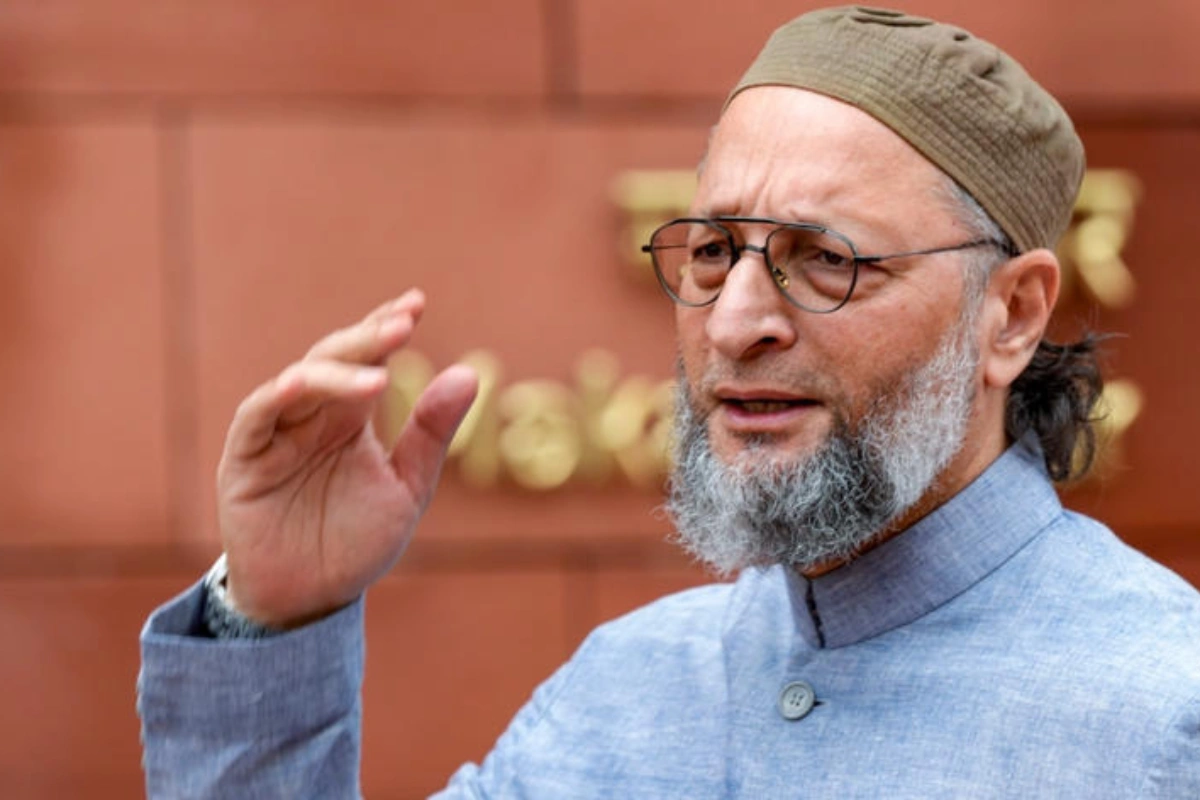
AIMIM chief and Hyderabad MP Asaduddin Owaisi has blamed the Congress party for the prolonged incarceration of student activists Umar Khalid and Sharjeel Imam, stating that amendments made to the Unlawful Activities (Prevention) Act (UAPA) during the UPA government are directly responsible for their continued stay in jail.
Owaisi’s remarks came after the Supreme Court on Monday refused to grant bail to Khalid and Imam in the alleged “larger conspiracy” case linked to the 2020 Delhi riots. The apex court explained that the seriousness of the charges under the UAPA prevented it from extending relief to the two accused at this stage.
Reacting strongly, Owaisi said the Congress must take responsibility for strengthening a law that, according to him, has been repeatedly used to keep undertrial prisoners incarcerated for years without conviction. He pointed out that while the UAPA was originally enacted earlier, it was significantly expanded during Congress-led UPA rule.
The AIMIM chief specifically named former Union Home Minister P Chidambaram, under whose tenure key amendments were introduced to the UAPA. These changes, Owaisi argued, broadened the definition of terrorism and gave authorities sweeping powers that now make bail extremely difficult.
“The Supreme Court did not grant bail and clearly explained why. But the foundation of this problem lies in the amendments made during the UPA government,” Owaisi said. “That is when the definition of terrorism was expanded in a way that is highly subjective.”
Recalling his own intervention in Parliament more than a decade ago, Owaisi said he had warned that certain sections of the amended law could be misused. Referring to debates in the Lok Sabha around 2007–08, he said he had objected to the wording of Section 15(a) of the Act, which includes phrases such as “by any other means of whatever nature.”
“I had said in Parliament that this wording is subjective. Who decides what qualifies under ‘any other means’? Tomorrow, someone like Arundhati Roy could be arrested for her writings. That warning was ignored,” Owaisi said.
According to him, the very same provision he had flagged years ago was now being cited as the basis for denying bail to Khalid and Imam, who have spent over five-and-a-half years in jail as undertrials.
“Using the law framed by Congress, two young men remain behind bars. And yet, since Independence, how many Congress leaders have spent even one year, two years, or five-and-a-half years in jail under such laws?” Owaisi asked.
He also highlighted what he called the unequal application of stringent laws, arguing that political power shields some while others bear the brunt of harsh legislation.
Meanwhile, in the same case related to the 2020 Delhi riots, the Supreme Court granted bail to five other accused — Gulfisha Fatima, Meeran Haider, Shifa Ur Rehman, Mohd Saleem Khan, and Shadab Ahmad — offering partial relief in the long-running legal battle.