
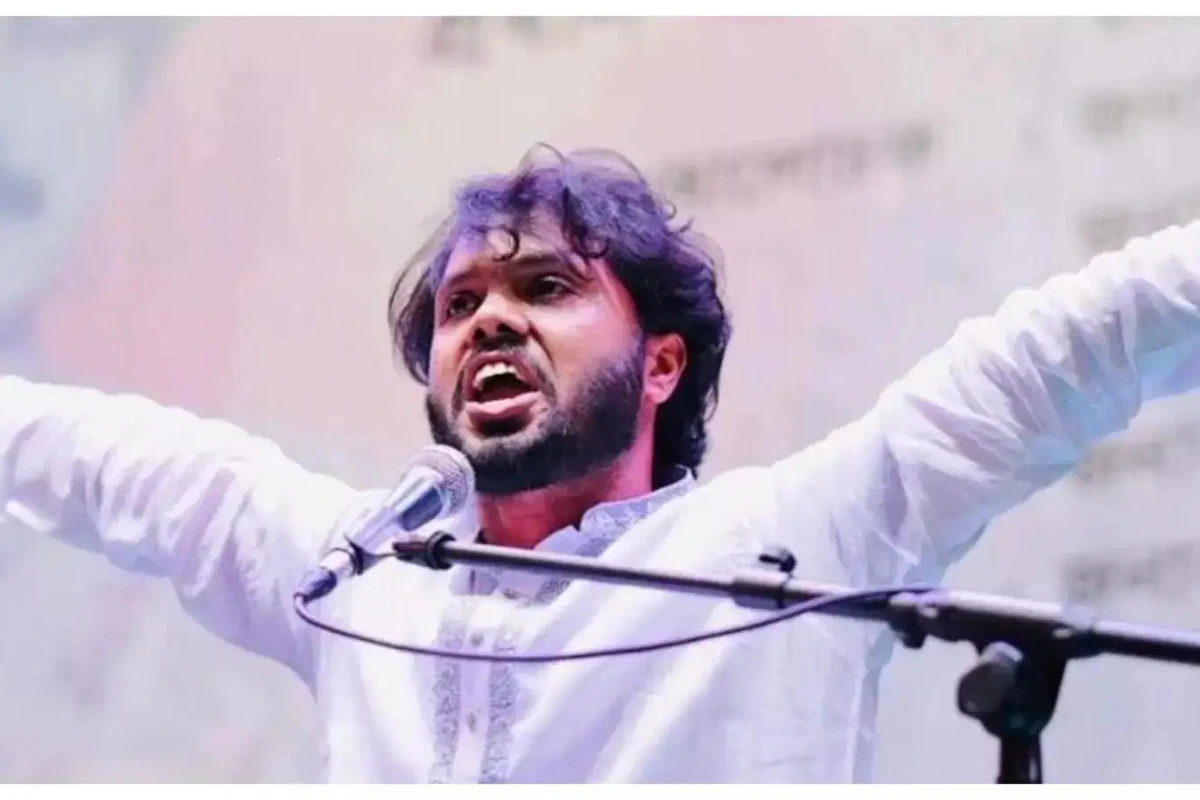
Former Bangladesh prime minister Sheikh Hasina has strongly denied allegations linking her Awami League party or India to the killing of student leader Sharif Osman Hadi, calling such claims “baseless” and politically motivated. In an exclusive interview with NDTV, Hasina said the murder was a result of worsening lawlessness and political violence under Bangladesh’s interim government led by Nobel Laureate Muhammad Yunus.
Describing the killing as “tragic and reprehensible,” Hasina said Hadi’s death exposed the interim administration’s failure to maintain public order. According to her, instead of taking firm action to prevent further violence, the authorities allowed extremist groups to exploit the incident for political gain.
“The killing of Sharif Osman Hadi was a direct consequence of the lawlessness and electoral violence that have consumed Bangladesh under the interim government,” Hasina said, adding that radical elements were using the case to inflame tensions, attack democratic institutions, and distract from governance failures.
Hasina Dismisses Claims Linking India
Hasina categorically rejected attempts by sections in Dhaka to link the killing with India, describing the narrative as “deliberate and entirely unfounded.” She claimed that fundamentalist forces were behind the allegations, seeking to portray internal instability as the result of foreign interference.
“Attempts to link this case to India are not only false but dangerous,” she said. “They are driven by forces that thrive on hostility toward Bangladesh’s closest ally and seek to convert domestic failures into foreign conspiracies.”
She warned that such claims risk radicalising public discourse and undermining decades of trust between India and Bangladesh. According to Hasina, the portrayal of India as an adversary does not reflect the views of ordinary Bangladeshis and is harmful to the country’s long-term interests.
“India is our closest ally. Our nations have worked together for decades to strengthen trade ties, diplomatic relations, and regional stability,” she said, criticising what she called the Yunus government’s “knee-jerk and short-sighted” foreign policy approach.
India has also rejected allegations linking it to Hadi’s killing, calling them a “false narrative,” and has urged Bangladeshi authorities to conduct a thorough and transparent investigation.
Background of the Killing
Sharif Osman Hadi, a prominent leader of Bangladesh’s 2024 student uprising, was shot in the head by masked attackers in Dhaka on December 12, 2025. He succumbed to his injuries six days later at a hospital in Singapore. Hadi gained national prominence during last year’s student-led protests that eventually led to Sheikh Hasina stepping down from power.
Following the unrest in August 2024, Hasina left Bangladesh for India, where she has remained since — a development that has strained relations between Dhaka and New Delhi.
Aftermath and Rising Unrest
Hadi’s death sparked widespread violence across parts of Bangladesh. Mobs vandalised and torched the offices of major newspapers Prothom Alo and The Daily Star, along with cultural organisations Chhayanat and Udichi Shilpi Goshthi in Dhaka. In a separate incident, a Hindu factory worker was lynched by a mob in central Mymensingh.
Despite the severity of the violence, the interim government has faced criticism for its response. Observers have pointed to the absence of visible nationwide security measures, a lack of protection for vulnerable communities, and no clear accountability for those responsible.
As political tensions deepen, the handling of Hadi’s killing continues to fuel debate over governance, security, and Bangladesh’s relations with India.