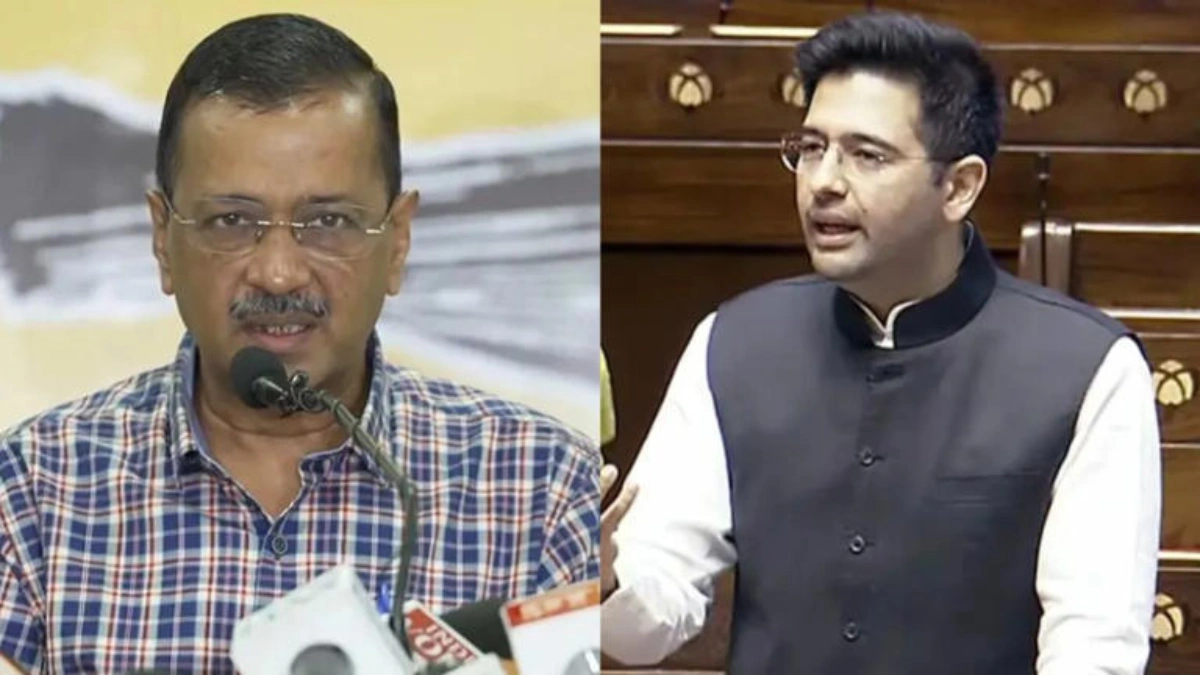
Raghav Chadha
In a significant political shift, the Aam Aadmi Party (AAP) has reportedly moved to remove Raghav Chadha from his position as deputy leader in the Rajya Sabha, signaling possible internal realignments within the party.
According to reports, AAP has formally communicated with the Rajya Sabha secretariat, requesting that Chadha no longer be recognized in the leadership role. In addition, the party has allegedly asked that he not be allotted speaking time under its quota in the Upper House—an indication of a deeper shift in trust and influence.
The party is now expected to appoint Ashok Mittal as the new deputy leader in the Rajya Sabha. While an official confirmation is awaited, sources suggest that the decision is part of a broader strategy to restructure the party’s parliamentary leadership.
Growing Distance Within the Party
Raghav Chadha, once considered among the closest aides of AAP chief Arvind Kejriwal, has reportedly been distancing himself from the party’s core leadership for several months. This growing gap is believed to have contributed to his removal from a key parliamentary position.
Although AAP has not publicly disclosed specific reasons behind the move, political observers believe Chadha’s reduced visibility in party activities and his absence from major political events may have raised concerns within the leadership.
One such instance was during the celebrations following Kejriwal’s acquittal in the Delhi liquor policy case. The party organized a large-scale roadshow to send a strong political message to rivals, particularly the Bharatiya Janata Party (BJP). However, Chadha’s absence from the event sparked speculation about his standing within the party.
Declining Role in Decision-Making
Over the past two years, Chadha’s role within AAP appears to have gradually diminished. He has reportedly not been part of the party’s core decision-making team during this period.
During a crucial phase when Arvind Kejriwal was in legal trouble related to the liquor policy case, several other leaders were elevated to key roles. Atishi and Saurabh Bhardwaj were entrusted with major responsibilities in governance and party affairs.
In contrast, Chadha neither received a significant administrative role nor took a prominent public stance defending the party leadership during that period. This perceived lack of active engagement may have influenced the leadership’s decision.
Silence on Key Political Issues
Another factor that may have contributed to Chadha’s sidelining is his relatively low participation in addressing critical political issues concerning the party. In recent months, AAP has been actively involved in political battles at both state and national levels, particularly in Punjab and Delhi.
However, Chadha’s limited presence in debates and public messaging has been noted by party insiders. In a political environment where visibility and vocal advocacy play a crucial role, such silence can be interpreted as disengagement.
Strategic Reshuffle or Internal Rift?
While the move can be seen as part of a routine leadership reshuffle, it has also fueled speculation about internal differences within AAP. Political analysts suggest that the party may be aiming to bring in more active and aligned leaders in parliamentary roles as it prepares for upcoming political challenges.
The possible appointment of Ashok Mittal could signal a shift toward leaders who are more actively involved in current party strategies, particularly in Punjab, where AAP is in power.
At the same time, Chadha’s removal does not necessarily indicate a complete fallout. In Indian politics, leadership changes often reflect strategic adjustments rather than permanent exclusions. It remains to be seen whether Chadha will be reassigned a different role or continue as a member of the party in a reduced capacity.
What Lies Ahead
Raghav Chadha’s political journey within AAP has been notable—from being one of the youngest and most prominent faces of the party to now facing a phase of uncertainty. His removal from the deputy leader position marks a turning point that could redefine his role in the party.
For AAP, the decision highlights an ongoing effort to consolidate leadership and maintain political momentum. As the party navigates evolving political dynamics, such changes may become more frequent.
Whether this development signals a temporary adjustment or a deeper internal shift will become clearer in the coming months.
About the Author