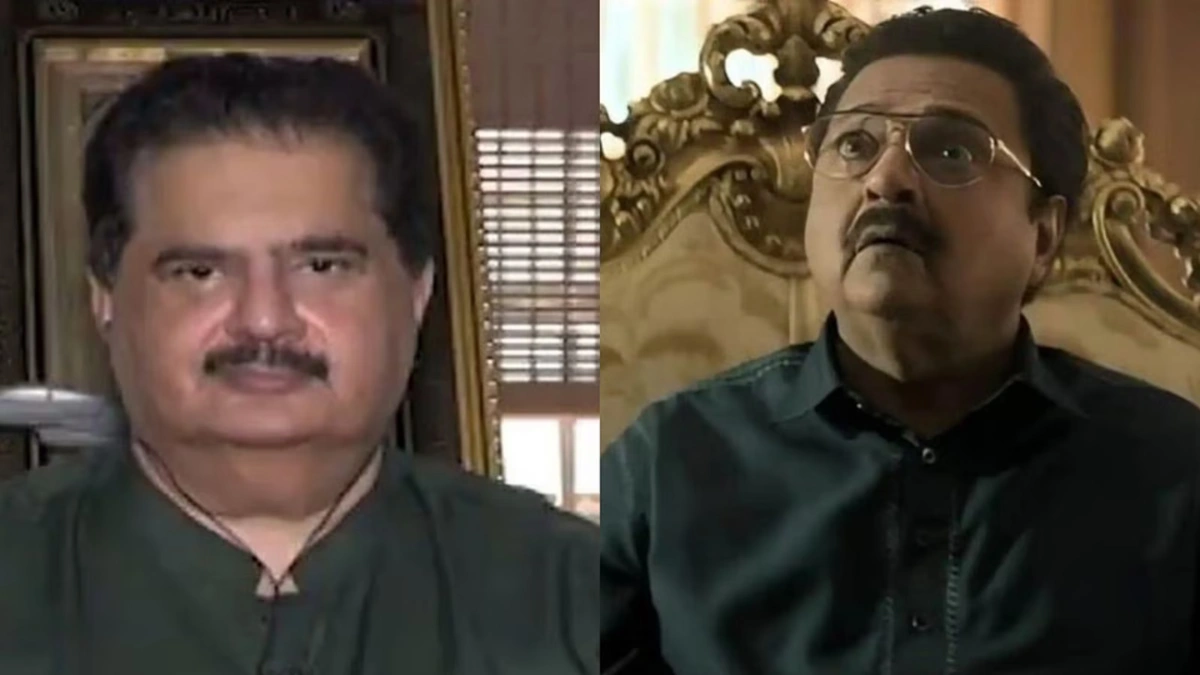
Nabil Gabol
Pakistani politician Nabil Gabol has strongly criticized the makers of Dhurandhar: The Revenge, claiming that the film misrepresents his real-life persona through the character Jameel Jamali. In a recent interaction, Gabol not only expressed his disappointment over the portrayal but also revealed plans to produce his own film as a response, tentatively titled Lyari Ka Gabbar.
Nabil Gabol Reacts to His Portrayal
Speaking during an interview with a digital content creator, Gabol alleged that the character of Jameel Jamali in the film is directly inspired by him. He pointed out that during 2007, when the story appears to be set, he was serving as the Member of the National Assembly (MNA) from Lyari, making the connection quite evident.
However, what upset him the most was the casting and depiction of the character. According to Gabol, veteran comedian Rakesh Bedi was chosen to portray a role that was allegedly based on him, which he felt undermined his real-life image. He remarked that the filmmakers opted for a comedic representation rather than an accurate or serious portrayal of his personality and influence.
Gabol further stated that while the actor later clarified that his performance was not solely based on Gabol but rather a generalized depiction of Pakistani politicians, the timeline and context still strongly pointed toward him being the inspiration.
Criticism of Film’s Narrative
Beyond personal portrayal, Gabol also criticized the broader narrative of the film. He suggested that the filmmakers used cinematic storytelling as a substitute for political or military confrontation, adding that such portrayals attempt to shape international perceptions about regions like Lyari.
Despite the controversy, Gabol acknowledged that the film has inadvertently brought global attention to Lyari. However, he emphasized that the people of the area are resilient and unaffected by such portrayals.
Strong Response to Social Media Trolling
Addressing the trolling he has faced on social media, especially from Indian users questioning his silence, Gabol said he is preparing a “powerful response.” Drawing parallels with military responses, he indicated that his reply would aim to set the record straight about the reality of Lyari and his role in it.
His comments have further fueled the ongoing debate surrounding the film, with many users discussing the fine line between creative liberty and factual representation in cinema.
Plans for ‘Lyari Ka Gabbar’
Taking things a step further, Gabol revealed that he intends to counter the narrative by producing his own film. While he humorously referred to it as Dhurandhar 3, he clarified that the project would be officially titled Lyari Ka Gabbar.
The proposed film aims to present what he describes as the “real story” of Lyari and his life, offering an alternative perspective to the one shown in Dhurandhar: The Revenge. This move indicates that the controversy could soon extend from political commentary into cinematic competition.
Past Objections to the Franchise
This is not the first time Gabol has voiced objections to the Dhurandhar franchise. He had earlier criticized the original film as well, stating that his character was not portrayed accurately and lacked the strength and dominance he associates with his real-life image.
He expressed that while he had considered taking legal action, financial limitations prevented him from pursuing the matter internationally.
About ‘Dhurandhar: The Revenge’
Dhurandhar: The Revenge serves as a sequel to the 2025 film Dhurandhar. The story follows Hamza, also known as Jaskirat, an undercover Indian agent tasked with dismantling criminal networks in Lyari that are allegedly linked to terrorist activities in India.
The film features a star-studded cast including Ranveer Singh, R Madhavan, Arjun Rampal, Rakesh Bedi, and Sara Arjun in key roles. Despite its commercial appeal and action-packed storyline, the film has now become a subject of controversy due to claims of misrepresentation.
About the Author